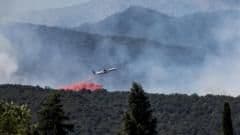
Thousands Flee as Wildfire Tears Through Southern France Amid Scorching Heatwave
A fast-moving wildfire in the French Pyrenees has forced over 10,000 residents to evacuate, while Tour de France officials restrict spectator access near the affected region.

Massive Wildfire Triggers Mass Evacuation in Southern France
A rapidly spreading wildfire has forced more than 10,000 residents to abandon their homes across a string of small towns and villages in southern France, as the country continues to battle the devastating effects of an early summer heatwave that has gripped much of Europe.
Authorities issued mandatory evacuation orders for residents across more than a dozen communities nestled in the foothills of the French Pyrenees, close to the Spanish border. The blaze, centered near Trévillach in the Pyrénées-Orientales region not far from Perpignan, has already consumed a minimum of 4,600 hectares — roughly 11,366 acres — of land.
Deteriorating Conditions and High Winds Fuel the Crisis
French Interior Minister Laurent Nunez issued a stark warning on national television channel TF1, cautioning that the situation remained highly volatile. "This morning conditions are deteriorating again," he told viewers. "Today the battle resumes."
Emergency services have flagged strong winds as a major concern, warning that gusts could rapidly accelerate the fire's spread. Local residents described scenes of near-panic as the flames advanced with frightening speed.
"It came within 300 metres of the houses. We were shocked by how fast it spread — it was staggering, bordering on panic," said Patrice, a resident of Trévillach, speaking to the AFP news agency.
Tour de France Forced to Restrict Spectator Access
The wildfire has also cast a shadow over one of the world's most celebrated sporting events. Tour de France organizers have urged fans and non-essential personnel to stay away from the final 40 kilometers of Monday's third stage, which concludes in Les Angles — located within the fire-affected Pyrénées-Orientales region.
The 195.9-kilometer stage begins in Granollers, Spain, and the convoy of team support vehicles that traditionally trails the peloton will be dramatically reduced to keep roads accessible for emergency responders.
Race director Christian Prudhomme emphasized the gravity of the situation: "An exceptional fire calls for exceptional measures for the Tour. We invite the public not to come to the edge of the race or to the finish site."
European Union Mobilizes Emergency Aircraft
The scale of the disaster has prompted an international response. European Commission President Ursula von der Leyen announced that the EU would deploy four firefighting aircraft — stationed in Cyprus and Sweden — to support French emergency operations on the ground.
Wildfires Also Ravage Neighboring Spain
The crisis is not confined to France alone. Across the border, wildfires have scorched more than 2,200 hectares within the protected natural reserve of Les Gavarres in Catalonia. Spanish authorities reported late Saturday that the blaze had been stabilized and was expected to be fully extinguished within the week.
Further south, in the eastern province of Castellon, approximately 500 people were evacuated after a separate wildfire breached the boundaries of the Sierra de Espadan national park.
Record Heat Persists Across the Region
Temperatures across south-western France are forecast to climb back toward 40°C this week. Parts of Portugal and Spain have already surpassed that threshold. BBC Weather Lead Forecaster Matt Taylor noted that while this heatwave may not shatter the records set in June, it remains highly unusual for the time of year.
"With the heat expected to persist into next week and little widespread rain forecast, the risk of further wildfires will remain elevated," Taylor warned.
During June's unprecedented heatwave — when temperatures in some areas hit 42°C — France recorded its hottest day ever on a nationwide average basis on June 24. The extreme heat contributed to at least 2,025 excess deaths in France, 1,222 in Belgium, and approximately 480 in the Netherlands.
Climate Change: The Driving Force Behind Europe's Worsening Summers
Scientists and climate analysts continue to point to climate change as the primary driver behind Europe's increasingly severe summer conditions. According to the Copernicus Climate Change Service, Europe is currently the fastest-warming continent on Earth, heating up at twice the rate of the global average.
This accelerating warming trend is intensifying summer heatwaves, straining water resources across the continent, and fueling more frequent and destructive wildfires — a pattern experts warn is set to worsen in the years ahead unless meaningful action is taken.