The Granny World Cup: Meet the Soccer Players Who Are Too Old to Be Stopped
Forget age limits — at the Grannies International Football Tournament, you must be at least 50 just to qualify. Meet the women rewriting the rules of the game.

When Grandmothers Rule the Pitch
At most sporting events, officials check credentials to keep ineligible players out. At the Grannies International Football Tournament — better known as GIFT — they check passports for an entirely different reason: to make sure nobody is too young to play.
"We don't want to see underage players," one match official explained with complete seriousness, flipping through a stack of passports before a recent match in Tzaneen, South Africa.
The minimum age to compete? Fifty years old. And that rule is non-negotiable.
A Tournament Unlike Any Other
Held in the small South African farming town of Tzaneen, GIFT brings together teams of women aged 50 and above from across the globe. Vuvuzelas blast through the humid air, crowds pack the stands, and grandmothers — gogos, nanas, vovos, and mamis — take to the field with fierce competitive intent.
The second edition of the tournament, held in early April 2025, drew teams from seven countries, including the United States, France, Togo, Kenya, Mozambique, Zambia, and a host of South African squads. For four intense days, the stadium in the Nkowankowa township became the center of the women's football universe — at least for the 50-and-over crowd.
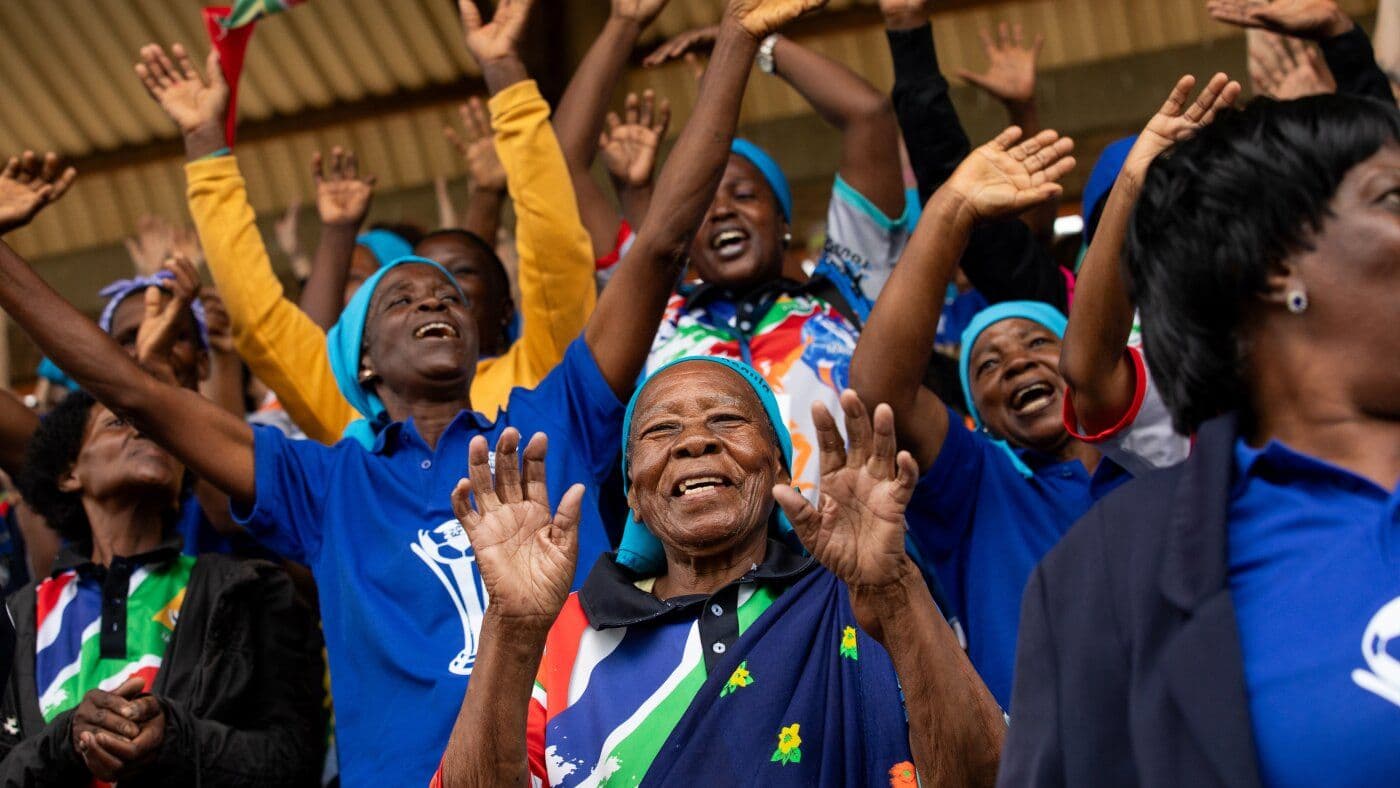
And what a crowd it was. The stands filled with fellow grandmothers cheering passionately for their favorite teams. Some brought knitting. Some dozed briefly between matches. All of them erupted with joy when their side found the net.
Stars of the Field — At 72, 78, and Beyond
On the pitch, the action was anything but slow. In a match between the United States and Togo, American forward Pam Woodworth, 72, burst past three defenders — white ponytail flying — and delivered a precise pass to center forward Sue "Clip" Clippinger, 78, who buried a hard, high shot into the corner of the net.
"Goooooaaaalll!" roared commentator Ishmael Maluleke, a former South African professional player. "What a performance from Granny #4 of the USA. She is the USA's Messi!"
Clippinger, who plays for the New England Breakers, says the experience has only sharpened her game. "I've gotten better at this than when I was 40," she said with a grin.
A Dream Born in a Small Farming Town
The story behind GIFT is as remarkable as the tournament itself. It begins in 2007, when a Tzaneen radio host and philanthropist named Beka Ntsanwisi — affectionately called Mama Beka — decided to organize a soccer league for older women in her community. Her goals were simple: improve health outcomes and give women a reason to move their bodies and connect with one another.
The early days were not without obstacles. One of the original players, Rossina Mathye, now 84, recalled quietly wrapping a long skirt over her soccer shorts before leaving home for practice. "You see, in our culture … trousers are for men," she explained. If the women wanted to play, the men in the community simply couldn't know what was happening.
Despite those challenges, the league took root and flourished. Inspired by South Africa's beloved national teams — Bafana Bafana (Boys Boys) and Banyana Banyana (Girls Girls) — the players named themselves Vakhegula Vakhegula, which translates to "Grandmothers Grandmothers" in the local Tsonga language.
From Local League to International Stage
By the time South Africa hosted the FIFA World Cup in 2010, the Vakhegula Vakhegula had become minor local celebrities. Shortly after the tournament concluded, an all-star squad of the grannies boarded a flight to Boston, Massachusetts, after American women who had seen footage of them playing extended an invitation to compete in a tournament for older players.
That trip planted a seed in Ntsanwisi's mind. If Boston could host something like that, she reasoned, why not Tzaneen? Never mind that the town sits a five-hour drive from the nearest major international airport in Johannesburg, surrounded by groves of orange and avocado trees. Ntsanwisi had already built a soccer league from nothing. Hosting a world championship felt like the logical next step.
"One day," she promised herself, "I'm going to host the World Cup." The grannies' World Cup, that is.
It took a decade of planning, but in 2023, the inaugural GIFT kicked off at the soccer stadium near Ntsanwisi's childhood home, welcoming teams from six nations. The 2025 edition expanded even further, with Zambia among the new additions — though their team had to hitchhike to the stadium after their bus broke down in southern Zimbabwe, some 200 miles away, during the opening ceremony.
Making Up for Lost Time
For many of the women competing in GIFT, the tournament represents something far deeper than a sporting event. A large number of them grew up in communities where soccer was considered a male pursuit. As the years passed, personal ambitions gave way to caregiving — for spouses, children, and eventually grandchildren.
Now, on the grass of a stadium in rural South Africa, they are finally getting their moment.
Rossina Mathye, who has ten grandchildren and is also a great-grandmother, no longer plays due to sore knees. But she hasn't left the game behind. "Now I sit and watch," she said warmly. "Now I'm one of their biggest supporters."
The stadium, the roaring crowd, the FIFA anthem crackling over the speakers — none of it is wasted on these women. They know exactly how long they waited for this.
And they have absolutely no intention of leaving the pitch early.