The Enhanced Games: Everything You Need to Know About the Controversial Las Vegas Sports Event
Dozens of athletes, including former Olympians, are set to compete in Las Vegas using performance-enhancing drugs. Here's a full breakdown of what's happening.
What Are the Enhanced Games?
Imagine the Olympics — but with a $25 million prize pool and zero restrictions on performance-enhancing drugs. That's essentially the premise behind the Enhanced Games, a one-night sports spectacle taking place in Las Vegas that has sparked fierce debate across the athletic and medical communities.
Organizers describe the event as a global sports competition designed to push the boundaries of human performance. Backed by high-profile investors including Donald Trump Jr.'s venture capital firm, 1789 Capitol, and tech billionaire Peter Thiel, the Enhanced Games have attracted significant attention both online and off.
The publicly-traded company behind the event, Enhanced Group, views the games as a commercial launching pad — selling peptides and supplements while simultaneously documenting the physiological effects of performance-enhancing drugs on competing athletes for internal research purposes.
Where and When Is It Taking Place?
The competition is being held in a custom-built arena at Resorts World Las Vegas. The venue features a four-lane 50-meter swimming pool, a six-lane sprint track, and a dedicated weightlifting stage — all constructed specifically for this single-night event.
Who Is Competing?
More than 40 athletes from around the world are participating across three main disciplines: swimming, track and field, and weightlifting. A "strongman" deadlift showdown is also on the program.
Several well-known names are on the roster:
- Cody Miller – U.S. Olympic gold-medalist swimmer
- Hunter Armstrong – U.S. Olympic gold-medalist swimmer and former world-record holder
- Ben Proud – British Olympic silver-medalist swimmer
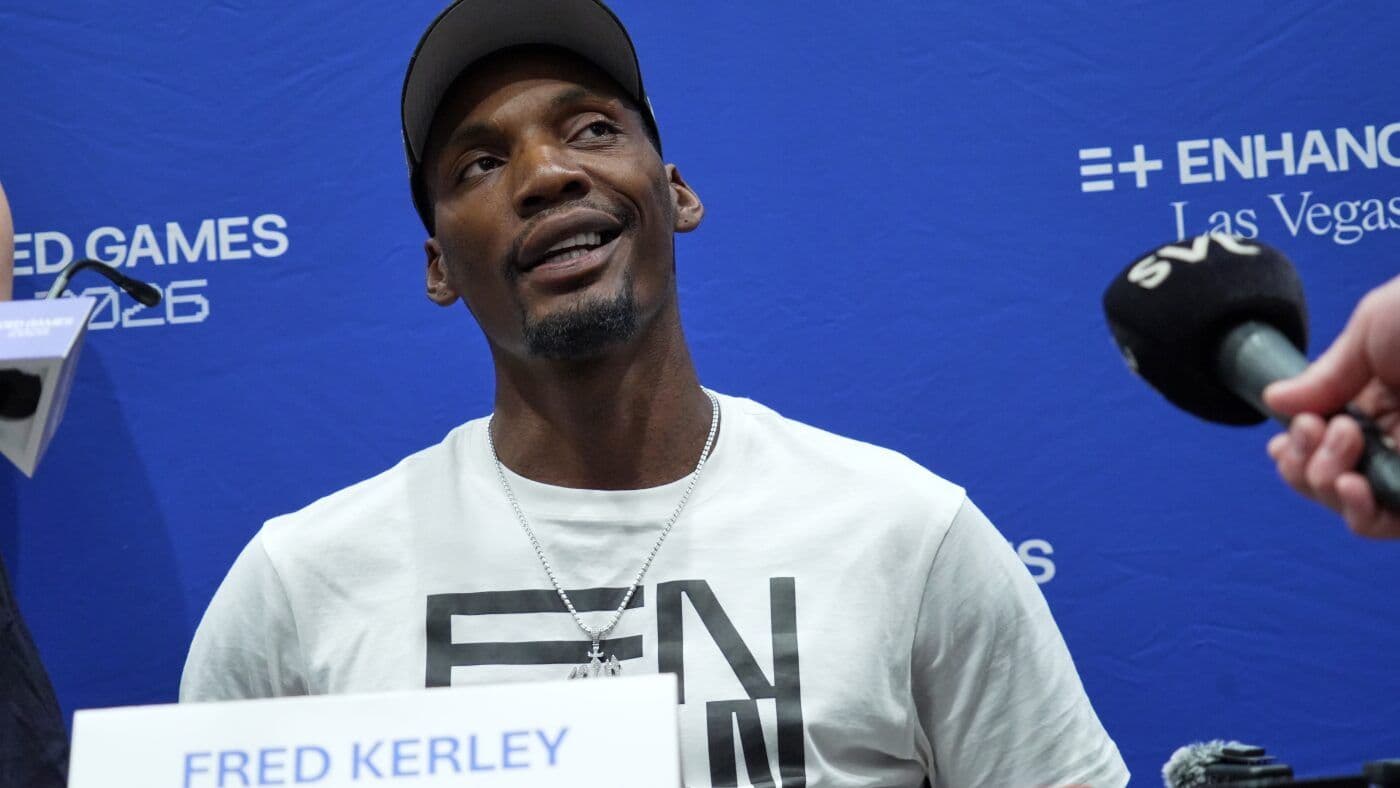
- Fred Kerley – Three-time world champion and two-time Olympic medalist in sprinting
It's worth noting that Kerley was handed a two-year ban from internationally sanctioned competition in March after missing mandatory drug tests — a procedural violation that does not automatically indicate drug use. Armstrong and Kerley have both publicly stated they plan to compete without using performance-enhancing substances.
The majority of athletes preparing for the games trained in Abu Dhabi as part of Enhanced Group's own research study.
What Events Are on the Schedule?
Swimming
- 50-meter freestyle
- 100-meter freestyle
- 50-meter butterfly
- 100-meter butterfly
Track and Field
- 100-meter sprint
- 100-meter hurdles
- 110-meter hurdles
Weightlifting
- Clean and jerk
- Snatch
How Much Money Is at Stake?
The total prize pool stands at an impressive $25 million, according to CEO Max Martin. Each individual event carries a purse of $500,000, with first place earning $250,000. Athletes who break world records in either the 100-meter sprint or the 50-meter freestyle will receive an additional $1 million bonus.
However, these performances — no matter how fast or how strong — will not be officially recognized by governing bodies such as World Athletics, which mandates drug testing for all record-setting efforts.
What Drugs Are the Athletes Using?
Enhanced Group has not disclosed which specific athletes are using which substances, but in the days leading up to the event, the company revealed that:
- 91% of competing athletes used testosterone or testosterone esters
- 79% used human growth hormone
- 62% used stimulants, including Adderall
The company maintains that all substances used are FDA-approved and were prescribed and administered under the supervision of independent medical and scientific commissions. Athletes reportedly followed fully personalized protocols with continuous health monitoring.
For comparison, all of these substances appear on the World Anti-Doping Agency's (WADA) prohibited list, which the International Olympic Committee strictly enforces.
What Do Medical Experts Say?
Not everyone is convinced that medical supervision makes this endeavor safe or ethical.
Dr. Aaron Baggish, a professor of medicine at the University of Lausanne in Switzerland — who spent two decades working with professional sports teams in Boston — was approached to serve as a physician for the Enhanced Games and immediately declined.
"I understand that there's a very large commercial opportunity for this company, but it is something I think borders on the lines of ethics," Dr. Baggish said.
He was particularly alarmed by the high percentage of athletes using testosterone, noting that research has linked elevated doses of the hormone to an increased risk of heart disease. He also cautioned against conflating FDA approval with safety in this context.
"FDA approval does not equate with safe use when the drug is not used the way the FDA has approved it," Baggish explained, drawing a distinction between medically prescribed testosterone therapy and the high-dose use aimed at athletic enhancement.
Perhaps most sobering was his warning about long-term consequences: "We have to be careful not to confuse short-term success with long-term implications. What happens to them three years from now, five years from now?"
He compared the role of medical supervision at such an event to a doctor standing by while someone smokes cigarettes — oversight alone doesn't neutralize the underlying harm.
Who Founded the Enhanced Games?
The Enhanced Games was founded by Aron D'Souza, an Australian entrepreneur and lawyer who previously collaborated with Peter Thiel in legal action against Gawker Media. D'Souza announced the concept in 2023, saying the idea came to him in 2022 "during a moment of reflection."
"I imagined a new kind of competition — one where science, sport, and society could evolve together, where we stopped apologizing for progress and started to embrace it," D'Souza said at the launch event.
D'Souza stepped down as CEO in November, with Max Martin taking over leadership of the company. In response to concerns raised by the International Federation of Sports Medicine, D'Souza previously argued that the Enhanced Games aim to "reduce the risks associated with unregulated practices and bring them under medical oversight," stressing that the event does not promote reckless drug use but rather clinically supervised performance enhancement.
The Bottom Line
The Enhanced Games sits at a contentious crossroads of sport, science, commerce, and ethics. Supporters argue it represents a bold reimagining of athletic competition — transparent, medically monitored, and financially rewarding. Critics, including leading sports medicine professionals, warn that no amount of oversight fully eliminates the long-term health risks associated with high-dose performance-enhancing drug use.
What's certain is that the event will generate conversations about the future of sports, the limits of human performance, and where society draws the line between innovation and recklessness.