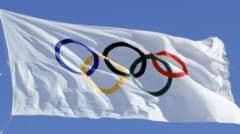
Russia Set to Return to Olympic Competition at LA 2028 After IOC Lifts Suspension
The International Olympic Committee has provisionally lifted Russia's suspension, potentially allowing Russian athletes to compete under their national flag at the 2028 Los Angeles Olympics.
Russia Could Compete Under Its Own Flag at the 2028 Los Angeles Olympics
The International Olympic Committee has provisionally removed Russia's suspension from international Olympic competition, opening the door for Russian athletes to represent their country at the 2028 Games in Los Angeles. The decision marks a significant shift in the geopolitical landscape of global sport and has already sparked fierce debate among athletes, governments, and sports officials worldwide.
Why Was Russia Banned in the First Place?
The IOC suspended the Russian Olympic Committee in 2023 following Russia's ongoing military invasion of Ukraine. The ban was specifically triggered after the Russian Olympic Committee extended its authority over sports organizations operating in Ukrainian territories that Russia had occupied — a move the IOC viewed as a direct violation of its rules.
The IOC now contends that this particular issue is no longer present, effectively rendering the original ban obsolete from a regulatory standpoint. As a result, the organization has declared the suspension "no longer applicable," provided that Russian athletes satisfy all relevant anti-doping requirements.
What Does This Mean for Russian Athletes?
Russian competitors had previously been permitted to participate in both the 2024 Paris Summer Olympics and the 2026 Milan Winter Olympics, but only as approved neutral athletes — stripped of their national identity, flag, and anthem. Just 32 athletes from Russia and Belarus combined competed in Paris, earning a total of five medals between them. This stands in stark contrast to Russia's presence at the 2021 Tokyo Olympics, where over 300 athletes represented the country and collectively claimed 71 medals.
With the provisional lifting of the suspension, Russian athletes may now be eligible to compete as full national representatives in Los Angeles. However, the IOC has not yet made a final determination on whether Russia will be permitted to display its national flag, colors, or play its anthem during the Games.
Russia Welcomes the IOC's Ruling
Russian officials responded positively to the announcement. Sports Minister Mikhail Degtyarev took to Telegram to declare that the Olympic movement must remain free of political influence, describing the IOC's decision as a clear signal in that direction. He confirmed that Russia intends to participate in qualification events for the 2028 Olympics.
Condemnation From Ukraine and European Leaders
The decision has drawn sharp criticism from Ukrainian athletes and European governments. Ukrainian skeleton racer Vladyslav Heraskevych — who was disqualified from the 2026 Winter Olympics after displaying a message about Ukraine on his helmet — called the ruling "absolutely shameful," saying it felt as though the IOC was abandoning Ukraine during its most difficult hour.
UK Culture Secretary Lisa Nandy also voiced strong opposition, stating she was "appalled" by the move. She reiterated the British government's position that the Russian state should not be represented in international sport while its full-scale invasion of Ukraine continues. Nandy also raised concerns about Russia's track record of anti-doping violations, arguing that its return would undermine the integrity of competition for clean athletes around the world.
The IOC's Justification and the Broader Debate
Despite strongly condemning Russia's invasion of Ukraine, the IOC has drawn a distinction between a government's military actions and the rights of individual athletes to compete. The organization argues that athletes should not be penalized for the political decisions of their governments.
IOC President Kirsty Coventry had previously signaled this philosophical direction in February, emphasizing the importance of sport as a neutral space where athletes can compete free from governmental politics. Her comments were widely interpreted as a precursor to lifting Russia's restrictions.
A key precedent was set in March when the International Paralympic Committee allowed Russian athletes to compete under their national flag at the Winter Paralympics for the first time since 2014. While Ukraine and several European nations condemned that move, no athletes boycotted the actual competition — though some did skip the opening ceremony. The IOC is expected to monitor whether a similar response plays out in Los Angeles.
Accusations of Double Standards
Behind the scenes, there is acknowledgment within the IOC that concerns about double standards also played a role in the decision. Critics have pointed out that other nations involved in military conflicts have not faced similar Olympic bans, raising questions about consistency in the application of such sanctions.
Opponents of the reinstatement, however, argue that Russia's suspension should remain firmly in place until it withdraws from Ukrainian territory. They warn that welcoming Russia back into the Olympic fold could serve as a propaganda victory for President Vladimir Putin and potentially embolden further aggression.
World Athletics Holds a Different Position
Notably, not all international sports bodies are aligned with the IOC's approach. In May, World Athletics rejected an IOC recommendation to lift the ban on Belarusian athletes and teams competing under their national flag — signaling that the path back to full international participation remains contested across different sports governing bodies.
As the 2028 Los Angeles Olympics draw closer, the question of Russia's participation is set to remain one of the most politically charged issues in international sport.