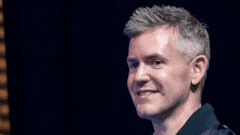
Paralympian John McFall Edges Closer to Making History as First Disabled Astronaut in Space
NHS surgeon and Paralympic bronze medalist John McFall is one step closer to becoming the first physically disabled astronaut to live and work in orbit.
Paralympian Surgeon Takes Giant Leap Toward Space History
John McFall, a Paralympic bronze medalist turned NHS surgeon, is inching closer to a milestone that could redefine the boundaries of human space exploration. The Hampshire native is on track to become the first physically disabled astronaut to live and work aboard an orbital space station — a prospect that seemed unimaginable just a few years ago.
From Motorcycle Accident to Space Candidate
McFall lost his right leg in a motorcycle accident at the age of 19, a life-altering event that could have ended his athletic ambitions before they began. Instead, he defied the odds, learning to run again while studying at Swansea University and training alongside Welsh Paralympic athletes. His determination paid off when he claimed a bronze medal at the 2008 Beijing Paralympic Games.
In 2022, the European Space Agency selected McFall as part of a groundbreaking feasibility study examining whether physically disabled individuals could safely live and work in space — a first in the history of astronaut recruitment.
UK Government Agreement Opens the Door
A newly signed agreement between the UK government and American commercial space company Vast has brought McFall significantly closer to launch. Under the deal, the UK Space Agency will be empowered to secure private sponsorships to fund a dedicated spaceflight for him, removing one of the key logistical barriers standing between the father-of-three and orbit.
McFall was careful to temper expectations, acknowledging he is "not guaranteed to get to space" but describing himself as "certainly one step closer." A significant milestone was already achieved last year when he was declared medically fit for a long-duration mission to the International Space Station (ISS).
Groundbreaking Research on the Agenda
Should McFall make it to the ISS, his mission would carry considerable scientific weight. Planned research areas include:
- Human physiology and musculoskeletal adaptation in a microgravity environment
- Prosthetic limb performance under weightless conditions
- Human movement and balance in space
The findings could have far-reaching implications not only for future disabled astronauts but also for medical science on Earth.
Rigorous Training Stands Between Him and the Stars
McFall has been candid about the enormous demands of astronaut preparation. Speaking to BBC Breakfast, he outlined a training regime that spans wilderness and sea survival, classroom instruction in physics, engineering, biology, and human performance, as well as behavioral training.
"And don't forget the parabolic flights — they're also awesome fun," he added with characteristic enthusiasm.
When asked what qualities define a successful astronaut candidate, McFall drew on both his sporting and medical careers:
"You've got to be a reasonably rational and pragmatic person, someone who's good at problem solving, good at communicating, able to make difficult decisions under pressure. My experiences standing on the start line at the Paralympic Games, combined with working long hours as a surgeon through tough situations and difficult conversations with patients and families — all of those skills translate remarkably well to astronaut training and life in space."
Family Keeps His Feet Firmly on the Ground
Despite the magnitude of what he is pursuing, McFall admits his children have a very different perspective on the whole affair. "My kids are only excited because, apparently, I promised if I go to space, they get a dog," he laughed. "I can't renege on it now."
For a man who has already overcome extraordinary adversity to compete at the highest level of Paralympic sport and serve as a frontline NHS surgeon, the prospect of space may simply be the next logical step in a life defined by pushing boundaries.