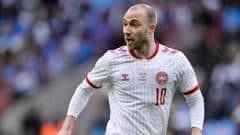
How Christian Eriksen's Chest Device Saved His Life — Again
Christian Eriksen collapsed during a Denmark vs Ukraine match, but a tiny implanted device in his chest acted fast. Here's how it worked.
Christian Eriksen Collapses — And His Implanted Device Steps In
Christian Eriksen is recovering at home with his family after collapsing during an international football match between Denmark and Ukraine on Sunday. The 34-year-old Danish midfielder lost consciousness on the pitch, but was able to walk off under his own power — a remarkable outcome made possible by a small life-saving device implanted in his chest.
Denmark's team physician confirmed that the device responded exactly as intended, and Eriksen himself took to social media to reassure fans. "My ICD did exactly what it was designed to do: protect me when I needed it," he wrote.
What Is an ICD and How Does It Work?
An ICD, or implantable cardioverter defibrillator, is a compact medical device designed to monitor the heart's rhythm in real time. When it detects a dangerous irregularity, it acts immediately to correct it — often by delivering a precisely timed electrical shock to reset the heart's normal pattern.
Professor Aneil Malhotra, a sports cardiologist at Manchester Metropolitan University's Institute of Sport, describes the sensation as feeling like "a thump to the chest." He likens the process of resetting the heart to "switching a computer off and on again," and considers ICDs to be "highly effective devices."
Two Main Types of ICD
There are two primary versions of the device currently in use:
- Subcutaneous ICD: Fitted just beneath the skin, typically near the armpit, with wires running under the skin toward the chest. It functions similarly to a miniature external defibrillator.
- Transvenous ICD: Connected directly to the heart, this type also doubles as a pacemaker, sending electrical signals to regulate a heart that beats too slowly.
In Eriksen's case, the device most likely detected a dangerously fast or abnormal heartbeat and delivered a corrective shock before the situation became life-threatening.
Eriksen's History With Cardiac Arrest
This was not Eriksen's first brush with cardiac danger. Back in 2021, during a UEFA European Championship match, he suffered a full cardiac arrest — a condition in which the heart stops pumping blood around the body entirely. He collapsed and lost consciousness on the pitch, and was only revived after teammates formed a protective circle around him while medical staff administered CPR and used a portable defibrillator.
Medical professionals widely credit the speed and quality of that emergency response with saving his life.
Following that incident, doctors implanted an ICD in Eriksen's chest during a procedure performed shortly after his recovery. This time around, that internal device made all the difference — kicking in automatically and eliminating the need for external intervention.
"Because he had the ICD in place, he didn't have to wait," Professor Malhotra explained.
Professor Michael Papadakis, a cardiology specialist at St George's, University of London, refers to the ICD informally as a "shock box." He describes its function plainly: "It looks after your rhythm and, if it detects a very fast, life-threatening irregularity, it will shock you out of it and jump-start the heart."
Why Do Young Athletes Experience Cardiac Arrests?
A cardiac arrest differs significantly from a heart attack. Rather than being caused by a blocked artery, cardiac arrest occurs when the heart's electrical system malfunctions, causing it to stop beating effectively. In younger individuals, this can stem from a range of causes — genetic conditions, heart inflammation following an infection, or even an adverse reaction to medication.
In rare cases, no definitive cause is ever identified, and the event is classified as a one-off occurrence.
While serious heart events in young professional athletes are uncommon, they are not without precedent. Eriksen's first collapse in 2021 came nine years after former Bolton Wanderers midfielder Fabrice Muamba suffered a near-fatal cardiac arrest at Tottenham, and nearly two decades after Cameroonian midfielder Marc-Vivien Foe tragically died after collapsing during a match in Lyon.
Muamba retired from professional football at 24 on medical advice. Others, however, have been cleared to continue playing with an ICD fitted. Former Manchester United and Ajax midfielder Daley Blind returned to top-level football in 2019 after being diagnosed with a heart condition, and Luton Town captain Tom Lockyer — who collapsed during a Premier League match at Bournemouth in 2023 — eventually made a comeback with Bristol Rovers.
A Broader Public Health Warning
Eriksen's second high-profile collapse has reignited important conversations about cardiac health in young people beyond professional sport.
According to the UK charity Cardiac Risk in the Young (CRY), sudden cardiac arrests claim the lives of 12 people under the age of 35 in the UK every single week.
"This second, sudden collapse of Eriksen is a reminder of the potentially devastating impact that cardiac conditions can have on so many young people every day in the UK and across the world," said Dr Steve Cox, chief executive of CRY.
Perhaps most alarming is his additional warning: in approximately 80% of cases, there are no warning signs whatsoever before a person collapses.
Screening initiatives in the UK, which test the hearts of healthy individuals aged between 14 and 35, have revealed that roughly one in every 300 young people may be living with a dangerous underlying cardiac condition — completely unaware.
Eriksen's story, while frightening, is also a testament to the life-saving potential of modern cardiac technology — and a powerful argument for expanding awareness and access to heart screening programmes worldwide.