How Cameras, Body Scans, and Smart Sensors Are Ending Blown Calls in Soccer
The 2026 World Cup is deploying cutting-edge digital twin technology, AI-powered cameras, and smart ball sensors to make officiating more accurate than ever.
The Most Technologically Advanced Officiating System in Sports History
Soccer's Video Assistant Referee (VAR) system and Semi-Automated Offside Technology (SAOT) have been reshaping how the game is officiated for several years. But the technological setup being deployed at this summer's World Cup pushes those boundaries further than any previous sporting event — not just within soccer, but across elite sports globally.
Every match will feature a dense network of sensors, high-resolution cameras, and sophisticated computer vision software working in concert. The standout innovation this time around is the use of digital twins — precise virtual replicas of every competing athlete — which promise to bring a new level of accuracy to officiating decisions that were once left to human judgment alone.
What Are Digital Twins and Why Do They Matter?
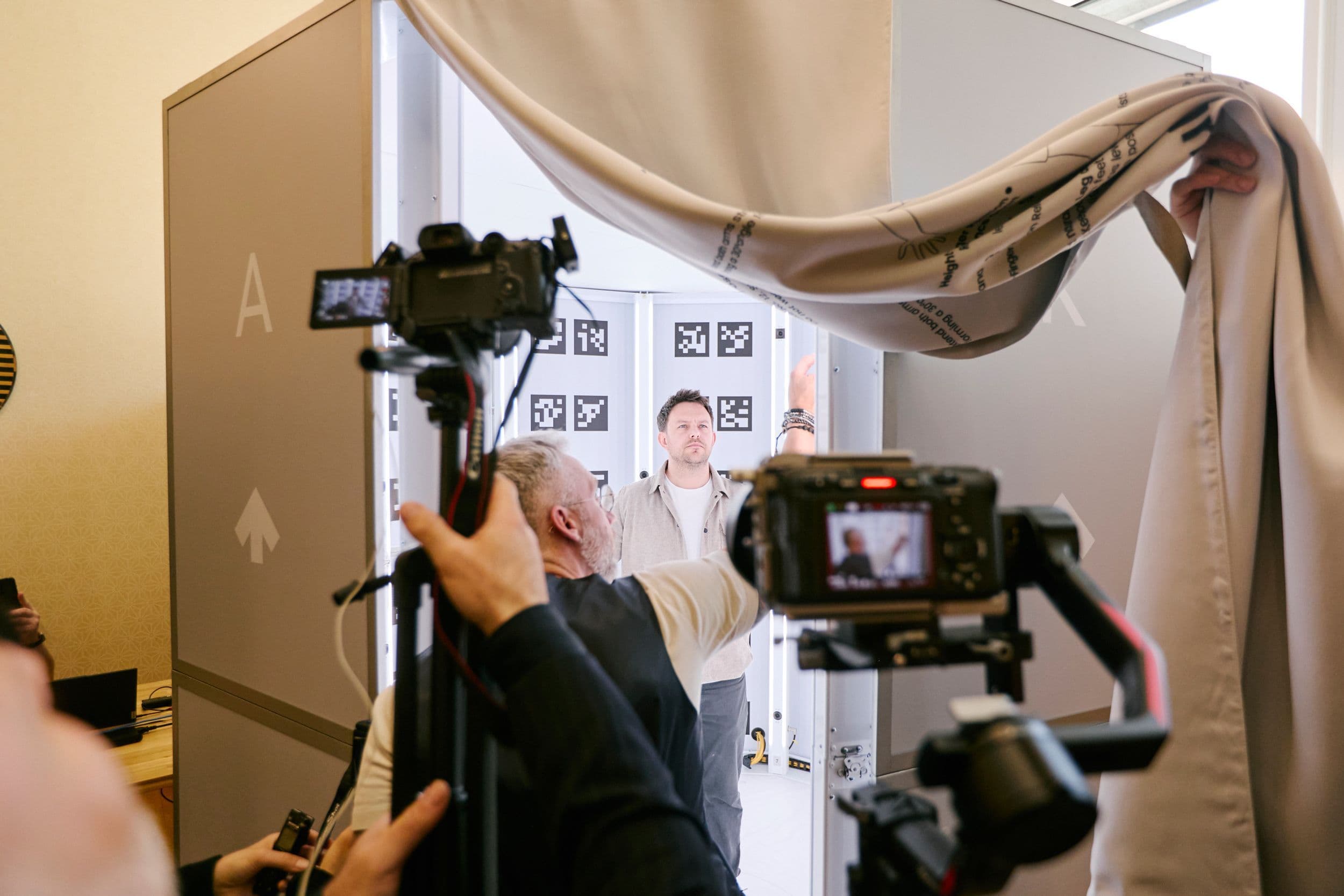
In preparation for the tournament, all 2026 World Cup players underwent a comprehensive 360-degree body scan conducted by FIFA's technology partner, Lenovo. These scans capture a player's exact body shape, muscle definition, limb proportions, and even shoe size with an accuracy of just 1 to 2 millimeters — a dramatic improvement over the generic avatars previously used in VAR systems.
"That's an order of magnitude improvement on an ordinary avatar," says Art Hu, Lenovo's Global Chief Innovation Officer.
These digital replicas are fed into the Hawk-Eye optical tracking system, which continuously monitors more than two dozen skeletal reference points on each player throughout the match. The real challenge, as Hu explains, is taking a scan captured while a player stands motionless and accurately applying it to dynamic, real-time gameplay — sprinting, leaping, sliding — all while consuming enormous amounts of computing power.
FIFA tested this upgraded system at the Club World Cup and Intercontinental Cup in 2025, as well as various youth tournaments over the preceding 18 months.
Upgraded Cameras and a Smarter Ball
Hawk-Eye's Enhanced Optical Tracking
Hawk-Eye returns as the tournament's official optical tracking provider, this time using 16 high-resolution cameras — up from 12 at the 2022 World Cup — to continuously capture player movement across the entire pitch. This expanded camera array gives officials a more complete and precise picture of the action at any given moment.
Inside the Ball: 500 Data Points Per Second
Sports wearables company Kinexon is once again supplying the digital intelligence embedded inside the match ball. The 2026 sensor setup combines an ultrawide-band sensor with an IMU unit that includes both an accelerometer and a gyroscope — the latter being essential for tracking ball spin. Together, these sensors record the ball's exact position and any contact it receives 500 times per second.
One key physical change from 2022 is how the sensor is housed inside the ball. Previously, the sensor sat suspended at the ball's center using a string sling. Now, Adidas has engineered a small vulcanized bladder positioned along the ball's interior wall to hold the sensor.
"That vulcanization is just way more stable than those strings, which had hooks that could break easier," explains Maximillian Schmidt, Kinexon's cofounder and managing director.
Because the sensor is no longer centered, careful counterbalancing was required to prevent any wobble during play. The entire sensor assembly weighs just 13 grams, though extensive calibration and impact testing were necessary given the sensor's new position closer to the ball's surface.
How These Systems Change the Officiating Process
Faster, More Accurate Offside Calls
One of the most visible changes for fans will be how offside decisions are handled. Rather than allowing play to continue after a potential violation and only stopping the game if a significant event like a goal or penalty occurs, the upgraded VAR system will now immediately alert sideline officials when an obvious offside is detected — stopping play right away and reducing time wasted on prolonged reviews.
For the rare cases where a violation occurs in the split second between video frames, the ball sensor's 500-per-second data capture — far exceeding the 60 frames per second of broadcast video — fills in the gaps to ensure nothing is missed.
FIFA's director of innovation, Johannes Holzmüller, is confident the enhanced system will get the right answer even in extremely close situations, such as "when there's only one toe offside."
Expanded VAR Applications
The previous iteration of digital twin technology was already being used to review plays leading up to goals and penalty kicks. The new system extends that capability to include:
- Red card incidents
- Cases where an official penalizes the wrong player
- Corner kick decisions, which VAR can now overturn when an error is detected quickly enough to alert field referees without halting play
Calls that require longer processing time will still not be reviewed via VAR, as they would cause unacceptable delays to the flow of the game.
The 3D Goalkeeper View
Perhaps the most innovative feature within this year's VAR setup is the 3D goalkeeper perspective visualizer. This tool renders the goalkeeper's exact line of sight during a play and uses digital input data to determine whether an attacker in an offside position was interfering with the keeper — a violation that has long existed in the rulebook but has historically been difficult to enforce with confidence given the number of players and the scale of the pitch.
Is the Technology Worth the Investment?
It's a fair question to ask whether the extraordinary financial and technical resources required to gain an inch or two of precision on a handful of rare calls throughout an entire tournament is truly justified. Holzmüller openly acknowledges that all of these advances might ultimately affect only a small number of decisions across 104 matches.
But from FIFA's standpoint, there is no ambiguity about the value of getting those calls right at the world's most-watched sporting event.
"We have to bring the best technology to the World Cup," Holzmüller says. "That's our goal."
As digital twin models grow more powerful and computing costs continue to fall, expect this technology to spread rapidly — not only to other major soccer competitions, but across elite sports worldwide, where its applications in athlete health monitoring and performance analysis are equally promising.