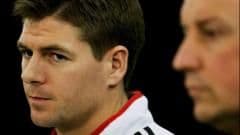
From Istanbul Glory to Transfer Chaos: The Untold Story of Gerrard's Near-Exit from Liverpool
Steven Gerrard called the 2005 Champions League final the best night of his life — yet weeks later, he almost walked away from Liverpool forever.

From Istanbul Glory to Transfer Chaos: The Untold Story of Gerrard's Near-Exit from Liverpool
Steven Gerrard immortalized himself in football history by leading Liverpool to one of the sport's most dramatic comebacks in the 2005 Champions League final. Yet, remarkably, within just two months of that unforgettable triumph, he was ready to turn his back on the club he had loved since childhood.
A new Netflix documentary exploring Liverpool's legendary Istanbul victory sheds fresh light on the turbulent emotional journey Gerrard experienced during that pivotal summer — one that nearly ended his Anfield career before it truly reached its peak.
The Greatest Night That Almost Led to Goodbye
In May 2005, Gerrard captained Liverpool through what is widely regarded as the greatest European Cup final in history. Trailing AC Milan 3-0 at half-time, the Reds staged a breathtaking second-half fightback, eventually clinching the club's fifth European Cup title in a dramatic penalty shootout.
For supporters, it felt like the moment that would cement Gerrard's loyalty to Liverpool permanently. Interest from Real Madrid and Jose Mourinho's Chelsea — the reigning Premier League champions at the time — had been circling, but surely no player walks away after a night like that.
As it turned out, they were wrong.
Six weeks after the final whistle in Istanbul, Gerrard publicly announced he was leaving Liverpool. Then, just as suddenly, he reversed his decision entirely.
A Head Like a Box of Frogs
Speaking candidly in the documentary, the 45-year-old admits he was in a deeply unsettled mental state during that period.
"Mourinho was on the phone — the best manager in the world at the time, offering silly contracts, which would naturally turn your head," Gerrard recalls. "Chelsea were spending fortunes. He was guaranteed success there."
"I can't park my relationship with Liverpool," he continues. "When they came, I didn't know which way to go. Mentally, I was in a bad place. My head was like a box of frogs."
Beyond the lure of Chelsea's wealth and ambition, Gerrard points to a more personal source of his uncertainty — his fractured relationship with Liverpool manager Rafael Benitez.
"I felt like he didn't rate me, he didn't trust me, he didn't want me," Gerrard says. "I've always been clear that I want to be a Liverpool player and a Liverpool player only, but with that doubt and with that coldness, that's when your head gets turned."
Benitez's Tough Love and Tactical Obsession
The documentary paints a vivid picture of the cultural clash between Gerrard's passion-driven approach to the game and Benitez's cold, analytically precise management style.
"My game was about emotion, passion, desire, commitment — for the badge, for the family," Gerrard explains. "I felt like he wanted to remodel me entirely."
Benitez, for his part, pushed back against the sentiment-first culture he inherited at Anfield.
"When I joined Liverpool, there was a culture based on emotion," the Spaniard says. "Football requires more than that. If you're really emotional, you don't find the way to success."
Former Liverpool defender and Sky Sports pundit Jamie Carragher, who played alongside Gerrard throughout that era, believes his teammate simply needed human reassurance — something Benitez was constitutionally unable to provide.
"Rafa Benitez was never going to put an arm around his shoulder," Carragher says. "He's very unemotional."
The Michael Owen Parallel
Gerrard's near-departure was not an isolated incident. A year earlier, striker Michael Owen — another product of Liverpool's celebrated academy — had grown similarly disillusioned with life at Anfield.
Following Gerard Houllier's dismissal in the summer of 2004, after Liverpool finished a staggering 30 points behind champions Arsenal, Benitez was appointed as the new manager. His very first challenge was persuading his two most important players to remain at the club.
Benitez travelled to Portugal, where Gerrard, Owen and Carragher were on international duty with England at the European Championship. Rather than delivering a warm sales pitch, the new manager launched straight into tactical demands.
"He was on me immediately," Gerrard recalls. "'I don't want this, I don't want that. You can't play in this team unless we trust you.' It was intense. And I was thinking to myself, 'I guarantee you, you'll need me before I need you.'"
Owen's experience was equally unimpressive. The 2001 Ballon d'Or winner was told by Benitez that he needed to learn to "turn on the ball quicker."
"That's absolutely what I was probably the best in the world at, at the time," says Owen, now 46. "He certainly didn't go any way to convincing me to stay, put it that way."
In August 2004, Owen departed for Real Madrid in a deal worth £8 million.
Benitez, however, remembers the meeting differently. "You can see when you talk with someone if he's happy with the conversation," he says. "I think they were quite happy."
Time Heals — And Changes Perspectives
Despite the tension and emotional turbulence of those years, Gerrard has arrived at a place of genuine appreciation for what Benitez brought to his career and to the club.
"I look back at Rafa and think he's the best coach I have ever worked with," he says — a remarkable endorsement from a player who once nearly fled Anfield to escape him.
It is a reminder that in football, as in life, the relationships that challenge us the most can ultimately shape us the best.
