F1's New Era: Racing Thrills, Qualifying Concerns, and Safety Questions After Three Rounds
Formula 1's biggest-ever rule overhaul has sparked debate over artificial racing, diminished driver skill, and serious safety concerns after a dramatic opening month.
Formula 1 at a Crossroads: What the First Month of the New Rules Has Revealed
The enforced pause in Formula 1's calendar — triggered by ongoing conflict in the Middle East — has given the sport a rare opportunity to pause and reflect. After three turbulent, incident-filled opening races under the most sweeping regulatory changes in the sport's history, there is plenty to unpack. From the nature of on-track battles to the integrity of qualifying laps, and from driver skill to outright safety, the new rules have raised as many questions as they have answered.
A Racing Revolution — But Is It the Right Kind?
Even before the first wheel turned under the new regulations, the paddock was alive with debate. Now that the season is underway, those conversations have only grown louder.
The new power units feature a precise 50-50 split between internal combustion and electrical energy, and they come equipped with two driver-activated modes: 'overtake' and 'boost'. Together, these systems have fundamentally altered the nature of wheel-to-wheel competition — and not everyone is happy about it.
Four-time world champion Max Verstappen has been among the most vocal critics, comparing the new-look Formula 1 to the popular video game Mario Kart and going as far as branding the whole concept "a joke." His frustration stems from what he calls "anti-driving" — a style of racing where position changes are dictated as much by energy levels as by genuine driver ability.
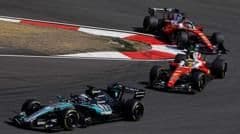
Yet not everyone shares Verstappen's disdain. Lewis Hamilton, now racing for Ferrari alongside Charles Leclerc, offered a strikingly different perspective after the Chinese Grand Prix. He described his multi-lap battle with his teammate as "the best fight I've had in over ten years" and declared it felt like "racing the way it should be."
The 'Yo-Yo' Effect: Entertainment or Gimmick?
The term most frequently used to describe the new racing dynamic is "yo-yo racing." Here's how it works: the 'overtake' mode grants any driver within one second of the car ahead the ability to harvest an additional 0.5 megajoules of electrical energy per lap. When combined with the 'boost' override, which allows drivers to demand maximum electrical output on command, the result is a series of lead changes that can continue for several laps at a stretch.
In previous seasons, once a car made a successful pass, that was typically the end of the battle. Under the current rules, however, cars can trade positions repeatedly as the energy advantage shifts back and forth between them.
Hamilton defended this style of racing by drawing a parallel with karting:
"If you go back to karting, it's the same thing — people going back and forth, back and forth, and you can never break away. Nobody has ever called karting 'yo-yo racing.' It's the best form of racing, and Formula 1 has not been the best form of racing for a long, long time."
World champion Lando Norris offered a more measured take. While acknowledging that the new format looks spectacular on television and appears to be winning over fans, he raised an important caveat:
"Some of that racing happens simply because the guy who overtakes uses up his battery and then has absolutely zero left — he becomes a complete passenger. You're not exactly racing at your best in that situation."
Norris captured a sentiment shared by many in the paddock: the new F1 is visually exciting, but something about it feels slightly hollow upon closer inspection.
The Qualifying Problem: Is the Art of the Lap Being Lost?
If the racing debate splits opinion, there is near-universal agreement on one thing: the magic of a pure qualifying lap has been significantly diminished.
Qualifying has always been one of Formula 1's most captivating spectacles — a driver extracting every last fraction of a second from their machine over a single, flat-out effort. Under the new rules, that concept no longer truly exists.
The demands of energy management mean that some of the sport's most iconic and challenging corners have effectively been downgraded. Two-time world champion Fernando Alonso has referred to certain sections of track as "charging zones" — areas where drivers are actually required to harvest energy rather than deploy it, fundamentally changing the nature of the challenge.
In some cases, drivers are being forced to 'lift and coast' — easing off the throttle before corners to allow the electric motor to run against the combustion engine and recover energy — even during qualifying laps. The result is that a qualifying effort is no longer a true flat-out attack on the clock.
Suzuka: A Blueprint for What's Being Lost
The Japanese Grand Prix at Suzuka served as a particularly telling test case. Widely regarded as the most technically demanding circuit on the Formula 1 calendar, Suzuka has long been considered the ultimate examination of both driver and machine.
Yet the new rules appeared to rob the circuit of some of its legendary character. The iconic Esses section — arguably the most technically intricate stretch of racing tarmac on Earth — was designated a "zero kilowatt zone," meaning teams were prohibited from deploying any electrical energy through it. In practical terms, this meant the cars were running at roughly half their total power output through one of the most celebrated sequences in motorsport.
McLaren team principal Andrea Stella highlighted the specific impact on Degner One, a corner that drivers typically cite among the most challenging on the entire calendar:
"Degner One has always been one of those corners that drivers will mention when asked about the toughest challenges of a season. That's the kind of corner that defines great circuits."
The implication was clear: corners that once demanded extraordinary bravery and precision are being softened by the constraints of the new energy framework.
Safety in the Spotlight
Beyond the sporting and philosophical debates, a more urgent concern has emerged: driver safety.
Oliver Bearman's terrifying crash during the Japanese Grand Prix — recorded at 191 miles per hour — has brought long-standing driver concerns sharply into focus. The speed differentials created by the new power modes, where one car can rapidly close on another that has exhausted its energy reserves, present a genuine danger that the sport's governing bodies must address urgently.
Drivers have been raising concerns about these speed gaps for some time, and Bearman's accident has transformed those warnings into an undeniable priority.
The Bigger Picture
At its core, the debate over Formula 1's new rules reflects a fundamental tension about what the sport is — and what it should be.
On a basic level, a racing driver's job is to pilot their car around a circuit as quickly as possible. By that measure, the challenge remains largely unchanged. But Formula 1 has always aspired to be something more: the absolute pinnacle of human and mechanical performance, where the very best drivers push themselves and their machines to the outermost limits of possibility.
By that more elevated standard, the new regulations have introduced compromises that many within the sport find difficult to fully embrace. The racing may be more entertaining for casual viewers, but for purists — and for the drivers themselves — something intangible has been lost.
As the sport heads into its mid-season break, the pressure is on F1's leadership to take stock of these issues and find a path forward that preserves both the spectacle and the soul of the world's most technologically advanced motorsport.