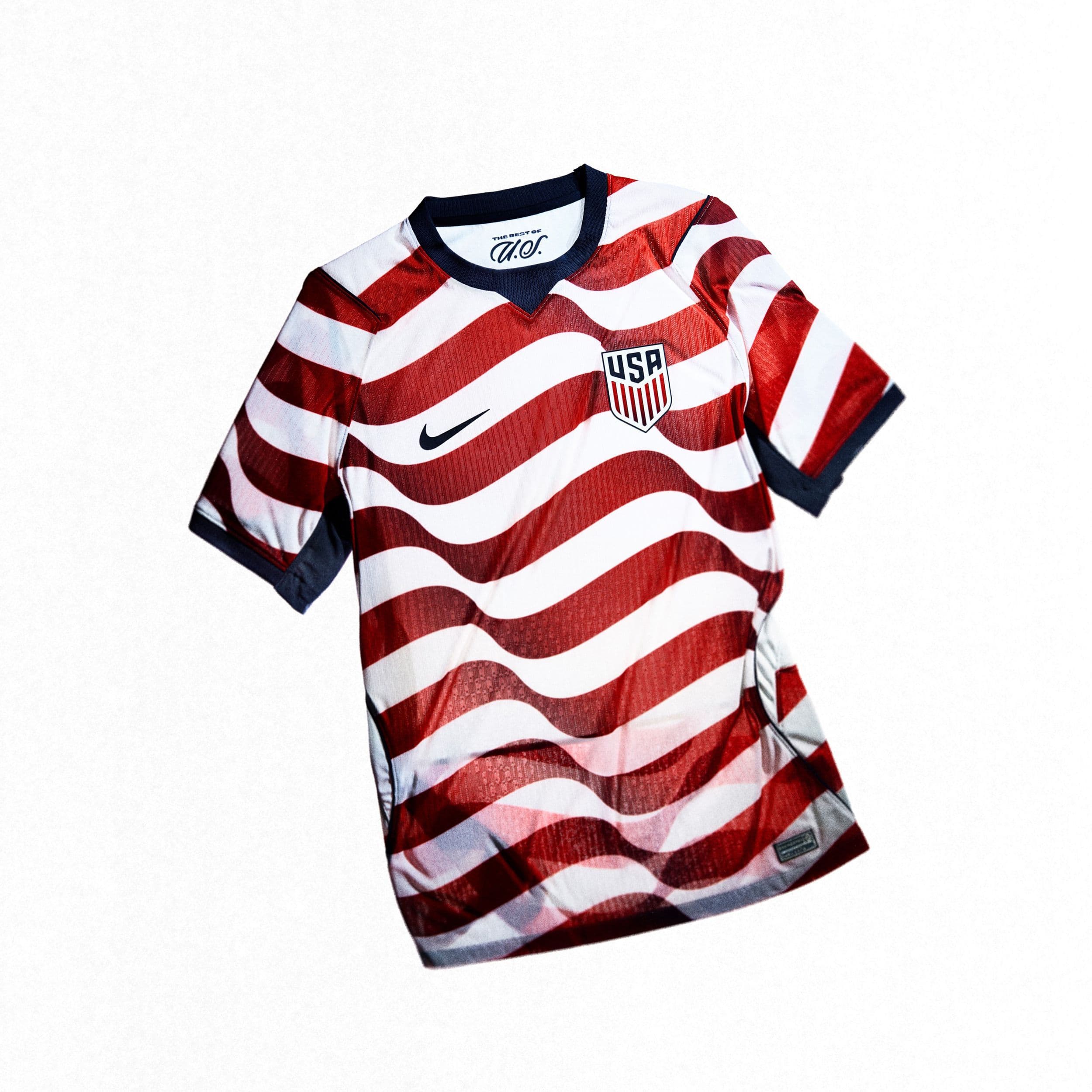
Can Nike's Recycled World Cup Kits Actually Fix Fashion's Waste Crisis?
Nike is making headlines with chemically recycled World Cup uniforms, but experts warn the technology is far from ready to transform everyday fashion.

Nike's Recycled Uniforms Make Headlines — But Is It Enough?
Athletes competing in upcoming World Cup matches may step onto the pitch wearing something unprecedented: uniforms crafted from recycled textile waste, potentially including old clothing and fabric scraps. Nike, one of the planet's most powerful apparel companies, is calling this a landmark moment — its first high-performance athletic gear produced entirely from textile waste using what it describes as "advanced chemical recycling."
Company executives and various media outlets have framed these jerseys as a sign of things to come — a glimpse into a future where clothing can be endlessly recycled in a truly "circular" system. But scientists and sustainability experts say that optimistic picture needs some serious reality-checking.
What Chemical Recycling Actually Means
Unlike conventional mechanical recycling — which grinds and shreds fabric, degrading fiber quality so severely that new material must be blended with 70 to 80 percent virgin inputs — chemical recycling uses industrial solvents to break textiles down to their fundamental molecular building blocks. These chemical units can then theoretically be re-spun into brand-new fabric with no loss in quality.
One specific method, known as methanolysis, has shown genuine promise in laboratory settings. Research confirms it can produce polyester that rivals virgin material in performance, and that it can maintain that quality across multiple recycling cycles. On paper, this is exactly the kind of circular solution the fashion industry desperately needs.
Nike has already signed sourcing agreements with two chemical recycling companies to pursue this vision: Swedish startup Syre and US-based Loop Industries. Several other major fast-fashion brands — including Gap, H&M, and Levi's — have made similar multi-year commitments to comparable firms.
The Uncomfortable Reality Behind the Technology
Despite the enthusiasm, researchers caution that chemical recycling is nowhere near ready for mass adoption. "Yeah, it's technically possible," said Veena Singla, an environmental health researcher at UC San Francisco. "But is it going to happen in reality?" Her answer, shared by many colleagues in the field, is a firm not anytime soon.
The core challenge lies in what chemical recycling actually needs to function well. Diana Ferreira, a textile researcher at the University of Minho in Portugal, explains that the process performs reliably only when working with clean, uniform, polyester-rich material — the kind of controlled industrial scrap you find on factory floors, not in household clothing bins.
Post-consumer textile waste is a far messier proposition. A typical pile of discarded clothes contains cotton, nylon, wool, spandex, and acrylic blends, along with chemical dyes, synthetic coatings, metal zippers, printed labels, and decorative thread. Each of these contaminants makes chemical recycling significantly more difficult, requiring elaborate pre-sorting and multiple rounds of chemical pretreatment before recycling can even begin.
"If we wanted it to work, we would have to have our clothes be 100 percent polyester, and we'd need to get rid of so many toxic chemicals," Singla noted.
Infrastructure Is Another Major Obstacle
Even setting aside the technical hurdles, the physical infrastructure required to collect, sort, and process used garments at scale simply doesn't exist yet. Beth Jensen of the nonprofit Textile Exchange acknowledges that while all available solutions — including chemical recycling — have a role to play in reducing fashion's dependence on fossil fuels, building out that infrastructure remains a distant goal. It's also unclear who would fund and construct it: brands like Nike, national governments, private recyclers, or some collaborative combination of all three.
Fashion's Sustainability Crisis Is Bigger Than Any One Solution
The fashion industry's environmental footprint is staggering. Apparel companies churn out more than 100 billion garments every year, generating up to 10 percent of global greenhouse gas emissions in the process. The overwhelming majority of textiles eventually end up landfilled, incinerated, or shipped to informal dump sites in low-income countries. Nearly 70 percent of all clothing is made from petroleum-derived synthetic fabrics, with polyester — a form of plastic — being the most widespread.
Rather than slowing production, the dominant industry strategy has been to recycle more. For years, that meant turning discarded plastic bottles into new polyester — an approach pioneered by Patagonia in the early 1990s. But that method has drawn legal challenges and regulatory pressure from advocates who argue plastic bottles should be recycled back into bottles, not clothing.
Chemical recycling has emerged as the proposed solution to that dilemma. But even under the most optimistic industry projections for the early 2030s, the volume of chemically recycled polyester would be a drop in the ocean compared to the more than 169 million metric tons of polyester expected to be manufactured annually by that point. Dionisios Vlachos, a chemical engineering professor at the University of Delaware, called Syre's target of producing 3 million metric tons by 2032 "too aggressive."
A Distraction From the Bigger Problem?
Nusa Urbancic, CEO of the nonprofit Changing Markets Foundation, takes a harder line. She argues that chemical recycling functions primarily as "an excuse to keep producing plastic clothes" and that the industry needs to abandon its addiction to polyester altogether — a material that sheds harmful microfibers and may expose wearers to hazardous chemical compounds.
Her broader point is that no recycling technology, however sophisticated, can offset the sheer scale of overproduction. Last year, growth in recycled polyester — mostly sourced from bottles — was completely eclipsed by an even larger expansion in the production of virgin fossil-fuel-based polyester. "Companies need to reverse the trend of fast fashion," Urbancic said. "That means making less clothing overall."
Questions About Transparency and Corporate Credibility
Adding further uncertainty to the picture is a notable lack of transparency from the key players involved. Nike, Syre, and Loop Industries all declined interview requests and did not respond to detailed questions — a silence that experts say makes independent verification of their claims essentially impossible.
Loop Industries' track record raises additional red flags. The company has never posted a profit since its founding in 2010. It is currently under investigation by the U.S. Securities and Exchange Commission following a 2020 report alleging that it systematically misrepresented its technology to investors and regulators. In 2022, the company settled a class-action lawsuit stemming from similar allegations.
Syre, meanwhile, has offered no explanation of how its planned large-scale factory in Vietnam will source and process consumers' used clothing, given that the country currently bans the import of secondhand apparel.
The Verdict: Innovation With Limits
Nike's World Cup uniforms are a genuine technical achievement and a meaningful proof of concept. But they represent a highly controlled experiment — one that bears little resemblance to what would be needed to fundamentally reshape how the fashion industry produces and disposes of clothing.
For the foreseeable future, chemically recycled polyester will likely remain confined to niche, high-visibility applications. Whether Nike's announcement signals the beginning of a true transformation or simply another chapter in fashion's long history of green marketing remains an open question — one that scientists, regulators, and consumers would do well to keep asking.