Brain Cancer Survivor and Elite Swimmer Demands Greater UK Support for Patients
Archie Goodburn, 24, competes at the Commonwealth Games while battling a rare brain cancer — and fighting for better research funding and patient rights.
Elite Swimmer Living with Rare Brain Cancer Takes Fight to Westminster
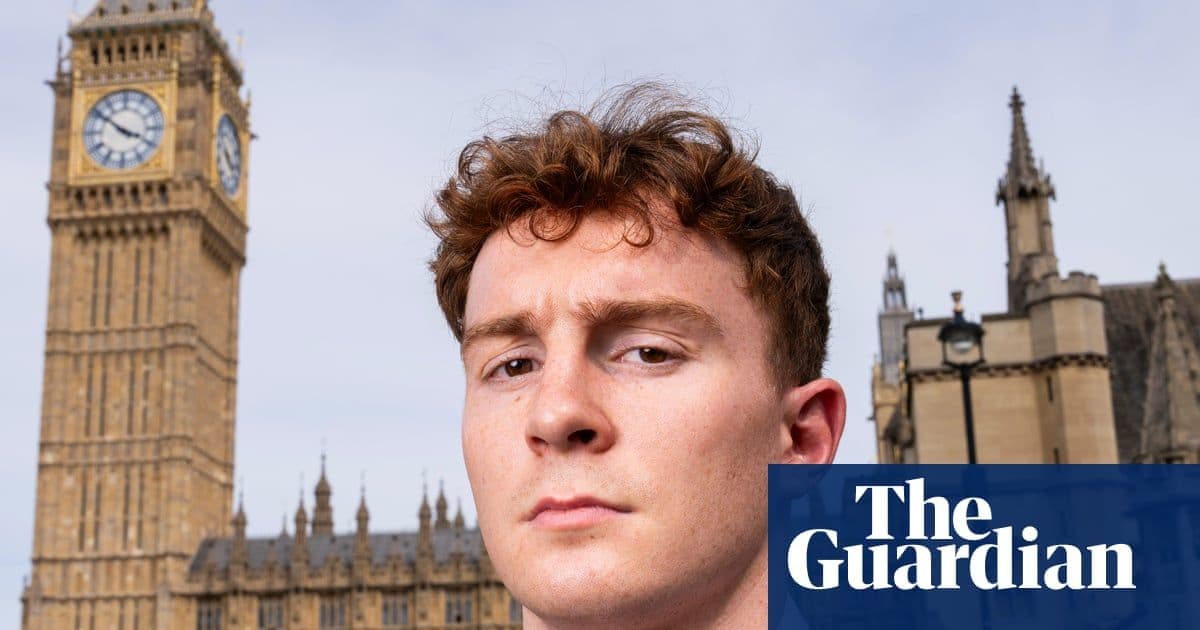
Archie Goodburn is not the kind of person who sits still. At 24, he is a champion swimmer preparing to compete at the Commonwealth Games in Glasgow — all while living with a rare, inoperable form of brain cancer. Now, he is channelling that same competitive drive into a campaign to push the UK government into doing more for brain cancer patients across the country.
"I grew up representing my country," Goodburn said. "And I want to see my country supporting me back."
A Diagnosis That Changed Everything
Two years ago, Goodburn began noticing alarming symptoms during training sessions. What started as unusual episodes gradually worsened — he experienced sudden weakness, numbness along his left side, overwhelming waves of fear, and intense nausea. At his most distressed, he described the sensation as feeling like his very consciousness was slipping away.
The timing could not have been more devastating. Just months before the Paris Olympics qualifiers, Goodburn missed out on selection by mere hundredths of a second. Shortly after, medical tests revealed the cause: three oligodendrogliomas — rare brain tumours that account for only around 3% of all brain cancer cases.
A Breakthrough Drug Gave Him a Second Chance
Rather than immediately beginning standard chemotherapy and radiotherapy — treatments that would have significantly impaired his cognitive function and derailed both his athletic career and his chemical engineering degree — Goodburn was granted access to Vorasidenib through an expanded access programme. The drug works by blocking the proteins that fuel tumour growth, effectively putting the brakes on his cancer's progression.
The results were remarkable. Shortly after beginning treatment, Goodburn broke the Scottish record in the 50-metre breaststroke — the very event he will compete in at next month's Commonwealth Games in Glasgow. He credits the drug with giving him back the freedom to live without his diagnosis defining every moment.
"There's that much space for change. Change is so possible," he said.
Vorasidenib only became widely available to NHS patients within the last three months. Initially, the National Institute for Health and Care Excellence (NICE) had provisionally recommended against its approval. Following sustained campaigning from the brain cancer community — including Goodburn himself — that decision was ultimately reversed.
One New Drug in Twenty Years Is Not Enough
Despite his gratitude for Vorasidenib, Goodburn is clear-eyed about its limitations. Clinical trial data suggests the drug may buy him around four additional years before more aggressive intervention becomes necessary. For him, that simply is not good enough.
"Vorasidenib only bought me four years, according to the trials. I need more. And I'm not going to stop campaigning until my last breath," he said.
His frustration is grounded in a stark reality: brain cancer is the leading cancer killer among children and adults under 40 in the UK, yet it has received just 1% of the government's national cancer research budget since 2002. Progress in developing new treatments has been painfully slow.
The 'Valley of Death' for Brain Cancer Patients
Goodburn points to what researchers and policymakers refer to as the "translational gap" — the significant barrier between early-stage scientific discoveries and their development into accessible clinical trials. The all-party parliamentary group on brain tumours has described this bottleneck as a "valley of death" for patients, attributing it to a fragmented, risk-averse funding system ill-suited to tackling such a complex disease.
Regulatory obstacles compound the problem further. A notable example: of the £40 million pledged by the government in 2018 specifically for brain cancer research, only a small fraction has actually been deployed in the years that followed.
What Goodburn and Brain Cancer Justice Are Demanding
Goodburn is working alongside the Brain Cancer Justice campaign to push for concrete government action. Their demands include:
- Immediate release of the remaining unspent £40 million pledged in 2018, directed to frontline researchers
- A dedicated brain cancer lead within government to oversee progress and accountability
- Expanded genome sequencing at the point of diagnosis, which would open more patients' access to clinical trials
- A formal 'right to try' policy, allowing patients access to potentially life-saving treatments before full regulatory approval
In response, the Department of Health and Social Care acknowledged that "more needs to be done to boost research into brain tumours" and stated it remains "committed to securing patient access to effective and innovative new medicines."
Campaigning as a Form of Treatment
Balancing intense athletic training with parliamentary lobbying is no small feat. Goodburn recently sat in the Westminster Hall viewing gallery as MPs debated a petition he and Brain Cancer Justice had spent months gathering signatures for — a moment he described as both nerve-wracking and deeply meaningful.
For Goodburn, having watched the 2014 Commonwealth Games as a young boy growing up in Glasgow, the prospect of competing in that same city next month carries enormous personal weight. But his motivations run far deeper than sporting glory.
"I campaign, if I'm being completely honest, because of the disparity in care, the lack of funding, but also because I believe that my campaigning can actually make a difference to my own future," he said. "In some ways, it's a treatment of its own."
His story is a powerful reminder that behind every funding statistic and policy debate is a real person — one who refuses to stop fighting, both in the pool and beyond it.