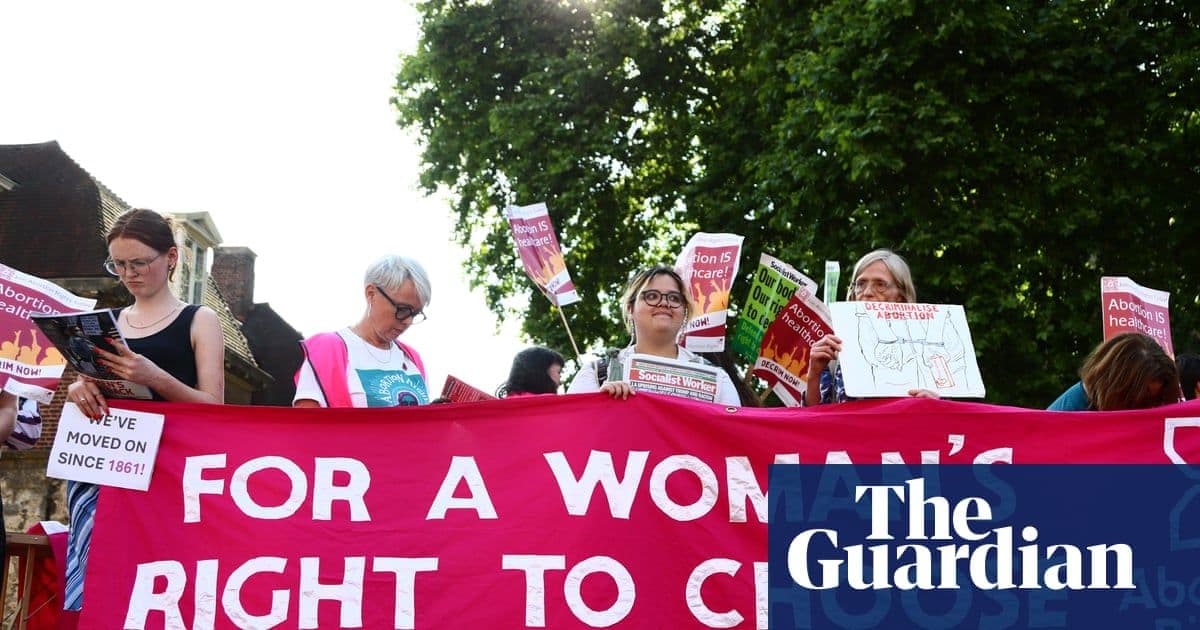
Women Criminalised Under Abortion Laws Must Not Be Forgotten, Campaigners Warn Lords
As the House of Lords prepares to vote on key abortion amendments, advocates are demanding justice for women already harmed by outdated criminalisation laws.
House of Lords Faces Pressure to Pardon Women Criminalised Under Abortion Laws
Campaigners and medical professionals are calling on the House of Lords to ensure that women who have already faced arrest, investigation, or conviction under abortion legislation in England and Wales are not overlooked if Parliament moves to decriminalise abortion going forward.
Last summer, the House of Commons passed a measure through the crime and policing bill that would put an end to the criminalisation of women who terminate pregnancies outside the existing legal framework. Now, the House of Lords is set to examine its own proposed amendments to the legislation, including two significant additions — one that would halt ongoing police investigations into suspected illegal abortions, and another that would formally pardon women who have previously been convicted.
A Life Sentence Without a Crime
Lib Dem peer Elizabeth Barker, who has tabled one of the amendments, described the long-term consequences facing women caught up in the current system.
"When I heard how the system has treated these women and girls when they are at their most vulnerable, and how they may have to explain this every time their disclosure and barring service check gets renewed, it was clear this cruelty had to be stopped," she said.
Barker highlighted that even a single conviction can effectively become a lifelong punishment, restricting employment opportunities and requiring women to repeatedly disclose their criminal record for routine administrative tasks such as renewing car insurance.
Becca's Story: Arrested After Seeking Help
One of the most striking cases involves a young woman named Becca, who was just 19 years old and working as a healthcare assistant in a northern English hospital when she unexpectedly gave birth. Having shown no visible signs of pregnancy — she had been wearing her usual clothing size and was in a cropped top at the beach just days before — Becca had assumed she had only recently conceived.
After visiting a clinic and receiving abortion medication, she grew concerned when she did not experience the expected effects. She called NHS 111 and was directed to go to A&E, where she was completely transparent about everything that had happened. A scan then revealed the shocking truth: Becca was six months pregnant. Within the hour, she had given birth to a son, Harry, at 28 weeks gestation.
As Harry was moved between specialist hospitals to receive appropriate premature care, it was the third hospital that contacted the police. Just days after Becca had returned home — while her mother and aunt were putting up decorations to celebrate the surprise arrival of her baby — officers knocked at her door.
Arrested for 'Attempted Child Destruction'
"They sat down and told me I was under arrest for attempted child destruction. I didn't even know what that meant," Becca recalled.
Despite officers telling her they were doing her a favour by arriving in plain clothes and without handcuffs, Becca said the manner of the arrest offered little comfort. During the subsequent police interview, she was asked whether she had stolen the medication from her workplace or whether her boyfriend had coerced her into taking it — questions she found baffling given that she had been honest with authorities from the very first phone call.
While Becca was arrested at home, her partner was simultaneously detained at the hospital where he was visiting their newborn son. Both had their electronic devices seized. Social services subsequently banned them from having any unsupervised contact with Harry for several months. It was not until 15 months later that the police investigation was officially dropped.
The Lasting Shadow of an Arrest
Now 21, Becca continues to live with the repercussions. Because abortion offences are classified as violent crimes, the fact of an arrest — even without a resulting conviction — can still appear on a disclosure and barring service check for decades.
"If that record was removed, it would just be almost like a release," she said. "We could just be able to live a normal life, because it's having an impact on job applications and plans for the future."
Becca's mother, Anne, noted that her daughter is considering training to become a nurse or midwife, but the arrest record will require ongoing disclosure. "If that's gone, she can just carry on just like any 21-year-old making plans," she said.
Other Voices Demanding Change
Nikki Packer, who was acquitted last year after being charged with carrying out an illegal abortion, also spoke out about the devastating impact of the legal process itself.
"The police investigation and the trial were by far the worst part. The time women are spending under investigation is ruining lives," she said, urging peers to support the decriminalisation vote on 18 March and calling on police to demonstrate accountability.
"The lasting effects on myself and other women placed under investigation aren't something I can simply 'get over'," Packer added. "The current law is ancient — it's time it reflects modern society."
Medical Community Adds Its Voice
Dr Alison Wright, President of the Royal College of Obstetricians and Gynaecologists, called on members of the House of Lords to follow the lead of the Commons and back the relevant clause in the bill, ensuring women are no longer at risk of prosecution for personal healthcare decisions.
"It is also vital that the harm already caused is addressed," Dr Wright said. "Women who have faced investigation or conviction should not have to continue living with the consequences of this archaic legislation."
Heidi Stewart, Chief Executive of the British Pregnancy Advisory Service, echoed this sentiment, arguing that pardoning affected women and erasing investigation records would acknowledge the fundamental injustice of criminalising abortion at all.
"If the law is to be finally brought into line with modern values, the women who have been harmed by this legislation must not be left behind," she said.
What Happens Next
The House of Lords vote represents a critical moment in a long-running campaign to modernise abortion law in England and Wales. Campaigners are urging peers not only to prevent future criminalisation but to actively repair the damage already done to the women and families caught up in a legal framework they argue is deeply outdated and unjust.