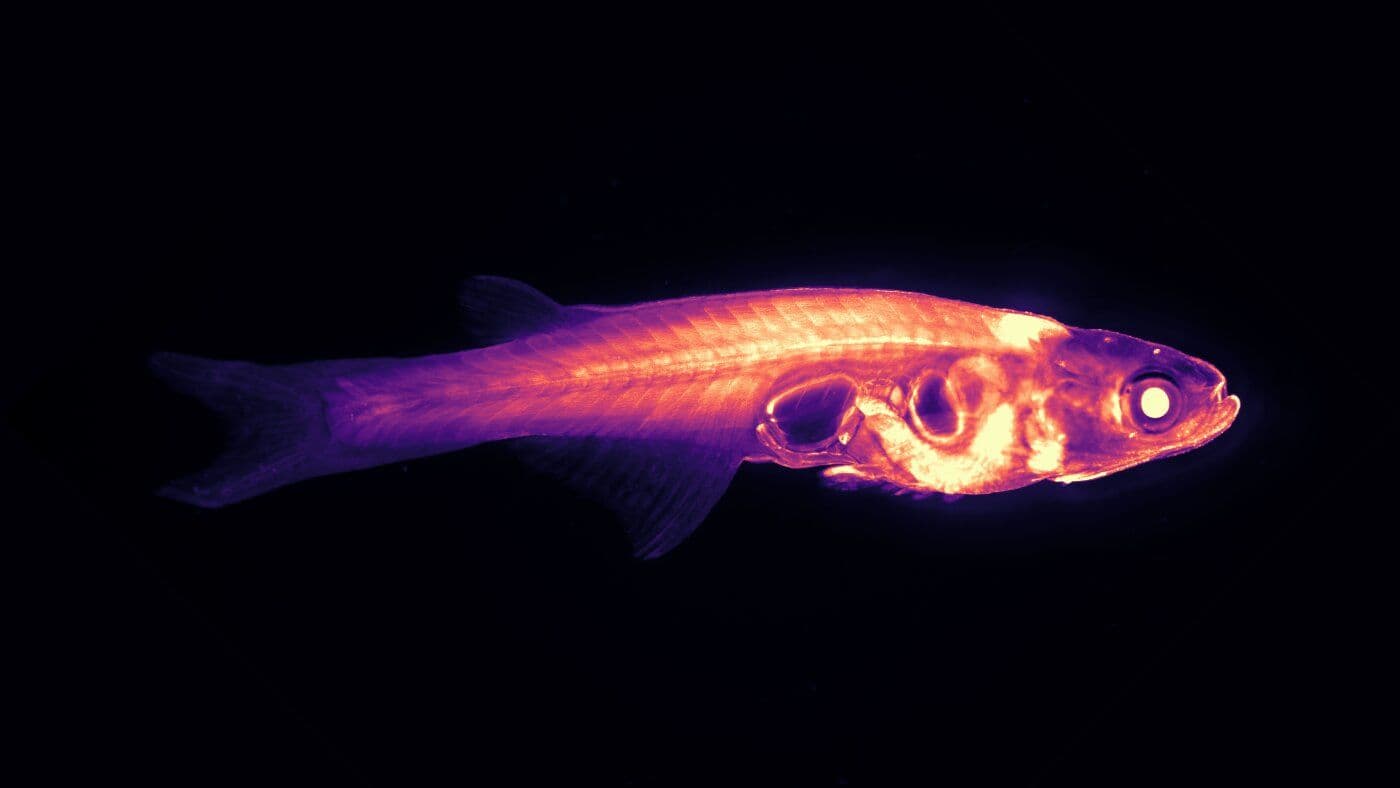
Why One of the World's Top Brain Research Centers Is Betting on a Tiny Transparent Fish
A leading neuroscience institute is swapping fruit flies for a small, see-through fish to unlock the mysteries of how brains drive behavior.
A New Era in Neuroscience Research
One of the most prestigious brain research centers in the world is making a bold scientific pivot. Rather than relying on the longtime laboratory staple — the fruit fly — researchers are now turning their attention to a far more unusual subject: a tiny, transparent fish.
This shift represents more than a change in specimen. It signals a fundamental evolution in how scientists approach one of biology's most complex questions: how does the brain actually control behavior?
Why a Transparent Fish?
At first glance, swapping flies for fish might seem like an unconventional leap. But for neuroscientists, the appeal of a transparent aquatic creature is anything but arbitrary.
Because the fish's body is entirely see-through, researchers can observe its brain activity in real time without invasive procedures. This remarkable biological trait allows scientists to watch neurons fire, circuits activate, and signals travel — all while the animal goes about its natural behaviors.
This level of visibility is virtually impossible to achieve with other common research animals, making the fish an extraordinarily valuable tool for studying the living brain in action.
Understanding the Brain-Behavior Connection
The central ambition driving this research shift is both profound and far-reaching: to understand precisely how the brain governs the actions and responses of a living creature.
By mapping these neural pathways in a transparent organism, scientists hope to uncover universal principles that apply not only to fish, but potentially to mammals and even humans. The brain, despite varying enormously in size and complexity across species, often operates according to shared fundamental rules.
Understanding those rules in a simpler, more observable organism could open powerful new windows into human neurological function — and ultimately, human behavior.
A Strategic Bet on the Future
The decision by a world-leading brain research center to realign its resources around this model organism reflects a growing consensus in the neuroscience community. As research tools become more sophisticated, scientists need study subjects that can keep pace — animals whose biology cooperates with modern imaging, genetic, and computational techniques.
The transparent fish fits that profile exceptionally well. It is small, fast-reproducing, genetically accessible, and above all, visually transparent — a combination that positions it as one of the most promising research models of the coming decade.
While the fruit fly has delivered decades of invaluable discoveries, the future of brain science may well swim on fins rather than wings.