Why Nvidia's GTC Conference Failed to Impress Wall Street Investors
Nvidia's CEO Jensen Huang delivered a powerful keynote packed with bold figures and new innovations — yet Wall Street remained skeptical. Here's why.
Nvidia's Big Moment Didn't Move the Markets
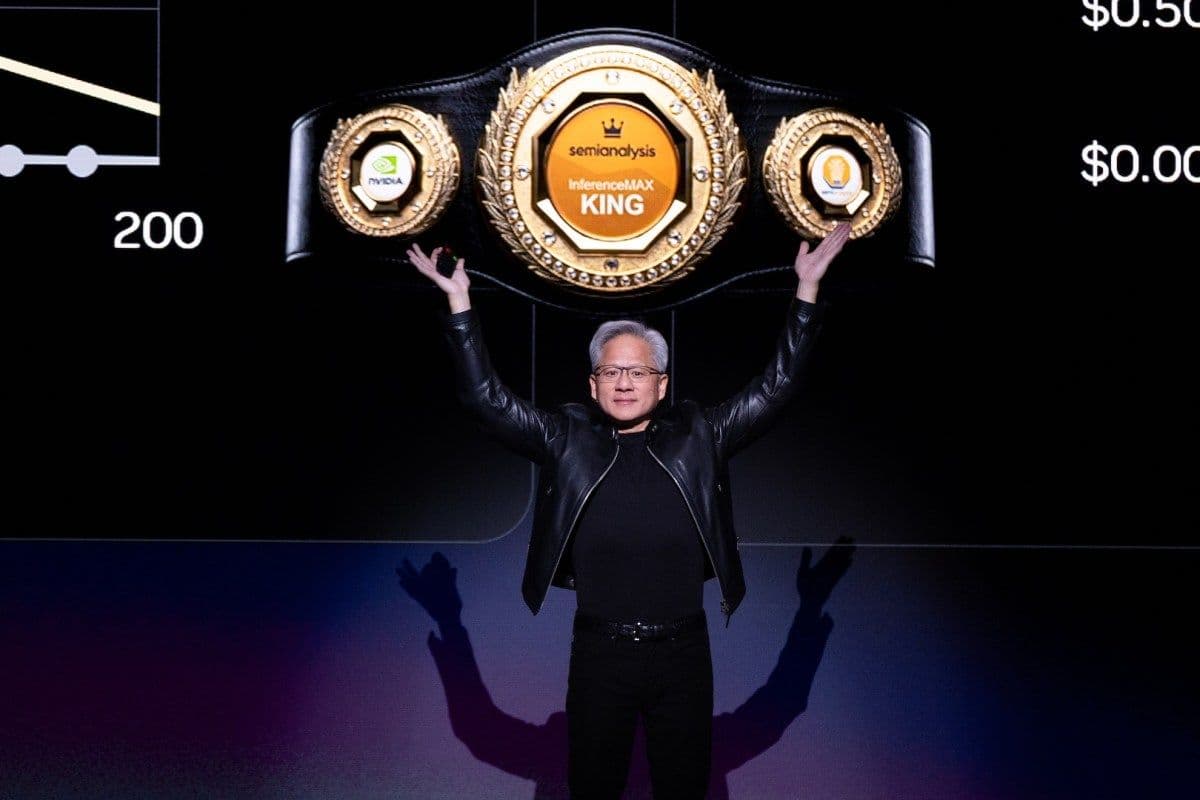
When Nvidia CEO Jensen Huang stepped onto the stage at the company's annual GTC conference, few could have predicted that the stock of a $4 trillion company would begin to slide. Despite a marathon two-and-a-half-hour keynote filled with ambitious projections and cutting-edge announcements, Wall Street investors appeared thoroughly unimpressed.
The contrast was striking. In Silicon Valley, the mood was electric — confidence radiated from every corner of the tech industry. On Wall Street, however, anxiety and skepticism dominated, fueled by mounting concerns over an AI bubble and the unpredictable road ahead for artificial intelligence.
What Jensen Huang Actually Announced
Huang's keynote was nothing short of comprehensive. He walked the audience through a sweeping range of new developments, including next-generation video game graphics technology, upgraded networking infrastructure, fresh autonomous vehicle partnerships, and a brand-new chip co-developed with Groq — designed to accelerate AI inference within the Vera Rubin system.
He also unleashed a series of staggering market projections:
- The AI agent ecosystem, he claimed, represents a $35 trillion opportunity
- The physical AI and robotics sector could be worth as much as $50 trillion
- He anticipates $1 trillion in purchase orders for Nvidia's Blackwell and Vera Rubin chips alone by the close of 2027
These are extraordinary figures by any standard. Yet they did little to stir enthusiasm among investors.
Why Wall Street Remains Unconvinced
According to Daniel Neuman, CEO of Futurum, the investor hesitation is understandable — even if the technology itself is genuinely transformative.
"AI is so powerful, so transformational, and evolving so rapidly that we don't fully understand what it means for the societal systems we've built," Neuman explained. "Markets despise uncertainty, and the breakneck pace of innovation has created a new kind of uncertainty that almost no one anticipated."
Neuman also pushed back on the narrative that enterprise adoption of AI is lagging. He argued that much of the data circulating in the press is outdated by several months, and that the true scale of corporate AI deployment is being underestimated.
"Enterprise AI adoption is going to hit an inflection point and scale very quickly," he said. "When people say it isn't happening, what they're really pointing to is that the ROI and tangible receipts are still taking shape. Companies are citing survey data that's often six months old."
The Numbers Tell a Different Story
Regardless of investor sentiment, Nvidia's financial performance speaks volumes. The company has not merely met its lofty quarterly targets — it has consistently shattered them. Last quarter alone, Nvidia posted a 73% year-over-year revenue increase, a figure that most companies could only dream of.
Further reinforcing the company's momentum, Amazon recently confirmed plans to purchase 1 million Nvidia GPUs, along with additional AI infrastructure, for Amazon Web Services by the end of 2027.
The Economy Is Orbiting Nvidia
Kevin Cook, Senior Equity Strategist at Zacks Investment Research, offered a blunt assessment of Nvidia's central role in today's economy.
"The economy is sort of orbiting around Nvidia," Cook said. "It's building the necessary infrastructure that hardware companies, software companies, physical AI players — even Caterpillar — are constructing their futures on top of."
In other words, investor dissatisfaction doesn't change the reality that Nvidia has become foundational infrastructure for the modern global economy.
Is There Still a Bubble Risk?
None of this definitively rules out the possibility of an AI bubble — either now or in the near future. Valuations remain elevated, ROI timelines are blurry, and macroeconomic uncertainty continues to weigh on sentiment.
But here's the critical distinction: the broader market's nervousness doesn't appear to be slowing Nvidia down in any meaningful way. The company is charging forward at full speed, and it appears to be pulling much of the global economy along with it.
As Huang himself put it during the keynote: "Nvidia is a platform company. We have technology, platforms, and a rich ecosystem — and today, virtually every major industry on Earth is represented here."
Whether Wall Street chooses to celebrate that reality or not may ultimately be beside the point.
