Why Kill Bill: Volume 1 Is the Ultimate Feel-Good Movie — Blood and All
Forget rom-coms and holiday classics. For some of us, Tarantino's brutal revenge masterpiece is the ultimate comfort watch — and here's why.

Why Kill Bill: Volume 1 Is the Ultimate Feel-Good Movie — Blood and All
Growing up with older siblings comes with unexpected perks. Chief among them? Early, unsupervised access to films that were absolutely not made with younger audiences in mind. Thanks to a towering household DVD collection curated by an older brother and sister with serious cinematic taste, some of the most formative movie experiences of my life happened well before they probably should have. Kill Bill: Volume 1 was one of them — and it left a permanent mark.
I couldn't tell you exactly how old I was the first time I watched it. Young enough that I probably shouldn't have been anywhere near it. Old enough to know, without question, that it was one of the most electrifying things I had ever seen.
More Than Just Memorable Lines
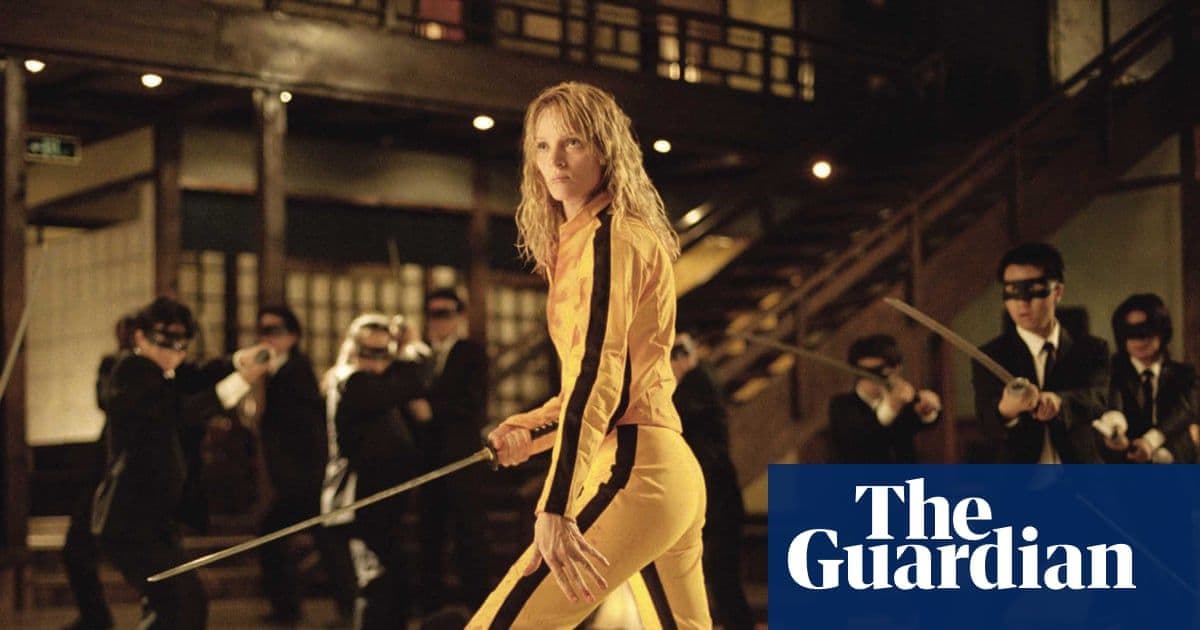
Unlike most beloved films that earn their place in your heart through endlessly quotable dialogue, Kill Bill: Volume 1 isn't really that kind of movie. There's one line — delivered by a deeply unpleasant character named Buck — that has stuck with me over the years, but it's hardly the kind you'd repeat at dinner. What truly lodges itself in your memory is everything else: the iconic soundtrack that pulses with energy, the unforgettable visual of a bright yellow tracksuit drenched in vivid crimson blood, and the relentlessly stylised action sequences that pull you completely out of your own world and into something far more extraordinary.
When real life feels heavy or dull, that transportation is exactly what I need.
The Plot: Simple, Brutal, and Brilliant
Director Quentin Tarantino tells a story that, despite its non-linear structure, is elegantly straightforward at its core. A pregnant bride, played with magnetic intensity by Uma Thurman, is savagely beaten to within an inch of her life at her own wedding chapel in El Paso, Texas. Her groom and the rest of the small wedding party are murdered in cold blood.
The perpetrators are the Deadly Viper Assassination Squad — a chillingly skilled group of assassins portrayed by Lucy Liu, Daryl Hannah, Vivica A. Fox, and Michael Madsen — operating under the command of a gravelly voiced, enigmatic leader known only as Bill, played by the late David Carradine. As the bride lies bleeding on the chapel floor, she manages to whisper to Bill that she is carrying his child. His response is a bullet to the head.
She survives.
The Bride's Mission — and Why It Feels So Good to Watch
Four years later, The Bride regains consciousness in a hospital bed, her baby gone. What follows is one of cinema's most satisfying revenge narratives ever committed to film. Armed with a felt-tip pen list of five names and an iron-clad determination, she travels to Okinawa, Japan, to acquire a custom-made samurai sword, then sets about delivering long-overdue justice to every single person who wronged her.
And nothing — absolutely nothing — stands in her way. Not the Crazy 88, a comically enormous army of fighters she dismantles almost effortlessly. Not the laws of the land. Not even the laws of physics. She acquires a bright yellow motorbike and matching suit as if by magic. Her katana sails through Tokyo airport security without so much as a raised eyebrow. Her hair, through all of it, remains remarkably composed. And honestly? Good for her.
Cathartic Violence as Comfort Viewing
Kill Bill: Volume 1 may not fit anyone's traditional definition of a comfort film. There are no warm kitchens, no heartwarming reconciliations, no uplifting montages set to acoustic guitar. What it offers instead is something rarer and, for many of us, far more satisfying — the visceral thrill of watching someone refused the role of victim claim absolute, unstoppable power over those who underestimated her.
Consider what the film does repeatedly and deliberately: it places its female characters in situations designed to diminish or objectify them, then allows them to respond with devastating, often darkly humorous force. When Lucy Liu's Yakuza crime boss O-Ren Ishii has her authority questioned by a disrespectful council member, she removes his head with calm, surgical precision. When Thurman's Bride awakens from her coma to find a predatory hospital worker and his accomplice looming over her, she fights back with ferocious, improvised brutality — using nothing but her teeth and a door.
Even a Texas ranger arriving at the scene of the El Paso massacre reduces the barely alive bride to her appearance, calling her a 'goddamn good-looking gal' and a 'little blood-splattered angel.' Moments later, she splatters actual blood across his face simply by exhaling — a small, perfect act of unconscious defiance.
Wish-Fulfilment at Its Most Delicious
The reality is that in everyday life, opportunities for women to reclaim power from those who have wronged them are vanishingly rare. The fantasy that Kill Bill constructs — where you can write down every name on your list and systematically, spectacularly settle every score — is precisely why this film functions as a feel-good experience, however unconventional that might seem.
Tarantino built Kill Bill as a loving tribute to exploitation cinema, martial arts films, and spaghetti westerns, designed first and foremost to entertain. But in doing so, he also crafted something that resonates on a deeper emotional level: a story about survival, agency, and the very human desire to see justice served on your own terms.
That combination of pure cinematic craft, pounding music, vivid visual storytelling, and deeply satisfying revenge fantasy is why, no matter what life throws at me, Kill Bill: Volume 1 remains my go-to feel-good film.
Kill Bill: Volume 1 is currently available to stream on Netflix and Disney+ in the UK and Australia, on Fawesome in the US, and available to rent digitally across multiple platforms.

