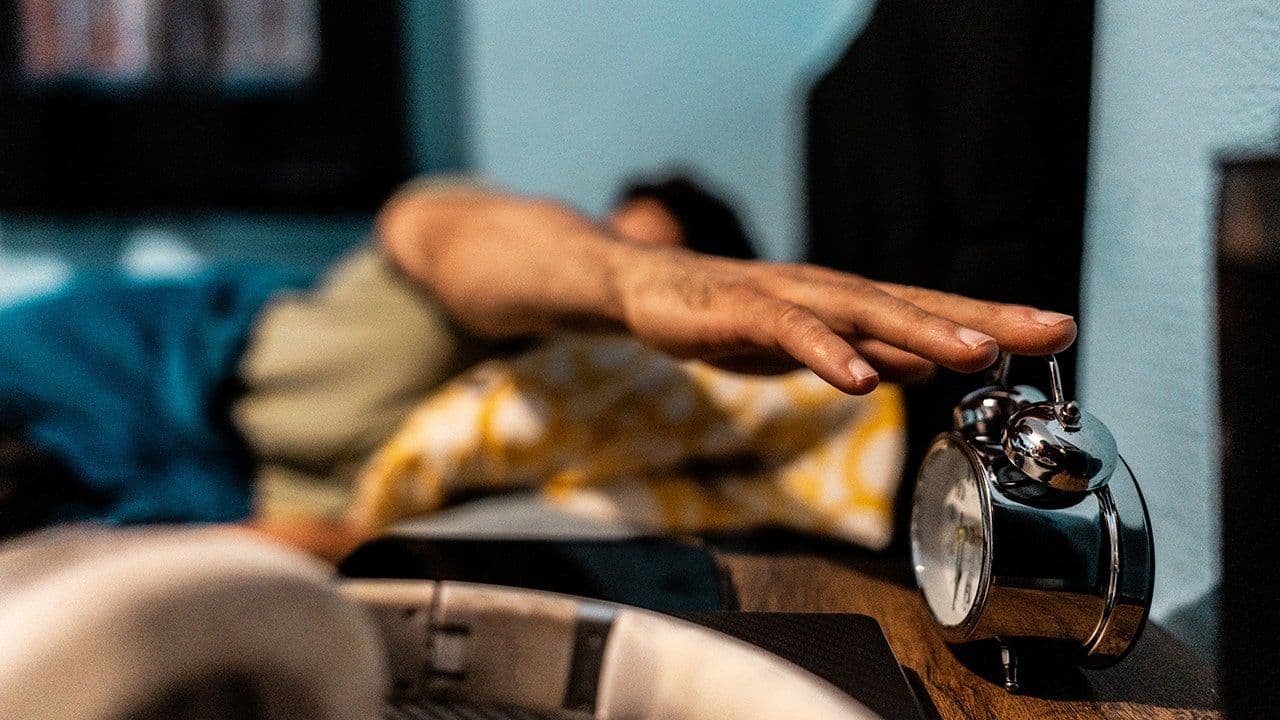
Why I'm Proudly the Last American Who Actually Loves Daylight Saving Time
While the rest of America complains about losing an hour, one Navy veteran sees daylight saving time as a powerful annual reset — and he has a compelling case.

The Clock Changes. Most People Complain. I Celebrate.
Every spring, like clockwork, the grumbling begins. Social media floods with memes about stolen sleep. Politicians draft bills to eliminate the time change. Health professionals warn of disrupted circadian rhythms. The national mood turns sour over a single lost hour.
And then there's me — apparently the one person in America who genuinely looks forward to it.
I'm not being contrarian for the sake of it. After two decades serving in the U.S. Navy, operating in high-pressure environments where conditions shifted without warning and hesitation could cost lives, I developed a fundamentally different relationship with disruption. Daylight saving time, to me, isn't a nuisance. It's an opportunity — one that most people are too frustrated to recognize.
Reframing the Disruption: A Built-In Annual Stress Test
In the military, we had a simple philosophy: you don't wait for ideal conditions. You adapt, execute, and move forward. Perfect circumstances are a fantasy. What matters is how quickly and effectively you respond when circumstances shift.
Daylight saving time operates on that same principle. I call it tactical discomfort — a low-stakes, nationally synchronized exercise in psychological flexibility. Losing one hour of sleep is not a catastrophe. It's a controlled challenge. If a 60-minute shift throws your entire week into chaos, the clock isn't your problem. Fragility is.
We talk constantly about building resilience. Here, twice a year, is a practical chance to actually practice it.
The Pattern Interrupt You Didn't Know You Needed
Most of us are running on autopilot. Same alarm. Same commute. Same habits. Same excuses recycled week after week. Comfort is the enemy of growth, and routine is comfort's most loyal accomplice.
The time change is a forced pattern interrupt. It jolts us out of our automated rhythms and demands a manual override of our mornings, our schedules, and our sleep. Rather than resenting that jolt, consider using it deliberately.
There are 168 hours in every week. The spring clock shift is the one moment each year when the entire country is simultaneously prompted to reconsider how those hours are being spent. Think of it as a blank slate:
- Audit your morning routine and identify what's working
- Eliminate a habit that's been quietly draining your energy
- Add a workout you've been putting off since January
- Reclaim time lost to mindless scrolling or passive consumption
Growth rarely emerges from comfort zones. Disruption, even minor disruption, creates the opening.
A Symbolic Shift That Carries Real Psychological Weight
Beyond the practical, there's a deeper psychological dimension worth considering. The spring time change is a symbolic threshold — a marker that separates the inward contraction of winter from the expansive energy of longer, brighter evenings.
Humans are deeply wired to respond to seasonal signals. Even an artificially manufactured shift in the clock can function as a meaningful mental pivot point. It becomes permission — permission to change direction, recalibrate priorities, and step into a more intentional, higher-output version of yourself.
We don't require perfect conditions to reset. We need a trigger. Daylight saving time is one of the most reliable triggers we have.
One of the Last True National Shared Experiences
In an era of deep cultural division, the time change remains one of the few experiences that still touches nearly all of us at once. Regardless of political affiliation, geography, or background, most of the country moves the clock together and feels the same collective shift in rhythm simultaneously.
Time is not purely biological — it's social. It's a shared agreement. And twice a year, the majority of Americans participate in that agreement in near-unison, around something entirely apolitical. That shared experience shouldn't be dismissed lightly. In a fragmented culture, it functions as connective tissue.
The Practical Benefit Hidden in Plain Sight
There's also a straightforward safety argument that rarely gets the attention it deserves. For decades, the biannual clock change has served as a reliable reminder for households to check smoke detector batteries and refresh emergency preparedness kits.
Without that built-in, recurring nudge, countless families would simply forget. What feels like an inconvenience quietly doubles as a life-saving prompt — a small but meaningful public safety ritual embedded into the calendar.
Stop Being a Victim of the Clock
Here's the honest truth: the time change doesn't make you tired. Your habits do. It doesn't steal your hour. It exposes how carelessly you were already spending the other 167.
In the military, blaming external conditions isn't an option. You master your schedule regardless of the sun, the season, or the circumstances. Civilian life, however, tends to treat time as something that simply happens to us — something we endure rather than command.
Daylight saving time invites a different mindset entirely:
- Adapt faster than you did last year
- Reset deliberately instead of drifting back into old patterns
- Leverage disruption as a catalyst rather than a complaint
The Real Question Isn't Whether to Keep It
You can spend the next week complaining about a lost hour, posting memes, and blaming the government for your fatigue. Or you can treat it for what it actually is: a stress test, a reset button, a national synchronization event, and a psychological pivot point — all rolled into one Sunday morning.
Maybe the debate shouldn't be whether we abolish daylight saving time. Maybe the real question is whether we're disciplined enough — and self-aware enough — to use it.