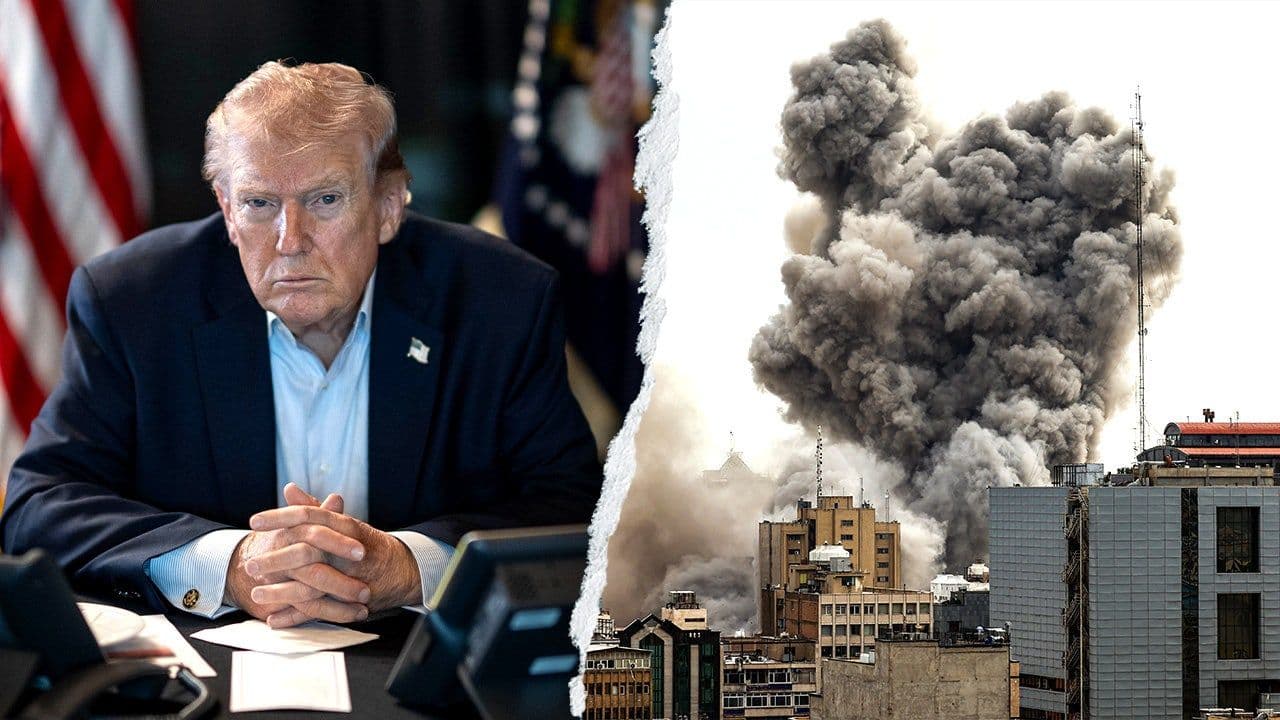
Why Democrats' War Powers Push Against Trump Was Constitutionally Flawed From the Start
The Senate rejected a Democratic war powers resolution targeting Trump's Iran strikes. Here's why legal experts say the move was unconstitutional.

Senate Rejects Democratic War Powers Resolution — And for Good Reason
On March 4, the Senate made the right call by voting down a war powers resolution that sought to limit or completely halt President Donald Trump's authority to conduct further military strikes against Iran. A companion measure in the House met the same fate.
The resolution, championed by Senator Tim Kaine of Virginia, demanded an end to military hostilities "unless explicitly authorized by a declaration of war or a specific authorization for use of military force" passed by Congress. Despite receiving near-unanimous Democratic support, the resolution was riddled with legal and constitutional problems.
Three Core Reasons the Resolution Failed Legally
1. The President Doesn't Need Congressional Permission to Use Military Force
Under the U.S. Constitution, the president holds broad authority to engage in military action — with or without a formal declaration of war from Congress. No legislative vote is required before the commander in chief can act to protect national security interests.
2. A Valid Military Authorization Already Exists
A legitimate and directly applicable Authorization for Use of Military Force is already on the books — one that squarely covers the current conflict with Iran. Democrats' claims that Trump was acting without legal cover simply don't hold up under scrutiny.
3. The Resolution Violated the Separation of Powers
Perhaps most critically, the resolution itself crossed constitutional boundaries by attempting to strip the executive branch of powers that the Constitution explicitly reserves for the president.
Democratic Hypocrisy on Full Display
The most glaring problem with the Democratic position isn't just legal — it's deeply hypocritical. Not long ago, former House Speaker Nancy Pelosi publicly declared that President Barack Obama needed no congressional authorization to bomb Libya in 2011. Her Democratic colleagues echoed that view without hesitation.
That position remained firm as Obama ordered airstrikes across six additional countries: Afghanistan, Pakistan, Yemen, Somalia, Iraq, and Syria. President Joe Biden continued the same tradition, launching similar military operations to no Democratic objection whatsoever.
Yet when President Trump exercises the same constitutional authority, the political outcry is immediate and fierce. The double standard couldn't be more transparent.
What the Constitution Actually Says
The Founding Fathers were deliberate in how they divided military responsibilities between the executive and legislative branches. Article II, Section 1 of the Constitution grants "executive power" to the president — a designation that includes broad discretionary authority over foreign affairs and military decisions.
The Supreme Court affirmed this principle in the landmark Marbury v. Madison ruling, in which Chief Justice John Marshall clarified that Congress holds "no power to control that discretion."
Meanwhile, Congress was granted a more limited role. An early draft of the Constitution gave lawmakers the power "to make war," but James Madison and fellow framers successfully argued this gave the legislature far too much control over what was fundamentally an executive function. The language was revised so that Congress could only "declare war" — a formal proclamation, typically initiated at the president's request.
Importantly, that declaration power is narrow in scope. It does not represent the exclusive gateway to military action. That authority belongs to the president. Congress retains one meaningful check: the power of the purse — it can refuse to fund military operations.
History reinforces this interpretation. The United States has issued formal declarations of war just 11 times across five conflicts. Yet presidents have independently invoked their constitutional authority to deploy military force more than 200 times throughout American history.
The 1973 War Powers Resolution: A Constitutionally Questionable Law
During the Vietnam War, Congress passed the War Powers Resolution of 1973 in an attempt to rein in President Richard Nixon's military authority. Critics — including prominent Democrats — have long argued that the resolution effectively rewrote the Constitution, granting Congress powers it was never meant to have while weakening the commander in chief.
It is a well-established legal principle that Congress cannot, through a simple vote, strip away executive powers enshrined in Article II. Doing so would require a formal constitutional amendment — not a legislative resolution.
In a striking moment of intellectual honesty, Senator George Mitchell of Maine — who would later become Senate Majority Leader — criticized the resolution in 1988 as unconstitutional, stating it "oversteps the constitutional bounds on Congress' power to control the Armed Forces in situations short of war."
Despite never being directly ruled upon by the Supreme Court, the resolution remains technically active law. However, no president since 1973 has accepted it as a legitimate constraint on executive power. Some, including Obama, simply disregarded it. Others complied with select procedural elements — such as notifying Congress within 48 hours and observing troop withdrawal timelines — while rejecting its broader authority.
President Trump has thus far followed those procedural requirements. Should Congress attempt to force a halt to military operations, Trump would be on solid constitutional and historical ground in refusing to comply.
The AUMF: Legal Cover That's Been There All Along
Following the September 11, 2001 attacks, Congress passed the Authorization for Use of Military Force — a sweeping joint resolution granting the president extraordinary authority to pursue groups and nations that aided, committed, or harbored the perpetrators of those attacks. Its stated purpose was to "prevent any future acts of international terrorism against the United States."
Iran's connection to those attacks is well-documented. The 9/11 Commission Report detailed how Tehran provided al-Qaeda operatives with training, intelligence support, transit routes, logistics, weapons, and financing — assistance that extended to individuals who would become the very hijackers responsible for the 9/11 attacks.
When the U.S. invaded Afghanistan, senior al-Qaeda leaders fled across the border into Iran, where they received safe haven. For nearly five decades, Iran has waged a sustained campaign of violence against American interests — attacking military bases, targeting civilians, abducting diplomats, and killing more Americans than any other state-sponsored terrorist regime on the planet.
The Broader Threat Iran Poses
Beyond its history of direct aggression, Iran's leadership has spent years developing an arsenal of ballistic missiles and relentlessly pursuing nuclear weapons capability — with the explicit intent of using them against the United States and Israel. The evidence supporting this conclusion is extensive and well-established within the intelligence community.
Given this documented history of hostility, combined with Iran's ongoing nuclear ambitions and continued support for terrorist proxies around the world, President Trump holds not only the constitutional authority to act — but arguably a solemn obligation to take decisive preemptive measures to neutralize this threat before it escalates further.
