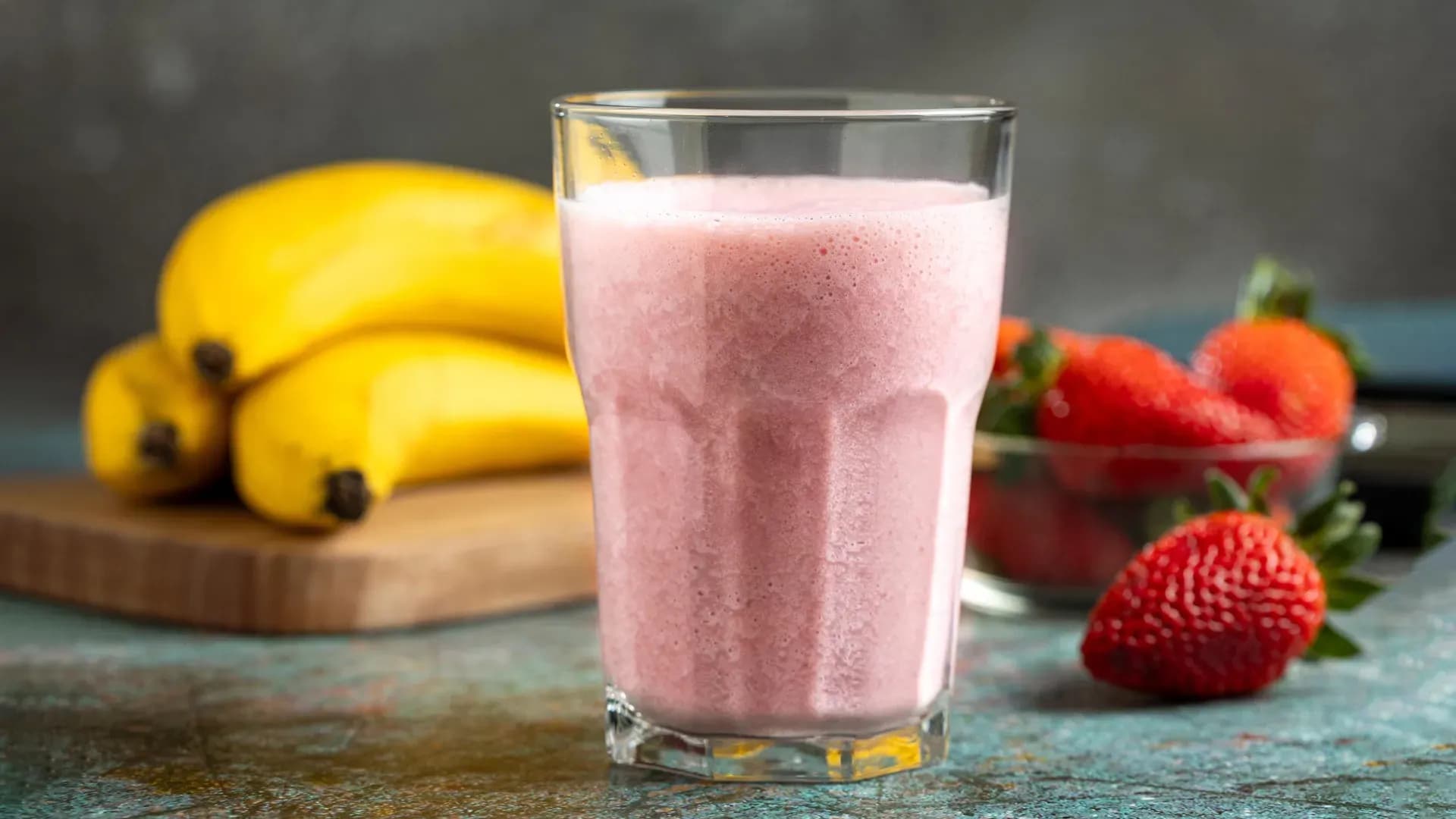
Why Adding Bananas to Your Berry Smoothie Could Be Sabotaging Your Health Goals
New research shows that blending bananas with berries can slash flavanol absorption by 84%. Here's what you should mix instead.

That Banana in Your Smoothie Might Be Working Against You
For years, tossing a banana into a smoothie has felt like a no-brainer. It adds creaminess, natural sweetness, and a boost of potassium. But a new study from the University of California, Davis is challenging this habit — and the findings are hard to ignore.
According to researchers, combining bananas with berries in a blended drink can reduce your body's ability to absorb flavanols by as much as 84%. That's not a minor nutritional footnote. That's a dramatic shift in what your body actually gets from a drink you thought was healthy.
What Are Flavanols and Why Do They Matter?
Flavanols are naturally occurring plant compounds found in berries, apples, grapes, cocoa, and tea. They've attracted significant scientific interest for their potential role in supporting heart health, regulating blood pressure, improving blood flow, and even promoting brain function.
The Academy of Nutrition and Dietetics has formally recommended consuming between 400 and 600 milligrams of flavanols daily to support cardiometabolic health. If you're loading up on berries or cocoa in your smoothies specifically to hit that target, the way you build your drink matters more than you might think.
The Science Behind the Banana Problem
The culprit isn't the banana itself — it's an enzyme it contains called polyphenol oxidase, or PPO. This is the same enzyme responsible for the browning you notice when you slice an apple or peel a banana and leave it exposed to air.
When researchers at UC Davis blended high-PPO ingredients like bananas together with flavanol-rich berries, the PPO enzyme began breaking down those beneficial compounds before they could even reach the digestive system. The result was a dramatic drop in flavanol availability in the body.
The study, published in the Royal Society of Chemistry journal Food & Function, had participants consume three different things: a banana-based smoothie, a mixed berry smoothie made with low-PPO fruits, and a flavanol capsule used as a controlled reference point.
Blood and urine samples were then analyzed to measure how much of the flavanols were actually absorbed.
The Results Were Striking
- Banana smoothie: Flavanol levels were 84% lower than the control capsule
- Mixed berry smoothie: Flavanol levels were comparable to the capsule
"We were really surprised to see how quickly adding a single banana decreased the level of flavanols in the smoothie and the levels of flavanol absorbed in the body," said lead author Javier Ottaviani, director of the Core Laboratory of Mars Edge and an adjunct researcher at UC Davis.
It May Even Continue After You Swallow
In a follow-up portion of the study, participants consumed flavanols alongside a high-PPO banana drink, but the two were kept completely separate until ingestion. Flavanol absorption was still reduced — suggesting PPO activity may persist even after the drink enters the stomach.
This finding makes the interaction more complex than a simple blending issue. It implies the enzyme may continue doing its work during digestion, potentially limiting flavanol uptake at multiple stages.
What You Should Add Instead
The good news: you don't have to give up smoothies or even bananas entirely. You just need to be more strategic about your combinations.
Ottaviani recommends pairing flavanol-rich ingredients like berries, cocoa, or grapes with low-PPO alternatives. These include:
- Mango
- Pineapple
- Orange
- Yogurt
These options preserve the creamy texture and natural sweetness that bananas typically provide, without interfering with flavanol absorption.
Bananas are still a nutritious food. They're rich in fiber, potassium, and other essential nutrients. The key is knowing when to use them. If you want a creamy, energy-boosting smoothie and flavanol intake isn't the priority, bananas are a perfectly fine choice. But if your goal is to maximize the health benefits of berries or cocoa, consider leaving the banana on the counter.
A Broader Lesson About Food Preparation
This research fits into a growing body of evidence showing that food combinations and preparation methods can significantly alter nutritional outcomes. A smoothie isn't simply a collection of ingredients with fixed nutrient values. The moment those ingredients interact, chemistry happens — and that chemistry can either work for you or against you.
"This highlights how food preparation and combinations can affect the absorption of dietary compounds in foods," Ottaviani noted.
The implications may stretch beyond smoothies as well. Ottaviani suggested that tea — another major source of dietary flavanols — could also be affected by preparation and pairing methods in ways that haven't yet been fully studied.
"This is certainly an area that deserves more attention in the field of polyphenols and bioactive compounds in general," he said.
Important Caveats to Keep in Mind
While the findings are compelling, it's worth noting that the study was relatively small in scale. The first phase involved eight healthy men, and the second phase included 11 participants. These are meaningful early results, but they shouldn't be treated as absolute conclusions applicable to every individual or dietary pattern.
Nutrition experts have also cautioned against overreaction. A banana-berry smoothie is still a far healthier choice than most processed alternatives. Individual digestion, overall diet quality, and total daily nutrient intake all play important roles in determining real-world health outcomes.
The study was funded by a research grant from Mars, Inc., which has a commercial interest in cocoa flavanol research — a factor worth acknowledging when interpreting the results.
The Bottom Line
If you're building smoothies with the specific intention of boosting your flavanol intake, the ingredients you combine matter. Skip the banana when berries, cocoa, or grapes are your focus. Reach for mango, pineapple, or yogurt instead. Save the banana for when you want its unique nutritional benefits without the concern of flavanol interference.
Small adjustments in how you prepare food can lead to meaningful differences in what your body actually absorbs. That's a simple, practical lesson worth taking seriously — one banana at a time.