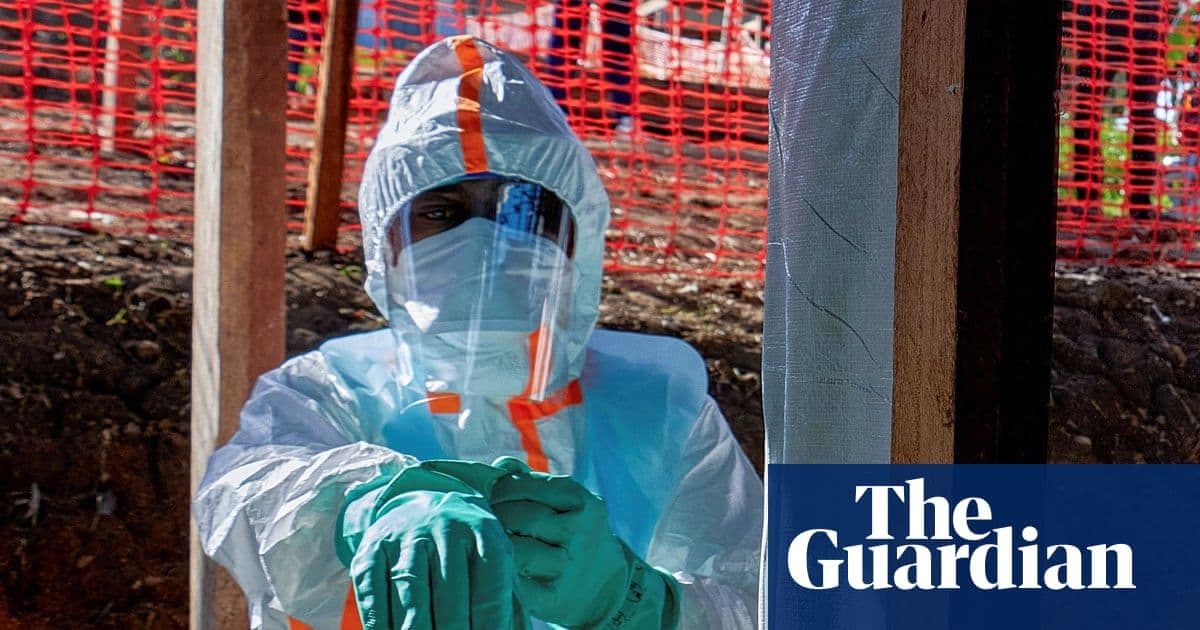
WHO Urges Community Action as Ebola Crisis Deepens in Democratic Republic of Congo
The WHO director general has called for unified community involvement to combat the worsening Ebola outbreak in the DRC, now entering alarming new territory.

WHO Issues Urgent Call for Public Solidarity in Fight Against DRC Ebola Outbreak
The World Health Organization has emphasized that tackling the escalating Ebola crisis in the Democratic Republic of Congo is a collective responsibility — one that demands active participation from every member of the affected communities.
WHO Director General Tedros Adhanom Ghebreyesus delivered this urgent message during a personal visit to eastern Congo on Sunday, where he presided over the opening of a new treatment facility in Bunia, the provincial capital of Ituri — currently the epicenter of the outbreak.
"We can stop this Ebola and anyone who has it can also recover. But the rule is this thing is everybody's business and every citizen should be involved," Ghebreyesus stated at the ceremony.
Community Resistance Complicates Containment Efforts
A significant challenge facing health authorities has been resistance from local residents, some of whom have staged protests against strict medical protocols governing the handling of deceased victims' bodies. Many community members argue these protocols conflict with deeply rooted traditional burial customs — a tension that has fueled at least three violent attacks on healthcare facilities in the region.
Ghebreyesus urged residents to seek medical attention at the earliest sign of symptoms, stressing that timely intervention dramatically improves the chances of survival. "If you come to health facilities when you have symptoms, you can get the support and recover, so the key is to come forward as early as possible," he said.
On a positive note, five patients had recovered from the disease, with four more cleared for discharge on the same day.
Outbreak Statistics Paint a Grim Picture
The WHO has recorded a total of 906 suspected cases and 223 suspected deaths within the DRC. Figures released by the country's communications ministry on Sunday confirmed 282 positive cases and 42 deaths, following 19 new confirmed test results. The crisis has also crossed international borders, with neighboring Uganda reporting nine confirmed cases and one fatality.
Brazilian health authorities have also been placed on alert. The state government of São Paulo reported that a 37-year-old man from the DRC displayed symptoms consistent with Ebola, while health officials in Rio de Janeiro activated safety protocols after a man arriving from Uganda presented with viral symptoms including fever, cough, and chills. He subsequently tested negative but remained under observation until the inquiry concluded.
The DRC's Long and Difficult History with Ebola
This marks the 17th recorded Ebola epidemic in the Democratic Republic of Congo since the disease was first identified in the country in 1976. The WHO has designated the outbreak a public health emergency of international concern. Across all recorded outbreaks, the virus carries an average fatality rate of approximately 50%.
Armed Conflict Hampers Relief Operations
Response teams have faced further difficulties due to ongoing clashes between armed factions in the mineral-rich Ituri region. Ghebreyesus appealed directly for a ceasefire, stating plainly: "No cause, no conflict, no grievance is worth condemning innocent people to death from a preventable disease."
Frontline health workers and aid organizations have reported critical shortages of basic protective equipment, including face masks. However, some relief has arrived — a consignment of medical aid from the European Union reached Ituri last week, and the United States announced an additional $80 million in funding, bringing its total financial commitment to $112 million.
African Leadership Must Drive the Response
The Africa Centres for Disease Control and Prevention has called for the immediate activation of national incident management systems and argued that investment in pandemic preparedness infrastructure must become a long-term commitment rather than a reactive measure.
Jean Kaseya, the organization's director general, wrote in the Financial Times that while international support remains essential, it is most impactful when it operates in alignment with strategies developed by African institutions and governments. "Africa's response to Ebola must be defined by Africa itself," he emphasized.
MSF Warns Response Is Falling Behind
Médecins Sans Frontières (MSF) sounded a stark alarm on Saturday, warning that the speed at which the disease is spreading is unprecedented. The humanitarian medical organization noted that no previous outbreak had generated such a high number of cases in such a short timeframe.
Alan Gonzalez, MSF's deputy director, stated that field teams were observing a response that had not yet managed to keep pace with the epidemic's rapid progression. "The reality today is that nobody knows the true scale and severity of this outbreak. New suspected cases are being reported daily, yet hundreds of samples remain untested," he said.