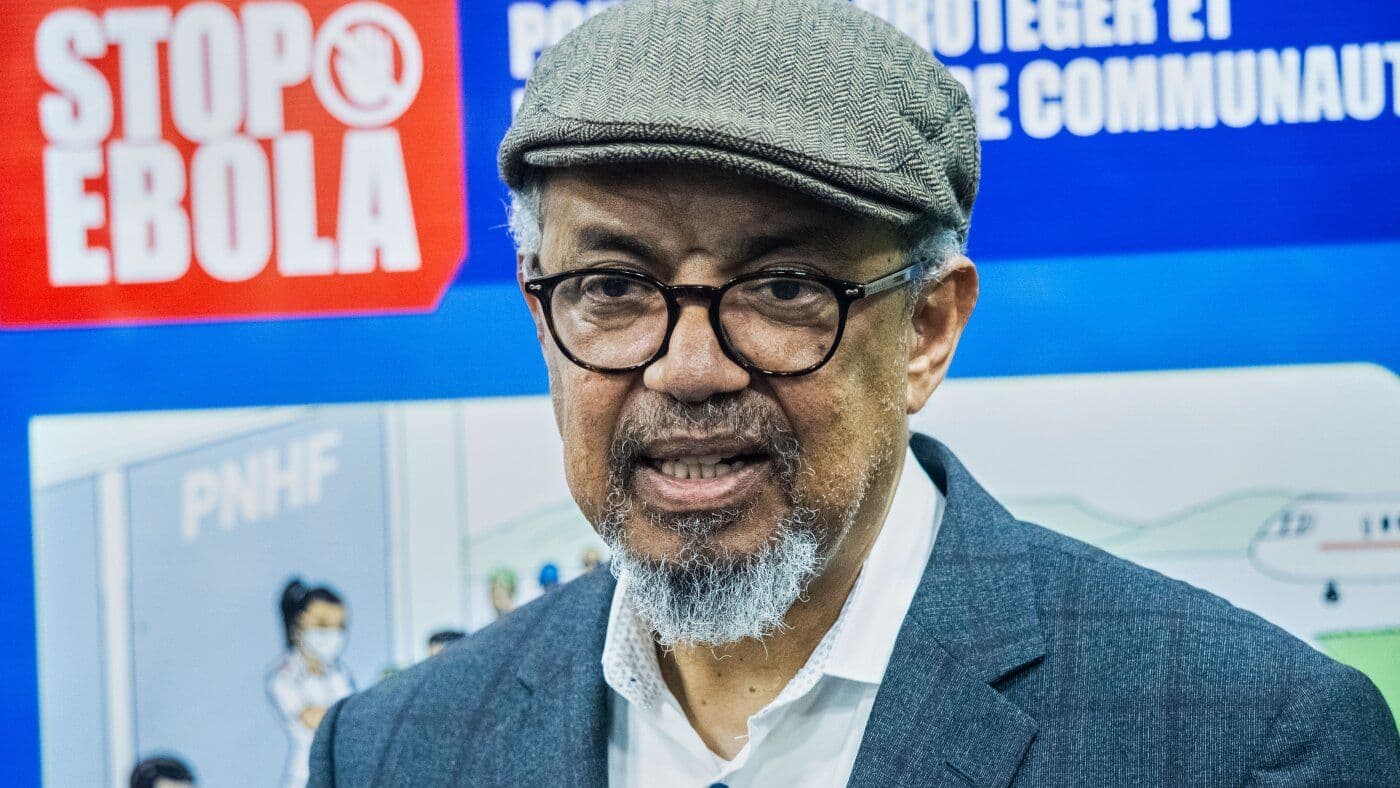
WHO Director-General Arrives in Congo to Confront Rare Ebola Strain Amid Conflict and Community Mistrust
WHO chief Tedros Adhanom Ghebreyesus has touched down in Kinshasa as Congo battles a deadly Bundibugyo Ebola outbreak with over 1,000 suspected cases.
WHO Chief Visits Congo as Rare Ebola Outbreak Escalates
World Health Organization Director-General Tedros Adhanom Ghebreyesus flew into Kinshasa, the capital of the Democratic Republic of Congo, late Thursday evening to personally assess the international response to a growing outbreak of a rare and particularly dangerous strain of the Ebola virus. Health workers on the ground are facing a perfect storm of challenges — dwindling medical supplies, deep-seated community skepticism, and the constant threat posed by armed militant groups operating throughout the volatile region.
"Coming here is my way of showing these communities that the world has not forgotten them," Tedros told journalists gathered at N'djili International Airport shortly after his arrival. "It is easy to issue directives from a comfortable office in Geneva. But I am asking my colleagues to work hand in hand with local communities — and I am asking those communities to take steps to protect themselves."
A Deadly Virus With No Approved Treatment or Vaccine
At the center of the crisis is the Bundibugyo virus, a rare variant within the Ebola family for which neither an approved vaccine nor a standardized treatment currently exists. The outbreak is concentrated in Ituri province in northeastern Congo, though confirmed cases have also emerged in the neighboring provinces of North Kivu and South Kivu.
According to the latest WHO figures available as of Tuesday, authorities have recorded 1,077 suspected cases and 238 suspected deaths — numbers that underscore the urgency of an accelerated international response.
Medical teams working in affected areas are operating under severe resource constraints. In some locations, healthcare providers have been forced to treat suspected Ebola patients while wearing expired protective masks — a situation that places both workers and patients at heightened risk.
International Aid Begins to Flow
On Thursday, a cargo shipment of medical supplies donated by the European Union landed in Ituri province. In a separate development the same day, the United States announced an additional $80 million in emergency funding, bringing its total financial commitment to combating the outbreak to more than $112 million. These contributions represent a significant boost to relief operations, though health officials warn that the situation on the ground remains critical.
Community Tensions Complicate Containment Efforts
Beyond the logistical difficulties, health authorities face a profound challenge in building trust with local residents. Strict medical protocols governing how the bodies of Ebola victims must be handled have come into direct conflict with deeply held local burial customs. The resulting tension has turned violent on multiple occasions, with residents launching at least three attacks on health centers in recent weeks.
Tedros acknowledged that rebuilding community confidence is among the most critical and difficult tasks facing responders. "Without the trust and cooperation of the people living in these areas, even the best-funded response will fall short," he said.
Armed Conflict Fuels the Crisis
The outbreak is unfolding against a backdrop of chronic armed conflict that has plagued eastern Congo for decades. Ituri province, situated near the Ugandan border, has long been battered by attacks from the Allied Democratic Forces — a rebel faction with ties to the Islamic State — as well as various ethnic militia coalitions. In early May alone, ADF fighters killed at least 40 civilians and destroyed multiple homes in the province.
Further south, the Rwanda-backed M23 rebel group has seized control of key urban centers in North Kivu and South Kivu, including the major cities of Goma and Bukavu. The group has itself reported two Ebola cases. Critically, Goma's main airport — a vital hub for humanitarian logistics — has been shuttered since January 2025 following the M23 takeover of the city.
The cascading impact of this violence has triggered one of the world's most severe humanitarian crises, with an estimated 7 million people displaced across eastern Congo.
On Wednesday, Tedros issued an urgent appeal for a ceasefire throughout the affected region. "We cannot build community trust or isolate the sick while bombs are falling," he stated.
Travel Bans Draw WHO Criticism
As international concern over the outbreak grows, several governments have moved to restrict travel to and from affected areas. The Trump administration last week announced a temporary travel ban barring entry to the United States for non-citizens and green-card holders who have visited Congo, Uganda, or South Sudan within the previous 21 days. Washington also revealed plans to redirect any Americans exposed to Ebola to a newly established facility in Kenya, rather than repatriating them to the United States. Meanwhile, Uganda and Rwanda have closed their borders with Congo.
Tedros pushed back against these measures, arguing that blanket travel restrictions are neither effective nor necessary. "There are practical ways to screen travelers and manage potential cases without resorting to sweeping bans," he said. "Such measures are not something WHO encourages."
A Region That Cannot Be Left Behind
The WHO chief's visit to Kinshasa sends a clear signal that the global health community is watching and engaged. However, the path to containing this outbreak remains steep — requiring not only sustained funding and medical resources, but also a fragile peace that has so far proven elusive in one of Africa's most conflict-ravaged regions.

