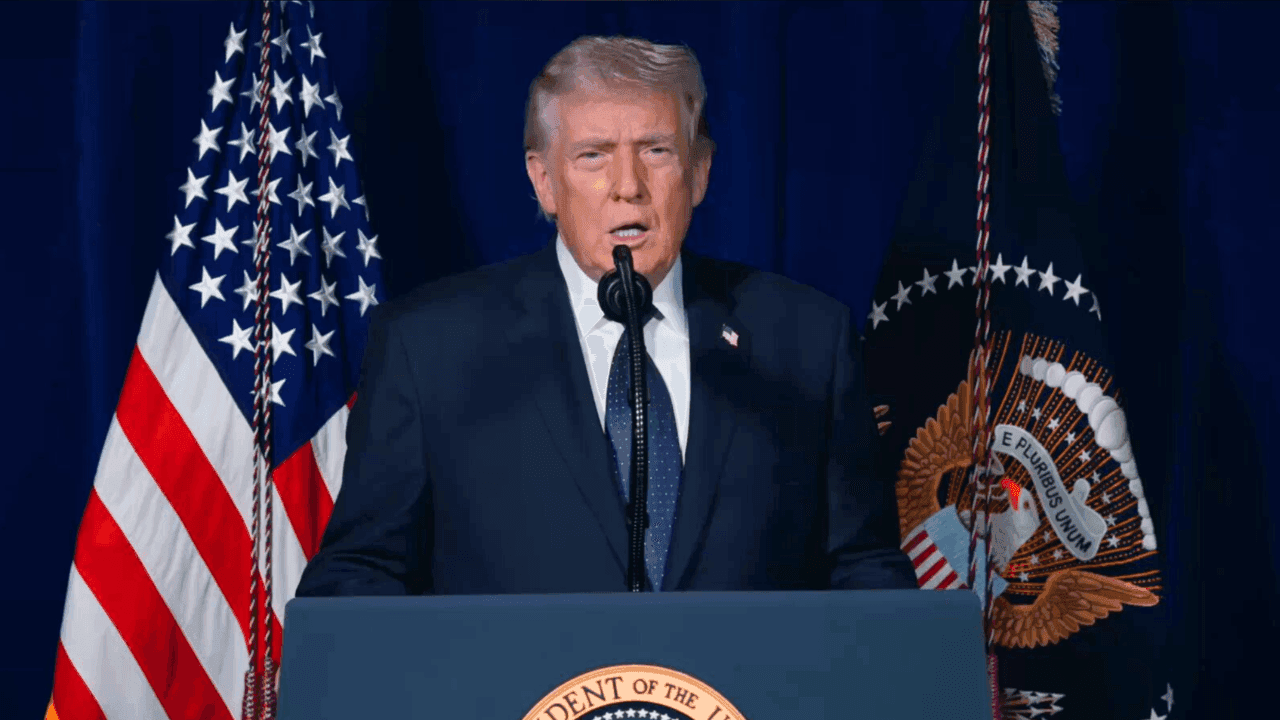
While Soldiers Serve Abroad, the Media Launches Its Own War Against Trump at Home
As U.S. forces engage enemies overseas, America's legacy media is busy recycling old, unproven allegations against President Trump. Is this journalism or political warfare?

The Media's Playbook Has Not Changed
While American forces are engaged in significant military operations against one of the Middle East's most persistent threats, a familiar drama is unfolding on the home front. Segments of the mainstream media have shifted their focus not to the battlefield, but to resurrecting unverified allegations against President Donald Trump — this time sourced from the long-awaited Epstein files.
This is not a new strategy. Since Trump first entered the political arena as a Republican candidate, the press has operated with what appears to be a singular mission: to damage him politically, regardless of the circumstances. Wars, national crises, economic turbulence — none of it changes the script.
A Pattern Built on Debunked Narratives
The media's track record of weaponizing unverified stories against Trump is well-documented. Consider the Russian collusion narrative — a years-long saga that ultimately collapsed under scrutiny. Or the consistent labeling of destructive riots as "mostly peaceful protests." And perhaps most infamously, the coordinated effort to discredit the Hunter Biden laptop story ahead of the 2020 presidential election.
On October 19, 2020, Politico published a headline that would later prove deeply misleading: "Hunter Biden story is Russian disinfo, dozens of former intel officials say." Fifty-one intelligence officials signed on to that claim. The laptop, of course, turned out to be entirely real — and packed with politically explosive material relating to then-candidate Joe Biden and his family.
The consequences of that cover-up were significant. President Biden ultimately pardoned his son Hunter before leaving office. The 51 officials who signed the letter lost their security clearances. And the press, working in concert with social media platforms, successfully suppressed a story that could have altered the course of a national election.
NPR Admits It Got It Wrong
Even NPR's own CEO, Katherine Maher, was compelled to acknowledge the outlet's failure during congressional testimony. "NPR acknowledges we were mistaken in failing to cover the Hunter Biden laptop story more aggressively and sooner," she admitted. Yet despite that admission, NPR continued to receive public funding, Biden won the presidency, and the Republican Party paid the political price. The institution faced no meaningful accountability.
Epstein Files and the Trump Name-Association Game
Fast-forward to the present, and the media is running a remarkably similar play. This week, newsrooms across the country made a concerted effort to link two names in their headlines: Trump and Jeffrey Epstein. The allegation in question is old, unverified, and legally uncorroborated — but that has done little to slow the coverage.
NPR offered this headline: "Justice Department publishes some missing Epstein files related to Trump." Radar Online went further with tabloid flair: "'Missing' Epstein Files Containing Explosive Trump Assault Claim Released by Pam Bondi Hours After She Was Subpoenaed by Congress."
The Daily Beast published multiple pieces on the subject, including one with the headline: "Creepy Nicknames Trump Allegedly Used With Epstein Revealed by Accuser" — complete with a subhead reading simply, "EWWWW." The reporter behind that piece, Catherine Bouris, has been transparent about her editorial philosophy: "I do not pretend to be an impartial witness... I do not think journalism needs to be neutral in the face of oppression and injustice in order to be effective."
At the very least, that is an honest acknowledgment of what passes for journalism in certain corners of the media landscape.
Legal Pressure Is Changing the Language, If Not the Intent
One notable shift in media behavior has emerged: fear of litigation. Since returning to the White House, President Trump has secured two major legal victories against major broadcast networks. Both ABC and CBS agreed to substantial financial settlements. As a result, many outlets are now hedging their language with terms like "uncorroborated," "unsubstantiated," or "alleged."
The Los Angeles Times, CBS News, and the Associated Press all used variations of "uncorroborated" in their Epstein-Trump coverage. CNN, The Guardian, and The Hill opted for the safer term "allegation." MS NOW deployed the double-barreled phrase "unsubstantiated Trump allegations" — a legal department's dream combination.
This careful language reveals something important: even the outlets running these stories seem to recognize they are on shaky factual ground. The qualifier-laden headlines are less a sign of journalistic integrity than institutional self-preservation.
Disinformation in a Time of War
What makes this moment particularly striking is its timing. American troops are deployed in active operations. Lives are at stake. The United States is engaged in a geopolitical confrontation with Iran, and the digital information space has itself become a battlefield — exploited by adversaries seeking to destabilize public trust and endanger military personnel.
In that environment, the decision to flood the media cycle with old, legally questionable allegations against a sitting wartime president is not merely irresponsible. It reflects a media culture that has prioritized political outcomes over journalistic standards.
President Ronald Reagan famously advised Americans to "trust, but verify" when dealing with adversaries. When it comes to today's legacy media, that standard may need an update: distrust first — they have earned it through a long and documented track record of selective truth-telling.
The Bottom Line
The press has waged an unrelenting campaign against Donald Trump for nearly a decade, cycling through one narrative after another — Russian collusion, suppressed laptop stories, riot optics, and now Epstein file innuendo. Each time, the goal has been the same: political damage. And each time, the credibility cost to the media has grown higher. Americans paying attention have noticed. The question is whether the institutions responsible will ever reckon honestly with what they have become.