What Happened When One Woman Meditated Under the Same Oak Tree Every Single Day for a Year
After a decade of relentless activism left her burned out, Natalie Fée found an unexpected healer just outside her door — a solitary oak tree on an urban hillside.

A Burned-Out Activist, an Urban Hillside, and One Remarkable Oak Tree
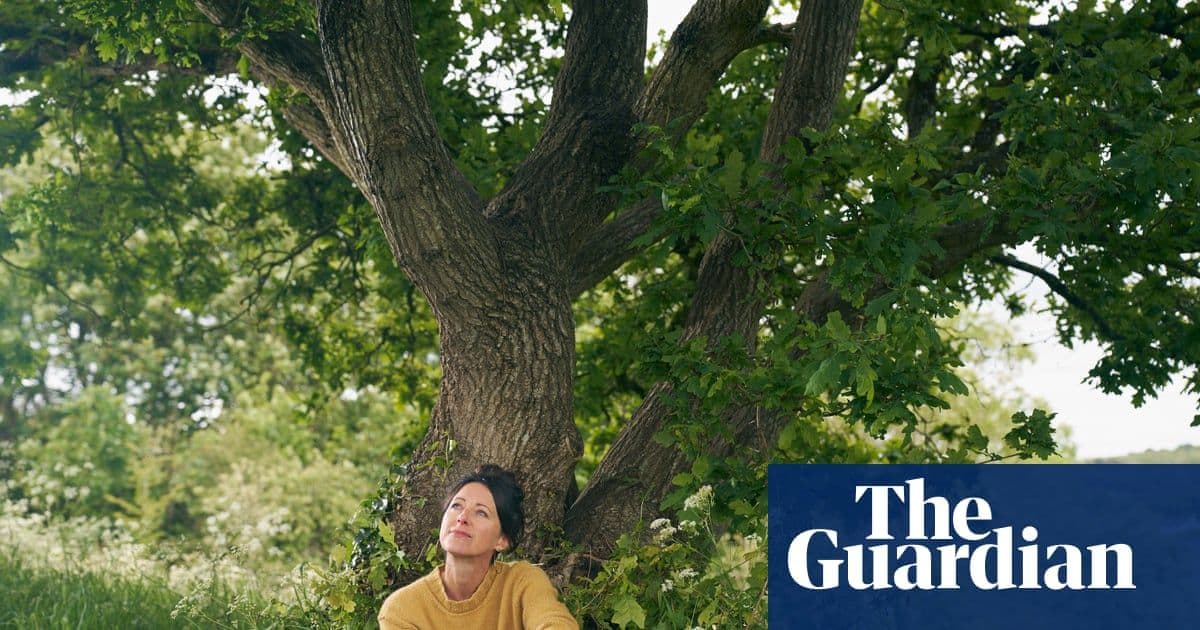
When Natalie Fée relocated to Clevedon, a small town near Bristol, in 2022, she wasn't searching for anything in particular. But the moment she spotted the solitary oak tree standing on the grassy hill behind her flat, something pulled her toward it — and she hasn't really stopped going back since.
The setting is far from dramatic. There's no sweeping countryside vista or remote woodland retreat. It's simply an urban green space, an ordinary hill, and one tree standing alone against the sky. Yet for Natalie, it became the most important place in her world.
A Decade of Fighting Plastic Had Left Her Depleted
For ten years, Natalie had poured herself into running a nonprofit organization dedicated to tackling the global plastic pollution crisis. The results were genuinely significant — her work helped push the UK government to ban plastic cutlery and polystyrene takeaway containers, and pressured major supermarkets into eliminating plastic cotton buds. These were hard-won, meaningful victories. But the relentless effort had taken a serious toll.
By the time she arrived in Clevedon, she was exhausted to her core. She had begun stepping back from frontline activism, cutting her working hours to just three days a week, and quietly searching for something that might restore her sense of inner calm.
That search led her to what she describes as a slightly unconventional idea: what if she meditated beneath the same oak tree every single day for an entire year?
She set her start date as the winter solstice of 2023 and committed fully to the challenge.
The Dark, Heavy Months of Winter
The early weeks were far from inspiring. Winter arrived with relentless rain, battering storms, and biting winds that made each daily visit feel like an act of sheer willpower. Natalie would bring a small square of sheepskin to sit on and occasionally a hot-water bottle tucked under her arm for warmth. The tree offered little visual drama during those months — no leaves, no birdsong, no burst of colour. Just bare branches and wet ground.
Her routine remained consistent regardless. She would spend the first ten minutes or so simply observing her surroundings with open eyes, taking in whatever small detail presented itself. Then she would close her eyes and settle into a meditation lasting between twenty and thirty minutes. Afterward, she would return home and record her thoughts in writing, often composing a poem inspired by the experience.
Reading back her winter poems now, she says they feel notably introspective — reflective of a mind still processing a long period of stress and overwork. There were days she questioned the entire project. But she pressed on.
Spring Arrived Like Someone Pressing Play
The shift, when it came, was transformative. Winter had felt like a long pause, and spring felt like the world suddenly lurching back into motion.
The daffodils were among the first to announce the change. Natalie had watched them building slowly beneath the soil, anticipating their arrival every single day. When they finally burst open in a bold cluster beside her, it felt like a genuine celebration — a reward for all those grey mornings of patient waiting. Two weeks later, they were gone. That transience hit her deeply. Fifty weeks of quiet preparation for just a fortnight of bloom. It filled her with a profound sense of awe about the fragile, fleeting nature of life itself.
From there, the meadow erupted. Forget-me-nots carpeted the ground. Buttercups appeared seemingly overnight. Crickets arrived one day from nowhere and suddenly filled the air with sound. A new birdsong drifted in on the breeze — the swifts, she realized, had returned for summer. Each of these micro-moments, easy to miss in the rush of daily life, became vivid and remarkable through the lens of daily stillness.
She would return home most mornings glowing.
Summer Taught Her to Slow Down
By midsummer, the meadow had settled into a quieter, more restful rhythm — but Natalie realized she had not. Despite the peace her daily ritual offered, she was still exhausting herself during the rest of the day: working, writing music, composing poetry, staying relentlessly busy.
The contrast became impossible to ignore. If the point of this practice was to reconnect with nature, she thought, then perhaps she needed to actually follow nature's lead and rest when the season called for it. Slowing down required deliberate effort, but it was clearly necessary.
The stillness under the tree began to deepen her meditation practice in ways she hadn't anticipated. Freed from the usual noise and digital distractions, her mind became noticeably clearer. On one memorable occasion, she opened her eyes mid-meditation to find a deer standing directly in front of her — perfectly still, regarding her with calm curiosity — before a passing dog scattered them both back into motion.
The Physical and Mental Transformation
Over the course of the year, Natalie noticed a series of meaningful changes in both her body and her mind. Chronic back pain that had plagued her quietly for some time simply disappeared. Her general sense of peace deepened considerably. She experienced a quality of happiness she hadn't felt since childhood — a lightness, a playfulness, a delight in small things.
Perhaps most significantly, her relationship with time and control began to shift. Where she had previously tended to force outcomes and wrestle with uncertainty, she found herself growing more patient, more trusting that things would unfold in their own good time. The oak tree, indifferent to urgency and rooted in its own ancient rhythm, had modelled something she needed to learn.
Marking the End — and a New Beginning
On the winter solstice of 2024, exactly one year after she had begun, Natalie returned to the tree one final time as part of her formal challenge. She brought her guitar. She played. She sang her gratitude to the oak for a year of shelter, stillness, and quiet transformation.
She emerged from the year with what she describes as a genuinely renewed resilience — a steadiness she hadn't possessed before. She also felt ready, at last, to travel again and reconnect with family.
She still visits the tree most days. She admits she tends to skip the rainy ones.
You Don't Need to Go Far
Natalie's experience carries a message that is both simple and easy to overlook: you don't need a remote wilderness or a dramatic landscape to benefit from regular time in nature. A single tree on an urban hillside is enough. A patch of grass in a local park is enough. Almost any natural space, returned to consistently and approached with genuine stillness, can offer something restorative.
Nature, as Natalie puts it, always knows what you need. It is endlessly patient and perpetually ready to give. The only real requirement is that you become quiet enough to receive what it's offering.