What Artemis II Astronauts Can See That No Satellite Ever Could
The Artemis II crew is witnessing parts of the moon human eyes have never observed. Here's why their perspective matters for lunar science.
A Human Eye Where No Camera Has Gone Before
For the first time in more than half a century, human beings are journeying to the moon — and what they're seeing cannot be replicated by any orbiting satellite. The four-person crew aboard NASA's Artemis II mission is offering scientists something no robotic probe ever could: real-time, nuanced human observation of Earth's nearest celestial neighbor.
Launched aboard the Orion space capsule atop a Space Launch System rocket from Kennedy Space Center, the mission has already shattered records. On Monday, at 1:57 p.m., the crew surpassed the Apollo 13 distance record of 248,655 miles, making Artemis II the farthest any humans have ever traveled into deep space.
The Lunar Flyby: Seven Hours of Unprecedented Views
The mission's centerpiece is a roughly seven-hour lunar flyby during which astronauts Reid Wiseman, Victor Glover, and Christina Koch — all NASA — along with Canadian Space Agency astronaut Jeremy Hansen, will peer out the windows of Orion and relay live observations to scientists on the ground.
The crew woke Monday morning just 18,830 miles from the moon's surface, serenaded by "Good Morning" from Mandisa and TobyMac, before beginning their historic approach. During the flyby, they will pass over the former landing sites of Apollo 12 and 14, and catch a rare glimpse of the lunar south pole — a region NASA is targeting for crewed landings as early as 2028.
The astronauts will also witness something extraordinarily rare: a solar eclipse viewed in reverse, watching the sun vanish behind the moon from the opposite perspective that observers on Earth experience.
Why Human Eyes Outperform Satellites
NASA does have extensive photographic coverage of the moon through instruments like the Lunar Reconnaissance Orbiter. So why does it matter that humans are up there looking?
Kelsey Young, Artemis II's lunar science lead, answered that question directly during pre-flyby press conferences. The human eye, she explained, is remarkably capable of detecting subtle color variations and surface textures — especially when paired with a trained scientific mind.
"The human eye, especially when it's connected to a well-trained brain — which I assure you these four people have — is capable of making nuanced color observations in literally the blink of an eye," Young said.
The Sandbox Analogy
To illustrate the scientific value of different illumination angles, Young used a simple but powerful analogy. Imagine a sandbox at the beach — the sand isn't uniform. It has texture, varying grain sizes, and subtle color differences.
Now shine a flashlight directly from above: you'll see color variations and surface reflectivity clearly. Shift that same light to the side, and you lose the color nuance — but gain a sharp sense of topography and physical structure.
The Artemis II crew will experience both scenarios in real time. As the spacecraft moves around the moon, the angle of sunlight hitting the lunar surface will shift dramatically. This means the astronauts can observe the same locations under multiple illumination conditions — something no fixed-orbit satellite can replicate.
"We understand what the moon is made of. We understand the topography," Young said. "But we don't know what the crew are going to see in these specific illumination conditions from a scientific perspective. And that's exciting."
Ten Science Objectives and 35 Geological Features
NASA has outlined ten distinct science objectives for this flyby. Among the most significant is documenting color variations across the lunar surface. Scientists have identified approximately 35 geological features for the crew to observe and describe throughout the approach, with live commentary expected several times per hour.
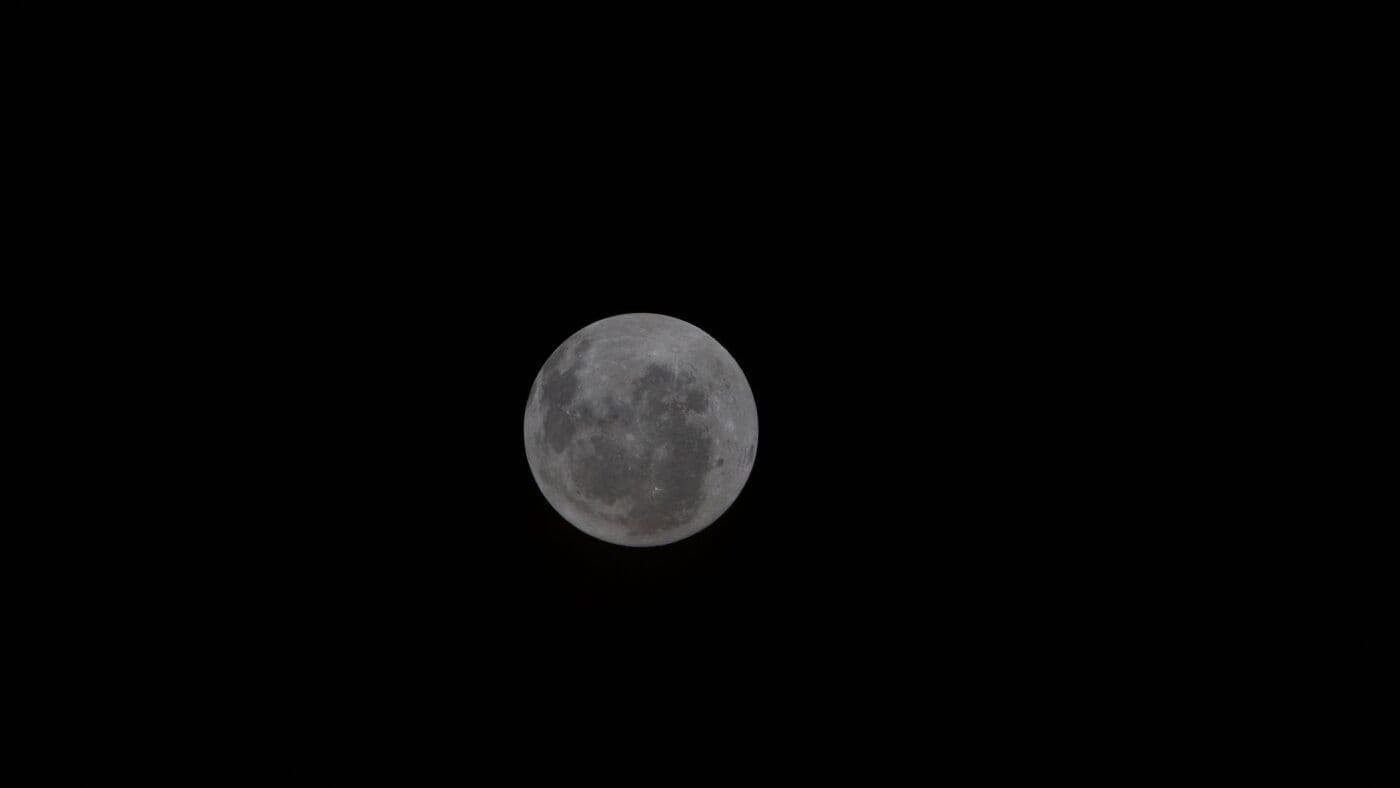
At closest approach, the far side of the moon — largely unseen by human eyes throughout history — will be approximately 21% illuminated, offering a unique viewing window into one of the most mysterious regions in our solar system.
Mission Commander Wiseman has already been delivering vivid real-time observations. In a post shared by NASA's Solar System account on X in the early hours of Sunday morning, he described looking at Tycho Crater:
"You know I'm not one for hyperbole, but it's the only thing I can come up with. Just seeing Tycho — there are mountains to the north, you can see Copernicus, Reiner Gamma. It's just everything from the training but in three dimensions and absolutely unbelievable. This is incredible."
Mission Control's reply was understated and perfect: "Copy, moon joy."
A Higher Altitude, a Broader Perspective
While Apollo missions flew much closer — and several actually landed on the lunar surface — Orion's closest approach during Artemis II will be approximately 4,070 miles from the moon. Far from being a limitation, this altitude is scientifically strategic.
The greater distance allows the crew to view the moon as a complete disc, assessing surface features at a broader scale than Apollo-era astronauts ever could. Just as Apollo geologists trained crews to spot specific rock formations at close range, Artemis II astronauts are being asked to observe large-scale patterns — color gradients, reflectivity zones, and geological transitions — that only become visible when you step back far enough to see the whole picture.
Thousands of Photos Expected
The Orion spacecraft is equipped with two Nikon D5 cameras and one Nikon Z9. Young anticipates the mission will produce thousands of images during the flyby, with NASA planning to release photos to the public as quickly as possible following the approach.
"The data we will get back will inspire the next generation of scientists and explorers," Young said. "But it will also bring the moon closer and unite all of us."
For a generation accustomed to seeing the moon through a telescope or a screen, Artemis II offers something different — and deeply human. It's the reminder that sometimes, the most sophisticated instrument we have is simply a pair of well-trained eyes.