Valve Steam Controller Review (2026): Impressive Hardware Held Back by Platform Limits
Valve's new Steam Controller is packed with features and built to impress — but without the Steam Machine to pair it with, its true potential remains untapped.
Valve Steam Controller Review (2026): A Promising Peripheral Waiting for Its Moment
Valve's latest Steam Controller arrives as a technically sophisticated piece of hardware — loaded with features, highly customizable, and built to a premium standard. Yet without the long-awaited Steam Machine to anchor its purpose, the controller feels like a headline act performing without a stage.
Build Quality and Physical Design
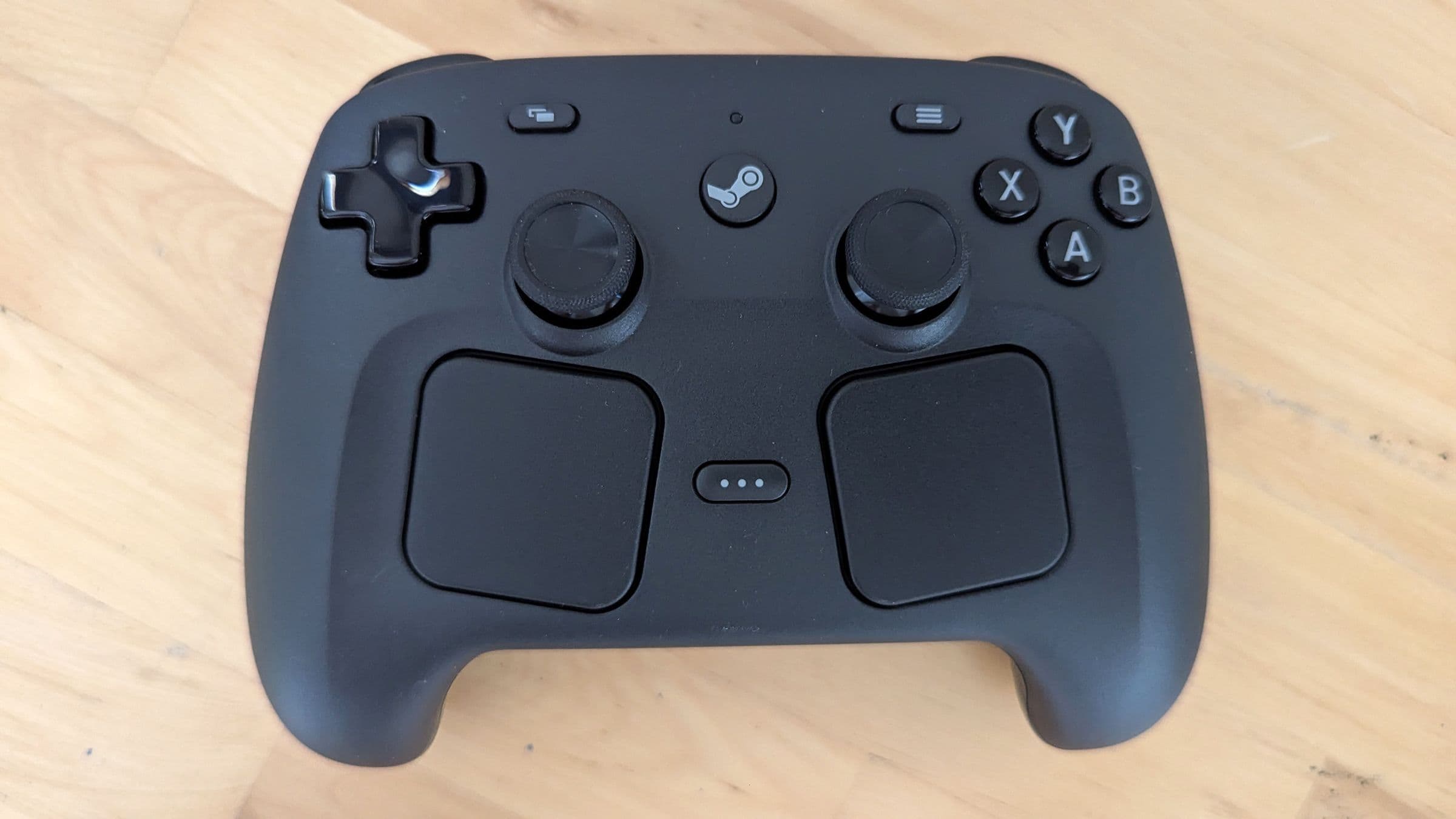
At just 292 grams, the Steam Controller is surprisingly lightweight given everything packed inside. Extended gaming sessions rarely feel tiring, and the overall construction exudes quality. The standout physical elements include TMR thumbsticks that deliver exceptional accuracy, along with the same responsive trackpads found on the Steam Deck, positioned on the lower half of the controller to enable mouse-like precision during gameplay.
However, the layout does come with trade-offs. Because so much space is dedicated to housing those trackpads, the thumbsticks sit slightly higher than ideal, requiring players to subtly adjust their grip. The D-pad, meanwhile, is the one area where Valve appears to have cut corners — it functions adequately but lacks defined edges and features a glossy finish that reduces tactile grip. Outside of that shortcoming, the controller's physical construction is genuinely excellent.
Features and Technology
The Steam Controller is loaded with impressive technology beneath its shell. It includes both an accelerometer and a gyroscope for motion-based input, alongside advanced rumble engines capable of nuanced haptic feedback. Much like the Nintendo Switch 2 Joy-Con 2s, the controller can vibrate at frequencies high enough to effectively function as a small speaker — enabling clever audio Easter eggs, including a hidden Wilhelm Scream.
A bundled charging puck rounds out the package, serving dual purposes as both a power source and a connectivity hub. It's an elegant solution that feels genuinely well-considered.
Software Integration and Customization
Connecting the controller and pressing the Steam button a second time launches Big Picture mode — Valve's console-style interface designed for comfortable couch navigation. The interface remains largely unchanged from previous iterations, presenting bold game tiles, clear library filters, and large text optimized for TV viewing distances.
Where the Steam Controller genuinely shines is in its deep customization options. Launching any game from Big Picture mode displays a real-time overlay showing which inputs are assigned by default. From there, players can remap virtually every button and function. Holding the Steam button grants quick access to settings such as rear grip button behavior, gyroscope functions, and trackpad configuration. Trackpad sensitivity can be tuned anywhere from 25 percent to 3,000 percent responsiveness, with built-in haptic feedback providing satisfying tactile confirmation as you navigate.
This level of flexibility is particularly valuable for strategy games, where switching a trackpad to mouse-cursor behavior can meaningfully improve precision.
The Big Limitation: Steam's Walled Garden
Despite its versatility, the Steam Controller carries one significant drawback that potential buyers must understand before purchasing.
Most PC gaming controllers — from premium options like the Thrustmaster ESWAP X2 H.E to budget-friendly alternatives like Hyperkin's Competitor — connect to Windows via the XInput API, allowing virtually any game to recognize them regardless of where it was purchased. The Steam Controller, by contrast, operates through Valve's proprietary Steam Input system.
This means Windows does not automatically identify it as a standard controller. As a result, playing games sourced from outside Steam — whether from GOG, the Epic Games Store, or directly from independent developers — becomes extremely difficult or outright impossible in many cases.
Verdict
The Valve Steam Controller is an ambitious and technically impressive peripheral that demonstrates clear engineering thoughtfulness. Its trackpads, customization depth, haptics, and build quality place it among the more capable controllers on the market. But its dependence on the Steam ecosystem and its inability to function as a universal PC controller limit its appeal considerably.
More critically, the controller feels incomplete without the Steam Machine hardware it was presumably designed to complement. Until that device materializes, the Steam Controller remains a fascinating but context-starved product — one that is difficult to fully recommend for everyone, despite being easy to admire.