United States Commits Major Earthquake Relief Package to Devastated Venezuela
The U.S. has announced a sweeping humanitarian response to Venezuela's deadly earthquakes, pledging $150 million and deploying rescue teams as the death toll approaches 1,000.

U.S. Launches Sweeping Relief Effort Following Venezuela's Deadly Earthquakes
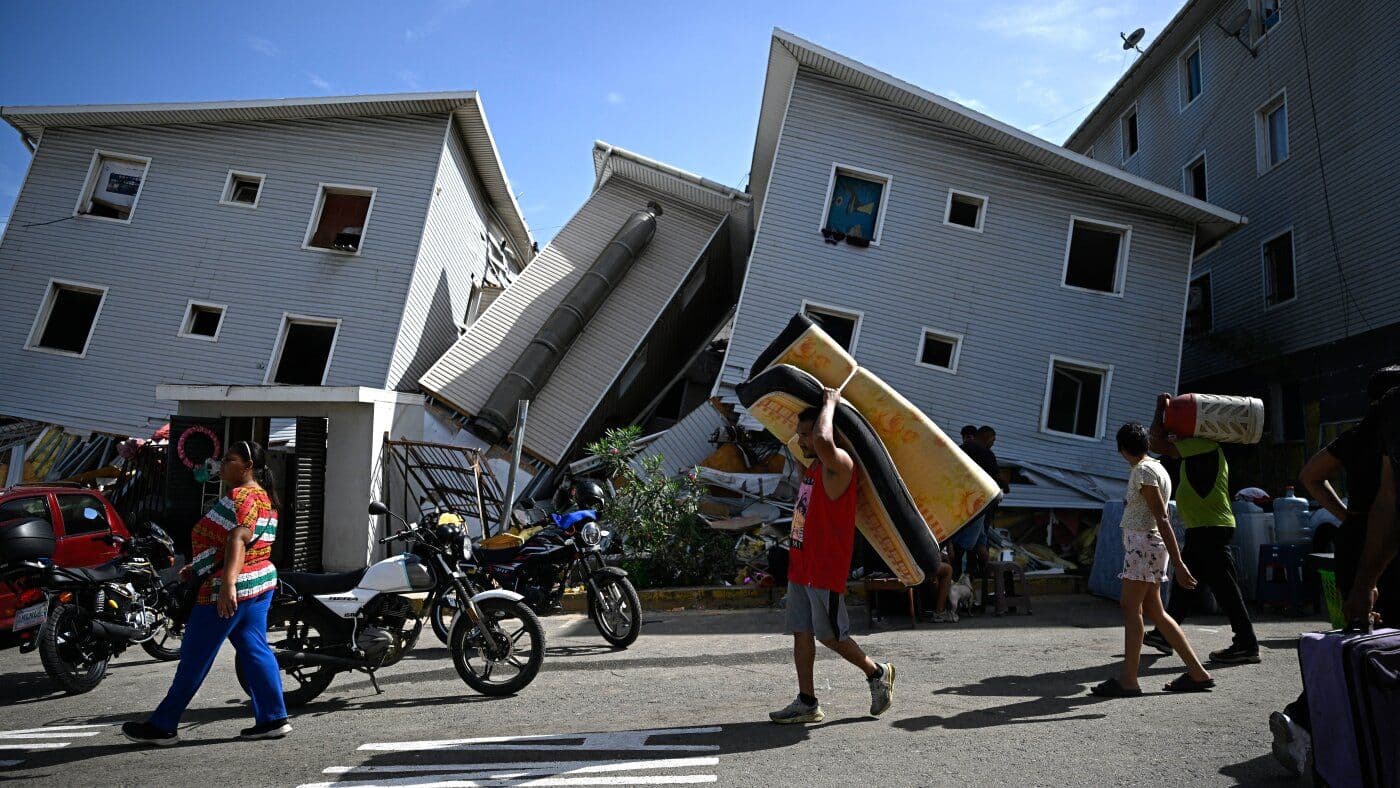
The United States has unveiled one of its most ambitious humanitarian responses to a natural disaster in recent years, committing substantial resources to Venezuela following a pair of devastating earthquakes that struck on June 25, killing at least 164 people and leaving entire neighborhoods in ruin near the capital, Caracas.
The twin quakes — described as the most powerful to hit Venezuela since 1900 — reduced residential buildings to rubble and overwhelmed local health infrastructure, forcing hundreds of injured residents to seek care in overcrowded, partially collapsed facilities.
A Whole-of-Government Pledge
Secretary of State Marco Rubio, speaking to journalists during an overseas trip to the Gulf region, outlined Washington's commitment in strong terms. "We have a whole-of-government response," Rubio stated. "It'll be big; it'll be fast; and it'll be effective."
As part of the relief effort, the administration has pledged $150 million in funding directed toward faith-based humanitarian organizations, including Samaritan's Purse and Catholic Relief Services, as well as two key United Nations agencies — the World Food Programme and the Office for the Coordination of Humanitarian Affairs.
Search and Rescue Teams on the Ground
Beyond financial aid, the U.S. is deploying a Disaster Assistance Response Team alongside two specialized urban search and rescue units from Virginia and California.
- The Virginia team comprises 80 personnel and 6 search dogs
- The California team brings 70 personnel and an additional 6 dogs
The Pentagon has also been called upon to assist with logistics, including transporting U.S. government staff and critical supplies into Venezuela, where some airport infrastructure sustained significant damage during the quakes.
A Striking Contrast to the Myanmar Response
The scale of the Venezuela relief effort stands in sharp contrast to the administration's reaction to the catastrophic earthquake that struck Myanmar in March 2025, which claimed more than 3,500 lives. At the time, Washington contributed just $9 million and dispatched three individuals to assess conditions — with no search-and-rescue team deployed. China, by comparison, sent $137 million in aid to Myanmar.
Jeremy Konyndyk, president of Refugees International and former head of USAID's disaster response under the Obama administration, believes the administration has course-corrected based on that earlier misstep.
"This clearly reflects some lessons that the administration learned after the failure to deploy a search and rescue team to Myanmar," Konyndyk told NPR. "There was definitely a period last year when they had lost the capability to deploy a search and rescue team in the DOGE destruction of USAID. It was very visible and very embarrassing."
Since then, the State Department has quietly rehired a number of former USAID humanitarian staff and reinstated contracts with organizations that specialize in disaster response, including search and rescue operations.
Geopolitics and the Venezuela Factor
Analysts note that the Trump administration has been transparent about prioritizing aid to nations of strategic geopolitical importance. Venezuela fits squarely within that framework, particularly given Washington's active role in efforts to dismantle the authoritarian government of Nicolás Maduro.
Konyndyk acknowledges the immediate response looks encouraging but warns that the harder test lies ahead. "The administration clearly wants to avoid a black eye of not deploying a robust immediate response, but whether they will sustain the kind of follow through that can save lives in the months that follow — I think that's an open question," he said.
He emphasized the need for emergency medical teams to stabilize Venezuela's health system, along with targeted investments in restoring water infrastructure and other essential services damaged by the disaster.
Conditions on the Ground Remain Critical
For those managing the crisis firsthand, the situation remains dire. Cesar Jimenez, a Venezuelan national coordinating the response for aid organization Project Hope with a focus on local health systems, described conditions at two healthcare facilities in La Guaira — near the epicenter of the second earthquake — as catastrophic.
"They're totally collapsed," Jimenez said. "We saw people laying on the ground with no beds, being assessed by health staff. We saw like 200 people in one tiny healthcare facility seeking help."
Jimenez stressed the unique vulnerability his country now faces. "We were not prepared for this. Nobody saw this coming, and we need a lot of support," he said, adding that the ongoing threat of aftershocks continues to endanger already displaced and injured survivors.
The Long Road to Recovery
Experts agree that while immediate rescue operations are critical, the most impactful disaster-preparedness work happens long before earthquakes strike. Konyndyk pointed to USAID's past initiatives following the 2015 Nepal earthquakes and the 2023 Turkey-Syria disaster, during which agency staff guided local authorities on earthquake-resistant building codes and the strategic placement of emergency response kits.
"The most lifesaving thing that can be done in an earthquake scenario is the work that is done beforehand, not the work that is done after live rescues," Konyndyk noted.
He expressed hope that the current administration would invest in that kind of long-term preparedness infrastructure for Venezuela in the months ahead — a model that USAID and international partners have championed for decades.
NPR has contacted the State Department for additional details regarding the full scope and timeline of the U.S. relief operations in Venezuela.

