Ultra-Sensitive Quantum Sensor Breaks Energy Detection Records — and Could Reveal Dark Matter
Finnish scientists have built a sensor that detects energy smaller than one zeptojoule, a breakthrough that could reshape quantum computing and dark matter research.
Finnish Scientists Shatter Energy Detection Limits With Groundbreaking Quantum Sensor
A team of researchers in Finland has developed an extraordinarily sensitive sensor capable of detecting amounts of energy so small they defy everyday comprehension — less than one zeptojoule, or a trillionth of a billionth of a single joule. This remarkable achievement could accelerate the development of quantum computers, open new pathways for counting individual photons, and even help physicists track down one of the universe's greatest mysteries: dark matter.
Just How Small Is a Zeptojoule?
To appreciate the scale of this breakthrough, consider that one zeptojoule is roughly equivalent to the energy required to lift a single red blood cell by just one nanometer against Earth's gravitational pull. It is an almost incomprehensibly tiny quantity of energy — yet the researchers managed to detect an electromagnetic pulse measuring only 0.83 zeptojoules with confidence and precision.
According to the research team, this represents the first time a calorimetric measurement device has ever achieved sensitivity at this level, marking a genuine milestone in ultra-precise measurement technology.
How the Sensor Works
The research was led by Academy Professor Mikko Möttönen at Aalto University, conducted in partnership with quantum computing firm IQM and the Technical Research Centre of Finland (VTT). Their findings were formally published in the prestigious journal Nature Electronics.
At the heart of the device is a calorimeter — an instrument engineered to detect minute variations in heat energy. Rather than simply pointing a beam at a target and reading a number, measuring energy at this scale demands extraordinary care and precision at every step.
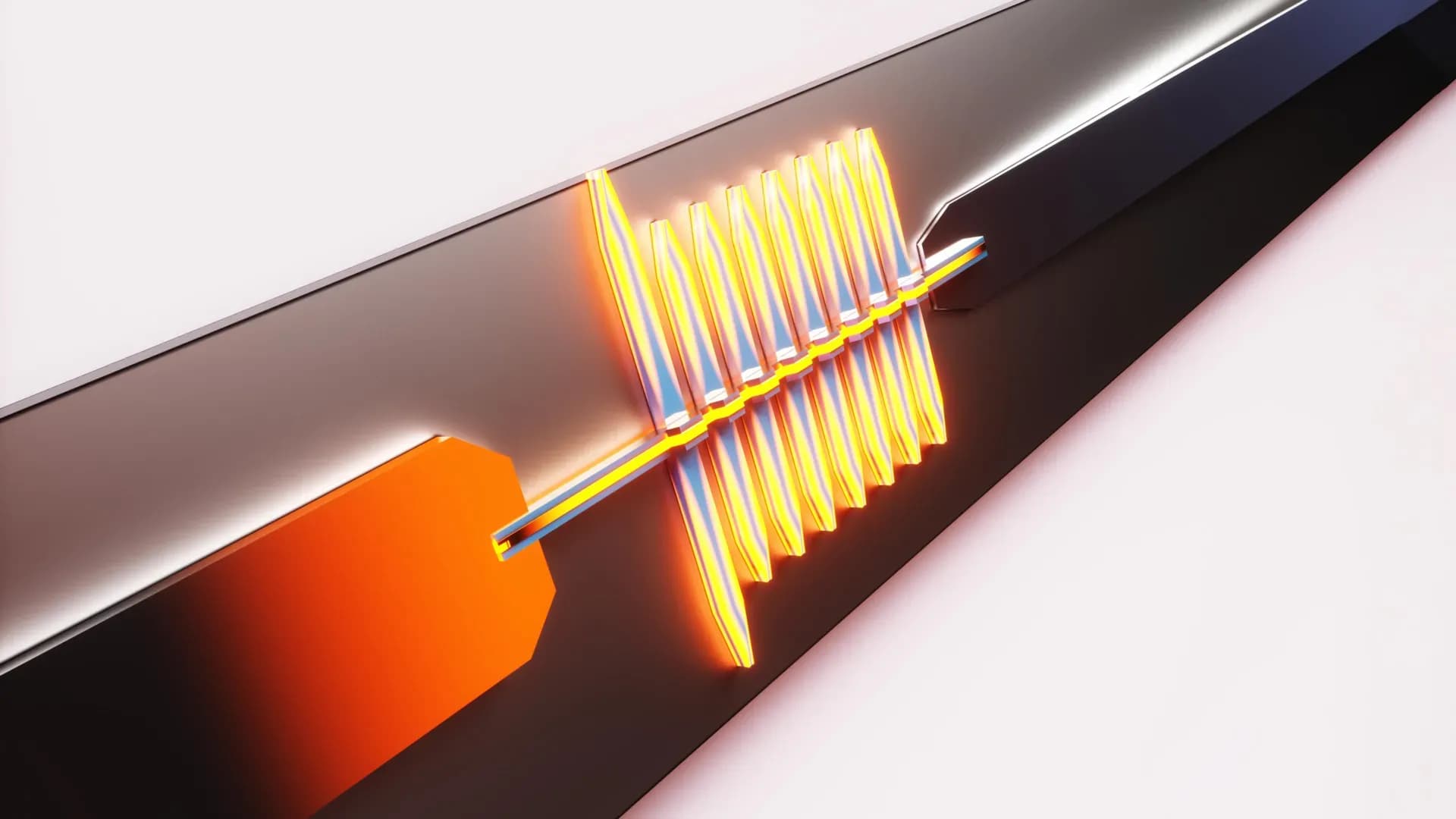
The scientists directed a microwave pulse into a specially constructed sensor made from two distinct types of metals. One component used superconducting materials, which allow electrical current to flow without any resistance. The other component was built from standard conducting metals, which do resist electrical flow.
Why That Combination Makes All the Difference
This pairing of superconductors and normal conductors is the key to the device's remarkable sensitivity. As Möttönen — who is also a co-founder of quantum computing company IQM — explained, the combination makes superconductivity an extremely fragile state. Even the slightest rise in temperature within the ultracold conductor is enough to disturb it, making the system extraordinarily responsive to even the faintest energy input.
After rigorously filtering out background noise, the team successfully confirmed detection of the 0.83 zeptojoule pulse, validating the sensor's unprecedented performance.
Implications for Quantum Computing
One of the most exciting practical applications of this technology lies in quantum computing. Modern quantum computers rely on qubits — the fundamental units of quantum information — which must be maintained at extremely cold millikelvin temperatures to function correctly.
Because this new calorimeter naturally operates within that same millikelvin temperature range, it could potentially be integrated directly into quantum computer architectures without disrupting the delicate qubit environment. This means researchers could read out qubit states without needing to amplify signals or raise the device to higher temperatures, reducing interference and potentially improving overall system performance.
Hunting Dark Matter From Space
Beyond quantum computing, the sensor holds significant promise for astrophysics — specifically for the search for dark matter axions, theoretical particles believed to exist throughout the universe but never directly detected.
One of the core challenges in detecting axions is that scientists have no way of predicting when such a particle might arrive at a detector. The research team is now working to adapt the calorimeter so it can respond to signals arriving at completely unpredictable times, which is essential for any practical dark matter detection system.
This capability would also support the broader goal of single-photon counting — detecting the arrival of individual particles of light — a long-pursued objective in both quantum technology and astrophysics that would unlock new possibilities in imaging, communication, and fundamental science.
Research Infrastructure and Funding
The experiments were conducted within the facilities of OtaNano, Finland's national research infrastructure dedicated to nano-, micro-, and quantum technologies. Funding came primarily through the Future Makers initiative, jointly supported by the Jane and Aatos Erkko Foundation and the Technology Industries of Finland Centennial Foundation.
With this breakthrough firmly established, the team is now focused on refining the technology further — bringing humanity one step closer to answering some of the deepest questions about the nature of the universe.