UK Space Startup Sends Autonomous Lab Into Orbit to Unlock Secrets of Age-Related Disease
Mass Balance has launched a self-operating chemical laboratory into space, hoping microgravity will reveal new insights into proteins linked to Alzheimer's and Parkinson's.
UK Startup Takes Disease Research Beyond Earth's Atmosphere
A British space technology company has successfully launched a miniature, self-operating laboratory into Earth's orbit, marking a significant step toward using the weightless environment of space as a cutting-edge platform for life sciences research. The mission, which lifted off aboard a SpaceX transporter on Tuesday, represents the first operational test of a system designed to study disease-causing proteins that are notoriously difficult to examine under normal gravitational conditions.
What Exactly Was Launched?
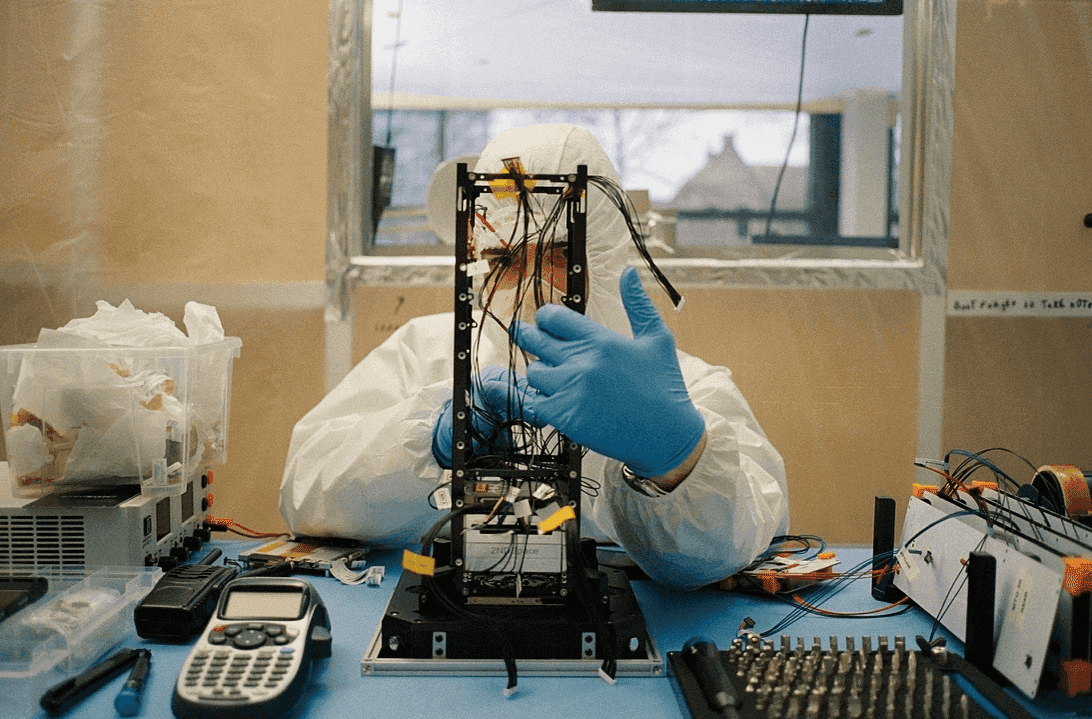
The spacecraft at the center of this mission belongs to Mass Balance, a UK-based startup with ambitious plans to turn low-Earth orbit into a reliable research environment. Their device — roughly the size of a grapefruit — is packed with chemicals, sensors, and control systems capable of running experiments without any human intervention. Housed within a compact 10-centimeter pod engineered by Austrian manufacturer Tumbleweed, the unit will circle the planet for approximately two months, autonomously collecting and transmitting real-time data on how biological and chemical systems behave under microgravity conditions.
Why Conduct Science in Space?
On Earth, gravity creates unavoidable complications in scientific experiments. Phenomena such as convection — the movement of heat through fluids — and sedimentation, where denser particles settle at the bottom of a mixture, can distort and contaminate research data. By removing gravity from the equation, scientists hope to observe chemical and biological processes in their purest, most unobstructed form.
"When you take away gravity, a lot of weird and wonderful things happen, some of which will be very valuable for life sciences and pharma," said Toby Call, co-founder and CEO of Mass Balance. "It sounds wild today, but the goal is really to make space boring, reliable, and just another research environment."
The Link to Alzheimer's, Parkinson's, and Cancer
One of the most compelling motivations behind Mass Balance's work is the potential to better understand intrinsically disordered proteins — a class of proteins associated with some of the most devastating age-related conditions, including Alzheimer's disease, Parkinson's disease, and certain forms of cancer.
These proteins are a persistent challenge for researchers on Earth because they continuously shift and contort their shapes, making them nearly impossible to image or analyze with precision. This instability has created significant gaps in the training data used by advanced artificial intelligence tools like Google's AlphaFold, which struggles to accurately predict the behavior of disordered proteins or forecast how they might respond to potential treatments.
Call believes that microgravity could stabilize these proteins enough to allow for meaningful study. The plan is to run structured experiments on disordered proteins in space, collect high-quality data, and use those findings to train a specialized AI model adapter — one capable of filling the gaps left by Earth-based research. Revenue would then be generated through the model itself, data licensing agreements, and controlled data access.
Tuesday's Mission: A Critical First Step
For this initial launch, Mass Balance is keeping the objectives straightforward and focused on validation. Rather than conducting protein experiments immediately, the team is testing its core operating system and data capture capabilities. The payload includes an industrial biocatalyst — a substance that accelerates chemical reactions — which will break down a separate compound while the platform monitors the process using light-based detection methods to confirm everything is functioning as intended.
A Growing Field of Space-Based Biotech
Mass Balance is not alone in recognizing the potential of orbital laboratories for pharmaceutical and biological research. In May of this year, fellow British company BioOrbit launched a test module designed to grow exceptionally pure and stable crystals that could be transformed into injectable cancer treatments. Meanwhile, US-based Varda Space Industries is also advancing its own microgravity pharmaceutical processing program.
However, Mass Balance distinguishes itself from these competitors with one key design decision: its system is not built to return to Earth. This means the company avoids the formidable engineering challenge of designing hardware capable of surviving the intense heat and mechanical stress associated with atmospheric re-entry — a significant cost and complexity saving.
Looking Ahead
If Tuesday's test proves successful, it could open the door to a new era of space-enabled medical research — one where the unique conditions of orbit become as routine and accessible as any conventional laboratory setting.
"Microgravity is a new tool that is underexploited," Call said.
With diseases like Alzheimer's continuing to evade effective treatments, the prospect of unlocking new biological insights from 400 kilometers above the Earth's surface may be less far-fetched than it sounds.