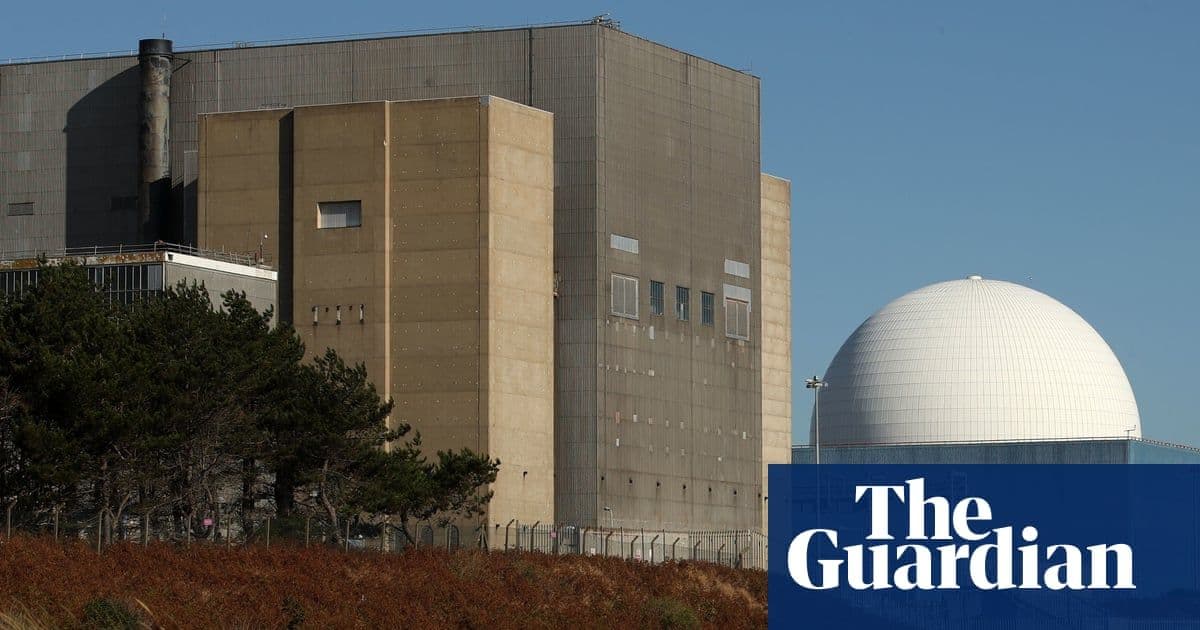
UK Plans Nuclear Power Plants Closer to Homes Under Sweeping Regulatory Overhaul
Energy Secretary Ed Miliband has outlined bold reforms to nuclear regulation that could place power plants nearer residential areas and protected nature sites.

UK Set to Overhaul Nuclear Regulations to Fast-Track Energy Infrastructure
Energy Secretary Ed Miliband has announced sweeping changes to nuclear regulations that could pave the way for power plants to be constructed closer to residential communities and on environmentally sensitive land. The reforms, intended to accelerate the development of critical energy infrastructure, are already drawing sharp criticism from environmental experts.
What the Reforms Involve
The government plans to implement the findings of the Nuclear Regulatory Taskforce Review, completed last year under the leadership of John Fingleton, former head of the Office of Fair Trading. The review identified the existing system as excessively bureaucratic and overly complex, arguing that it prioritised procedural compliance over genuinely safe outcomes.
Among the most significant proposed changes is a revision of the semi-urban population density criteria and default outline planning zones — guidelines that have historically been used to prevent nuclear facilities from being built near densely populated areas.
Miliband framed the overhaul as a necessary step toward national energy resilience. "As the current Middle East conflict shows, we need to go further and faster to build the clean energy we need to get off volatile fossil fuel markets and deliver energy security for our country," he said.
Backing From Government and Industry
The Nuclear Regulatory Taskforce was established by Prime Minister Keir Starmer in February, following the government's pledge to eliminate outdated rules and reduce red tape to accelerate construction across the UK. Starmer accepted the taskforce's recommendations in December, signalling his intention to use the framework to shape the country's broader industrial strategy.
Chancellor Rachel Reeves reinforced the government's position, stating: "To build national resilience, drive energy security and deliver economic growth, we need nuclear. That's why we're overhauling the system, getting rid of duplicative or overly complex guidance, rules and regulations that have been holding back our nuclear ambitions."
The reforms also coincide with Environment Secretary Emma Reynolds publishing the regulatory justification for Rolls-Royce's proposal to become the first company to develop small modular reactors (SMRs) in the United Kingdom. The government indicated that this lengthy approval process would likely be a one-time requirement, with future SMR projects expected to benefit from the streamlined regulatory environment.
In June, Miliband had already announced a £14.2 billion programme encompassing a new nuclear power station — including a major investment at Sizewell C on the Suffolk coast — alongside an ambitious push to expand SMR technology across the country.
GMB union national officer Charlotte Brumpton-Childs welcomed the direction of travel, saying: "Nuclear power is essential to deliver our energy independence and achieve net zero. Our members stand ready to build the next generation of nuclear power right across the UK."
Environmental Experts Sound the Alarm
Despite the government's insistence that the reforms represent a "win-win for building critical infrastructure while protecting nature and the environment," environmental specialists are far from convinced.
Alexa Culver, a leading environmental planning lawyer at RSK Wilding, accused the government of pursuing "irresponsible deregulation" at a particularly precarious moment for the natural world. "No ecologists or environmental specialists were invited to shape these proposals into anything that resembles a 'win' for nature," she said.
Culver drew parallels with high-profile environmental failures in other sectors, warning that simplifying complex regulatory frameworks without adequate checks and balances creates serious risks. "Recently popularised and devastating environmental scandals — like within the water industry — prove that high-stakes regulation is complex and easily manipulated when 'simplified' without checks and balances. This was a chance for the government to design resilience into our industrial strategy, and the government didn't take it."
She also raised concerns about a recommendation that would require the government to compensate nuclear developers for any financial losses incurred while judicial reviews of their projects are ongoing — a provision critics argue could shield developers from meaningful legal accountability.
The Bigger Picture
The government maintains that its reformed regulatory approach will be "proportionate, focused on real risk, rooted in evidence" while still safeguarding biodiversity and natural habitats. However, the debate over how to balance urgent energy ambitions with environmental protection is likely to intensify as these proposals move toward implementation throughout the year.