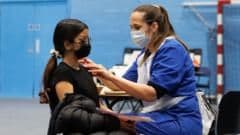
UK Health Experts Call for Free MenB Vaccines for All Teenagers Aged 15 and Over
UK advisers are urging the government to offer free meningitis B vaccines to all 15-year-olds following a deadly outbreak in Kent that claimed two lives.
UK Experts Push for Routine MenB Vaccination in Secondary Schools
Health advisers in the United Kingdom are now recommending that all teenagers around the age of 15 be offered a free meningitis B (MenB) vaccine — marking a significant shift from previous guidance. The recommendation comes in the wake of the country's largest and fastest-growing MenB outbreak, which struck Kent earlier this year and resulted in two fatalities.
The Joint Committee on Vaccination and Immunisation (JCVI) is formally requesting that the government evaluate the introduction of routine MenB vaccinations for secondary school-aged young people, with the aim of providing stronger protection against a potentially fatal disease.
A Father's Loss Drives Change
Anthony Mills, whose 18-year-old son Aaron passed away after contracting MenB during the Christmas university break in Liverpool, described the push for wider teenage vaccination as his son's "legacy."
The Mills family has since dedicated themselves to raising awareness and fundraising for the charity Meningitis Now. Anthony told the BBC that he believes Aaron's story was instrumental in persuading the JCVI to revise its guidance, and he is now calling on the government to act swiftly on the recommendation.
"The only thing that could have saved Aaron is the vaccine," Anthony said.
He also revealed that his family had been unaware a MenB vaccine even existed, having assumed that Aaron's school vaccinations at age 14 had fully protected him. It was only after his son's death that they learned Aaron had only received the MenACWY vaccine — which guards against four other bacterial strains that cause meningitis — but not MenB.
Anthony stressed that beyond vaccination, there is an urgent need for "more impactful literature" to educate the public about MenB and the specific strains each vaccine covers.
Survivor Voices: The Human Cost of MenB
Becca Heritage, a former medical student who had both legs and one hand amputated after contracting MenB while studying in Southampton, also welcomed the new recommendation. She emphasised the critical importance of educating young people about the disease's dangers and urging them to take responsibility for their own health.
"It's easy to think 'it'll never be me,' but all young people should know the signs and symptoms, as well as taking ownership of getting their vaccines and knowing which strains they are protected against," she said.
Becca called on the government to follow through on the JCVI's advice without delay, warning that "young people's lives are at stake."
"Young people's lives are not expendable, and this vaccine is our best protection. Anything other than following the advice would be failing our young people," she added.
What Changed — and Why
During the Kent outbreak, which saw 29 confirmed or suspected cases, many parents rushed to purchase the MenB vaccine privately from pharmacies. At that time, both the government and the JCVI maintained that broader teenage vaccination was unnecessary.
That position has now been reversed, following growing recognition that teenagers face a heightened risk of contracting and becoming seriously ill from MenB. Experts note that the disease can spread through close contact — including kissing or sharing vapes — making adolescents particularly vulnerable. For full protection, two doses of the vaccine are required.
As an immediate precautionary measure, a one-off vaccination campaign is already being rolled out across the UK this summer, targeting young people preparing to attend university for the first time.
Government Response and Next Steps
The Department of Health and Social Care acknowledged the updated guidance, stating: "We will consider the advice and will update on any future programme in due course."
The decision on whether to fund routine MenB vaccination through the NHS will ultimately rest with ministers in each of the four UK nations, who must weigh the financial implications against the public health benefits. If the programme is approved, teenagers would receive the vaccine free of charge.
Prof Wei Shen Lim, chair of the JCVI advisory group, acknowledged the gravity of the disease and the role that patient and family testimonies played in shaping the committee's recommendation.
"Invasive meningococcal disease is a rare but very serious illness which can have a devastating impact on lives. The JCVI has worked closely with meningitis charities and would like to thank all those who responded, including on behalf of loved ones who sadly died or had life-changing complications. Their lived experiences were carefully considered," he said.
Dr Tom Nutt, head of Meningitis Now, described the recommendation as a "significant moment" in the ongoing battle against the disease. "Today's recommendation is an important step towards ensuring that far more young people are protected from this devastating disease," he said.
Understanding the Dangers of MenB
Meningitis B is caused by the Neisseria meningitidis type B bacteria and can lead to life-threatening conditions, including inflammation of the brain's protective lining (meningitis) and blood poisoning (sepsis). Survivors may face life-altering consequences such as limb amputations, hearing loss, and brain damage — and in the most severe cases, the disease can be fatal.
While all babies in the UK are already offered the MenB vaccine due to their heightened vulnerability to invasive infections, older children and teenagers have until now fallen outside the routine vaccination schedule — a gap that health experts and campaigners are urgently seeking to close.