UK Covid Inquiry Reveals £10bn PPE Scandal That Left NHS Workers Dangerously Exposed
A landmark Covid inquiry report exposes how Britain wasted nearly £10bn on unusable PPE while frontline healthcare workers lacked adequate protection.

UK Covid Inquiry Exposes Catastrophic PPE Failures and Billions in Wasted Spending
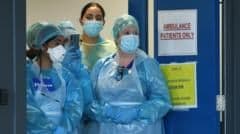
Britain's Covid inquiry has delivered a damning verdict on the government's handling of personal protective equipment procurement, revealing that NHS and care staff were left dangerously exposed to deadly infections while nearly £10 billion was squandered on equipment that was never used or had already expired.
Staggering Scale of Waste
Inquiry chair Baroness Hallett highlighted the sheer scale of financial waste in her report, noting that £9.9 billion — roughly two-thirds of the total £14.9 billion spent on PPE — was effectively written off. When home testing kits, ventilators, and other medical equipment are factored in, the government's total expenditure between January 2020 and June 2022 surpassed £42 billion.
Across the devolved nations, the waste was similarly alarming. Scotland wrote off approximately £8 million in healthcare equipment, Wales spent £18 million on PPE that went unused, and Northern Ireland faced £43 million worth of masks, gowns, and gloves at risk of expiring before they could be distributed.
Stockpiles Were Wholly Inadequate
When the pandemic struck, the UK's emergency reserves of protective gear were already in a critically weakened state. The national stockpile, designed to sustain healthcare systems for a minimum of 15 weeks, was close to exhaustion by the end of March 2020 as demand from hospitals rapidly escalated.
The inquiry found that only one-third of the masks held in England's pandemic stockpile were actually fit for use. Scotland fared even worse, holding no reserves whatsoever of the high-grade respiratory masks required in clinical settings. Meanwhile, care homes, GP practices, and pharmacies were left to procure their own supplies independently — a situation the report condemned as a "major failure in planning."
Baroness Hallett also noted that Britain entered the pandemic wholly unprepared for the fierce global competition to secure limited PPE supplies, placing the country at a serious disadvantage from the outset.
The Controversial VIP Lane
One of the most contentious elements of the government's pandemic procurement strategy was the so-called "VIP lane" — officially designated the high priority lane — which was introduced in April 2020. Under this system, PPE offers backed by referrals from ministers, MPs, members of the House of Lords, or other senior officials were fast-tracked for consideration.
The government at the time justified the scheme by pointing to what it described as a "desperate need" to protect health and social care workers, arguing that rapid decision-making was essential. However, the inquiry roundly rejected this rationale, branding the policy a "misguided attempt at prioritisation" that "embedded unfairness in emergency procurement."
Certain suppliers gained preferential access to contracts purely through their political connections to the then-Conservative government, the report found, undermining public trust at a moment when confidence in official decision-making was most critical. The inquiry concluded unequivocally that "the high priority lane should not have been established and must not be repeated."
No Evidence of Corruption, But Questions Remain
Despite the severity of its criticism, Baroness Hallett stopped short of accusing ministers or officials of corruption. She stated clearly that no evidence of cronyism had been identified in the actual awarding of PPE contracts.
Former Cabinet Office minister Michael Gove responded to the findings on social media, dismissing corruption allegations as "unfounded nonsense" while accepting full responsibility for what he described as "honest mistakes" made under extreme pressure.
However, certain aspects of the inquiry's findings remain unresolved. Testimony from senior government officials was heard behind closed doors to avoid compromising an active investigation by the National Crime Agency (NCA). A portion of the report relating to PPE Medpro has been withheld entirely and will only be released once any related criminal proceedings have concluded. To date, no criminal charges have been filed, though the NCA confirmed that its investigation remains ongoing and a priority.
Lessons for the Future
The inquiry acknowledged that over-purchasing PPE during a pandemic was preferable to running short, but stressed that significantly better calibration between supply and demand was both achievable and necessary. Government contingency plans, it noted, had "never been stress tested," forcing officials to improvise by constructing emergency procurement and distribution frameworks from scratch within days.
A separate programme that challenged private suppliers to rapidly design and manufacture ventilators resulted in a further £143 million charge for prototypes that never reached production — adding yet another layer to the overall cost of pandemic unpreparedness.
"Better planning would have resulted in fairer, faster and less costly procurement decisions," the report concluded — a finding that carries profound implications for how Britain prepares for future public health emergencies.

