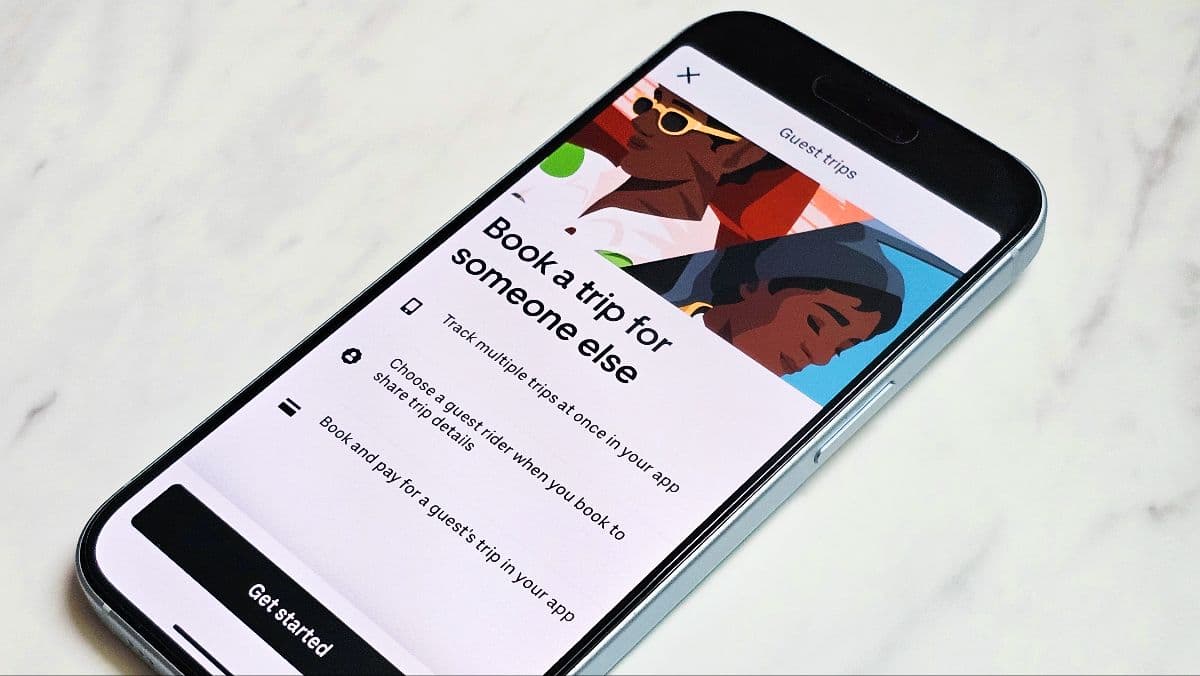
Uber's Super App Ambitions Shift Into High Gear as Competition Heats Up
Uber is pushing hard to become America's all-in-one lifestyle app, adding hotels, restaurant bookings, and more — but can it win a crowded race?

Uber Wants to Be Your Everything App — and Now It's Racing to Get There
For years, Uber floated the idea of evolving beyond ride-hailing into something far more expansive. That vision has taken on new urgency, particularly as autonomous vehicle players like Waymo begin ferrying real passengers through city streets. While Uber works to entrench itself in the self-driving industry as an investor, data partner, and distribution channel, its most consequential gamble may lie in what's happening directly inside its app.
Hotel Bookings, Restaurant Reservations, and a New Kind of Uber
At its annual GO-GET product event held recently in New York, Uber unveiled the most concrete step yet toward its super app ambitions. U.S. users can now book hotel rooms directly within the Uber app, thanks to a new partnership with Expedia Group that unlocks access to more than 700,000 properties worldwide. Subscribers to Uber One — the company's $9.99-per-month membership tier — receive 20% off a rotating selection of 10,000 hotels, plus 10% back in platform credits.
That's just the beginning. Vacation rental bookings through Vrbo are expected to roll out later this year, alongside restaurant reservations powered by OpenTable. A new "Shop for Me" feature also lets users place orders from retailers that don't even have a presence on the platform — broadening Uber's reach well beyond its existing network.
Taken together, these announcements represent the clearest picture yet of a goal Uber has been quietly building toward since at least 2019: transforming an app used by 199 million monthly active users into one they reach for almost every day.
The Membership Strategy That Ties It All Together
At a recent TechCrunch StrictlyVC event in San Francisco, Uber CTO Praveen Neppalli Naga laid out the company's logic with unusual clarity. He acknowledged that super apps have thrived for years in markets like India and Southeast Asia, but noted that American attempts have largely failed — typically because companies tried to stack services on top of existing traffic without giving users a genuine reason to stay.
Uber's answer is membership. Each new service category — whether food delivery, grocery runs, or hotel stays — gives users another reason to subscribe to Uber One and remain inside the ecosystem.
"I take Uber, go to the airport, take a flight, take another Uber, go to a hotel, go to a restaurant," Naga explained. "There is a flow you can actually build into it."
What's Next: Flights and Financial Services?
Flight booking hasn't launched yet, though Naga didn't dismiss the idea outright. Uber previously attempted to offer flight reservations in Europe and pulled back after limited success. "First let's get the hotel things done," he said. Financial services may also be on the horizon — Uber already provides a debit card product for drivers in Mexico — though a broader rollout remains undefined. When pressed, Naga's response was characteristically open-ended: "Never say never."
A Crowded Race to Own the American Super App
Uber isn't operating in a vacuum. Airbnb, perhaps the company most directly affected by Uber's hotel push, made its own move in late March, announcing a partnership with Welcome Pickups to offer airport transfer services across 125 cities in Asia, Europe, and Latin America — a deliberate effort to keep travelers inside the Airbnb experience rather than turning to Uber.
Meanwhile, Elon Musk has spent the better part of three years promising to reshape X into a WeChat-style everything app. That vision appears to be nearing a milestone: X Money, a banking and payments platform embedded within the social network, is reportedly close to a public launch. X currently claims 500 million monthly active users.
The fundamental question hanging over all of this is how many super apps the U.S. market can actually sustain. WeChat succeeded in China partly because the alternative was a fragmented, underwhelming digital landscape. American consumers, by contrast, already have well-established apps for most of what Uber wants to offer. Convincing them to consolidate their digital lives under one roof demands either meaningful financial incentives — like Uber One's discounts — or an experience smooth enough to make the switch feel worthwhile.
Uber's Installed Base Is Its Biggest Advantage
Uber's core argument is that its existing user base is its most durable competitive edge. Tens of millions of people have already linked a payment method to their account. Persuading those users to book a hotel or order from an unfamiliar retailer is a far smaller ask than convincing them to download an entirely new app.
Recent earnings data adds weight to that argument. Uber Eats delivery revenue surged 34% year over year in the first quarter, reaching $5.07 billion — making it the fastest-growing segment of the business and bringing it nearly level with ride-hailing in gross bookings. The delivery arm may be the strongest proof point for Uber's super app thesis.
Not everyone is fully persuaded. Uber's stock remains roughly 8% below where it stood a year ago, signaling that Wall Street is still waiting to see the strategy pay off at scale. Still, the company reports that 50 million people are now paying for Uber One, and that group accounts for approximately half of the company's total bookings — a number that gives the membership model real structural weight.
Whether Uber can translate that foundation into a genuinely dominant platform remains to be seen. But with rivals moving fast and the autonomous vehicle era approaching, the window for hesitation is closing.