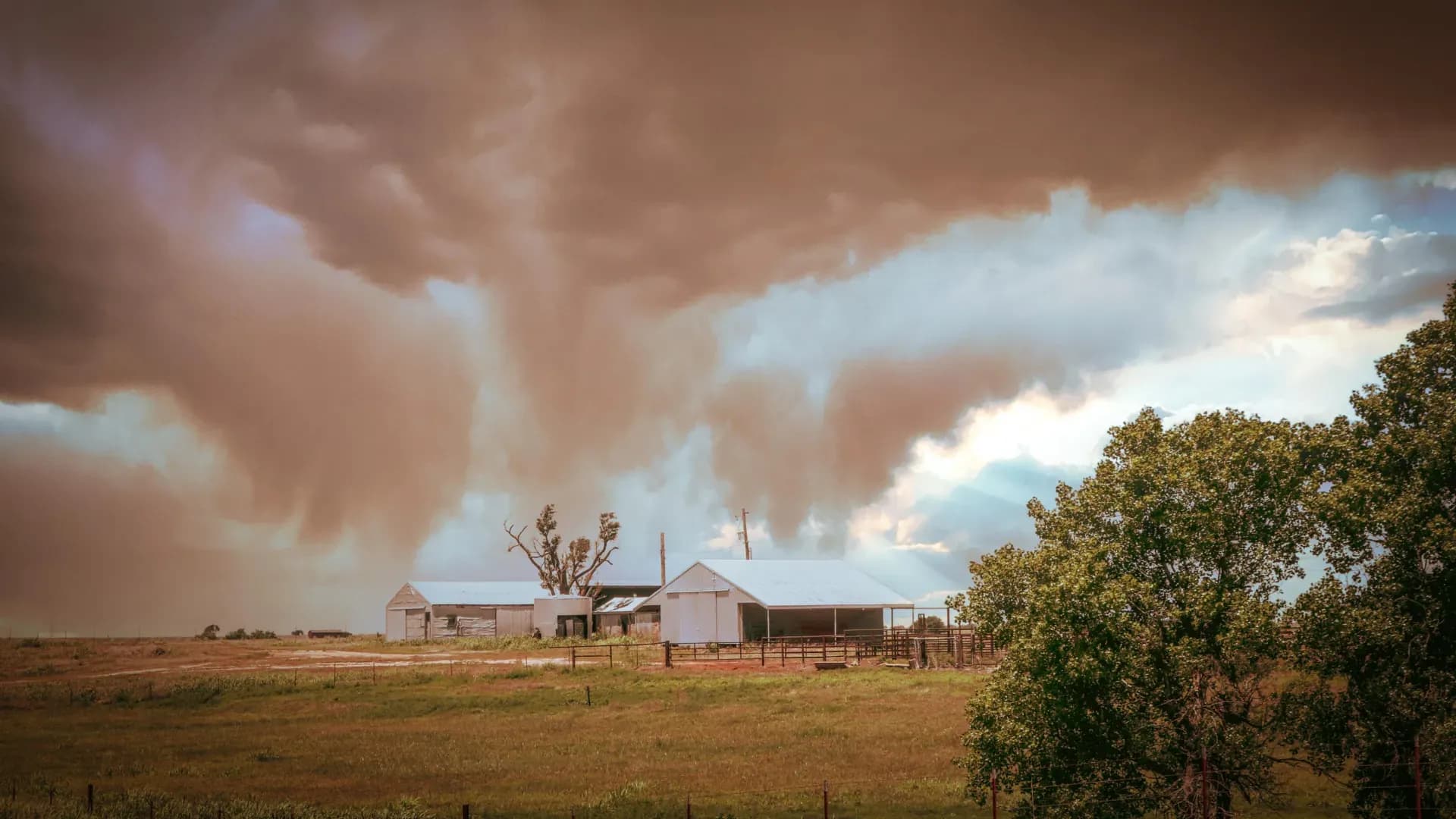
Toxic Airborne Chemicals Detected in the U.S. for the Very First Time
Researchers accidentally discovered dangerous MCCPs drifting through the air over Oklahoma — a first for the Western Hemisphere — likely released from sewage-based fertilizer.
Accidental Discovery Reveals a Hidden Pollution Threat
Scientific breakthroughs do not always follow a carefully laid-out plan. Sometimes, researchers searching for one thing stumble upon something far more significant. That is precisely what unfolded during a University of Colorado Boulder field study conducted in an agricultural region of Oklahoma — and the results are raising serious questions about air quality and public health.
The research team originally set out to examine how microscopic airborne particles form and change over time. What they found instead was something no scientist had ever documented in this part of the world: toxic chemicals known as Medium Chain Chlorinated Paraffins, or MCCPs, floating through the open air. This marks the first confirmed airborne detection of MCCPs anywhere in the Western Hemisphere. The study has since been published in the journal ACS Environmental Au.
What Are MCCPs and Why Do They Matter?
MCCPs belong to a family of synthetic organic pollutants that are widely used across various industries. They commonly appear in metalworking fluids, PVC manufacturing, and textile production. Because they frequently enter the wastewater system, they can accumulate in biosolid fertilizer — more commonly known as sewage sludge — which is a byproduct of wastewater treatment processes.
These chemicals have previously turned up in remote environments, including Antarctica and parts of Asia, but scientists had been unable to measure them in the air over the Western Hemisphere until now. The fact that they are now showing up in Oklahoma's atmosphere is raising red flags among environmental researchers.
MCCPs are currently under review for potential regulation under the Stockholm Convention, the international treaty designed to protect both human health and the environment from dangerous, long-lasting chemical pollutants.
Sewage Sludge Fertilizer Likely to Blame
The research team believes the most probable source of the MCCPs detected in Oklahoma is agricultural fields in the surrounding area where biosolid fertilizers had been applied. When sewage sludge is spread across farmland, it appears that trapped chemical compounds can escape into the atmosphere.
"When sewage sludges are spread across the fields, those toxic compounds could be released into the air," said Daniel Katz, a PhD student in chemistry at CU Boulder and the study's lead author. "We can't show directly that that's happening, but we think it's a reasonable way that they could be winding up in the air."
While the connection has not yet been proven definitively, prior research has demonstrated that similar compounds are released through the same process, lending strong support to the theory.
The Regulation Problem: Substituting One Danger for Another
MCCPs are chemically related to Short Chain Chlorinated Paraffins, or SCCPs, which have been regulated under the Stockholm Convention and by the U.S. Environmental Protection Agency since 2009. SCCPs were restricted after evidence emerged that they can travel vast distances, persist in ecosystems for extended periods, and pose measurable risks to human health.
However, experts suspect that restricting SCCPs may have inadvertently pushed industries toward using MCCPs as a replacement — a pattern that environmental scientists often refer to as the "regrettable substitution" problem.
"We always have these unintended consequences of regulation, where you regulate something, and then there's still a need for the products that those were in," explained Ellie Browne, a chemistry professor and CIRES Fellow at CU Boulder, who co-authored the study. "So they get replaced by something."
How the Discovery Was Made
The detection was made possible through continuous, around-the-clock air monitoring conducted over the course of a full month at the Oklahoma field site. The team employed a highly sensitive instrument known as a nitrate chemical ionization mass spectrometer, which is capable of identifying specific chemical compounds present in the air at very low concentrations.
As Katz combed through the data, he noticed unusual isotopic patterns that did not correspond to any previously identified compound. After extensive analysis, those patterns were traced back to chlorinated paraffins characteristic of MCCPs — an unexpected but groundbreaking finding.
"It's very exciting as a scientist to find something unexpected like this that we weren't looking for," Katz said. "We're starting to learn more about this toxic, organic pollutant that we know is out there, and which we need to understand better."
Similarities to 'Forever Chemicals' Deepen Concerns
Adding to the concern is the fact that MCCPs share certain characteristics with PFAS compounds — a broad class of synthetic chemicals widely known as "forever chemicals" due to their remarkable resistance to breaking down in natural environments. Worries over PFAS contamination in agricultural soil have already prompted the Oklahoma Senate to ban the use of biosolid fertilizer within the state.
What Comes Next?
Now that scientists have confirmed a reliable method for detecting MCCPs in the atmosphere, the focus shifts to understanding how these chemicals behave once airborne. Researchers plan to track how MCCP concentrations fluctuate across different seasons, investigate their chemical behavior in the atmosphere, and assess the broader implications for human and environmental health.
"We identified them, but we still don't know exactly what they do when they are in the atmosphere, and they need to be investigated further," Katz said. "I think it's important that we continue to have governmental agencies that are capable of evaluating the science and regulating these chemicals as necessary for public health and safety."
The discovery serves as a powerful reminder that environmental monitoring can reveal hidden dangers lurking in plain sight — and that understanding those dangers is the essential first step toward addressing them.

