The Woman With Ultra-Rare Blood Who Is a 'VIP' to the NHS
With only nine donors in the UK sharing her blood type, Mina Stoddart-Stones feels honoured to help critically ill patients in a way almost no one else can.
The Woman Whose Blood Is So Rare It Gets Frozen for 30 Years
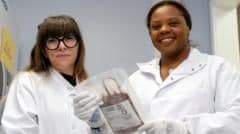
For most people, donating blood is a generous but relatively straightforward act. For 26-year-old Mina Stoddart-Stones, it is something far more extraordinary. Her blood is so exceptionally rare that it is cryogenically preserved for up to three decades — and she is considered nothing short of royalty by the organisation responsible for the UK's blood supply.
A Blood Type Found in Almost Nobody
Stoddart-Stones, who lives in Bridgwater, Somerset, has been a regular blood donor for several years. It was only recently, however, that she came to understand just how uniquely valuable her contributions truly are.
Her blood is classified as both U negative and N negative, meaning it lacks the antigens present in the blood of nearly 100% of people across the United Kingdom. Across the entire country, only nine donors share the same blood type — making each donation an irreplaceable medical resource.
"It makes me feel very special and honoured, actually, that I could help someone that is really poorly," Stoddart-Stones said.
Recognised as a 'VIP' Donor
Stoddart-Stones has been placed on the UK Rare Donor Panel, maintained by NHS Blood and Transplant (NHSBT). This exclusive panel represents just 0.01% of the organisation's 800,000 registered donors — approximately 1,200 individuals in total.
Her blood also carries the RO subtype, a rare and critically important classification most commonly found among people of Black African or Caribbean heritage. This subtype is particularly vital for patients with conditions such as sickle cell disease, who may require frequent blood transfusions throughout their lives.
Joanne Mathews, manager of NHSBT's National Frozen Blood Bank in Liverpool, did not hold back in expressing just how significant donors like Stoddart-Stones are to the medical community.
"We know her name, and we will only let her blood go for patients with that exact type, because it is so rare," Mathews explained. Meeting Stoddart-Stones, she added, was like meeting royalty.
Preserved for Decades to Save Lives
Unlike standard blood donations, units collected from rare donors are not simply stored in a refrigerator for a few weeks. They are frozen and kept in specialised facilities for up to 30 years, ensuring they remain available whenever a patient with a matching rare blood type requires an emergency transfusion or undergoes surgery.
This meticulous preservation process reflects the extraordinary lengths the NHS goes to in order to protect patients whose medical needs cannot be met by conventional blood supplies.
A Personal Motivation to Give Back
For Stoddart-Stones, the decision to donate goes beyond altruism — it is deeply personal. As a baby, she experienced serious illness herself, and her father later underwent treatment for cancer. Those experiences left a lasting impression and inspired her to contribute to the health service in whatever way she could.
"That little little bit that I can do, helping them as much as they've helped my family," she said.
In addition to her blood donations, Stoddart-Stones is also registered on the stem cell donor panel, further extending her commitment to supporting patients in critical need.
Her story serves as a powerful reminder that blood donation — while simple in practice — can carry an impact that is truly immeasurable.