The Unexpected Upside of Doctors' Strikes: Why Hospitals Sometimes Run Better Without Junior Staff
When resident doctors walk out, something strange happens — hospitals get faster and calmer. But can this accidental efficiency ever become standard practice?

When the Walkout Becomes a Wake-Up Call
At first glance, a doctors' strike sounds like a recipe for disaster — overcrowded emergency departments, delayed treatments, and patients left waiting in corridors. Yet a growing number of NHS hospital leaders are quietly telling a very different story.
Following the most recent walkout by resident doctors in England, several trust executives speaking to BBC News admitted that their hospitals had, in some respects, functioned better during the strike than on ordinary working days. Shorter waiting times, swifter clinical decisions, and noticeably quieter corridors were among the improvements reported.
"We sighed with relief — strikes act like a firebreak," one hospital chief executive reflected, recalling the mood when December's five-day walkout was announced.
A Strike That Sparked Surprising Results
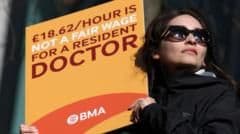
The December industrial action — the 15th episode in a prolonged dispute over pay — was condemned by government ministers as "irresponsible and dangerous." Approximately 25,000 doctors who would otherwise have been on duty were absent each day, according to NHS England.
Yet the data from inside hospitals told a more complicated story.
Researchers studying King's College Hospital found that during the first wave of junior doctor strikes in 2023, patients were assessed, treated, and sent home faster than on non-strike days — even with reduced staffing levels. Critically, the study found no increase in patient deaths or re-admissions.
At the Royal Berkshire Hospital, performance during December's strike was equally striking. The four-hour A&E target was achieved in 82% of cases during the walkout period, compared with just 73% the previous week — a notable jump that coincided directly with the industrial action.
Why Do Hospitals Perform Better With Fewer Doctors?
The answer, according to healthcare experts, comes down to who is staffing the front line.
On a typical day, emergency departments are largely run by early-career doctors still in specialist training. While dedicated and capable, these professionals tend to order more diagnostic tests and consult multiple senior colleagues before making clinical decisions. Each additional step, however well-intentioned, adds time to a patient's journey.
During strikes, senior consultants are redeployed directly to the emergency department entrance. With decades of experience, they can rapidly assess incoming patients, make confident decisions, and either begin treatment immediately or redirect patients to more appropriate community-based services.
"The more doctors involved in a patient pathway, the longer everything takes," explained Dr Damian Roland of the University of Leicester.
Dr Layla McCay, Director of Policy at the NHS Confederation, acknowledged the pattern: "An enhanced presence of consultant colleagues in A&E, with their additional experience, can mean quicker, less risk-averse decision-making — which is genuinely good for patients."
However, she was quick to add a significant caveat: "But this is a temporary, unsustainable solution with knock-on effects."
The Christmas Factor
Timing also played a role in December's surprisingly smooth operation. Every year, NHS hospitals work hard to discharge as many patients as possible before the Christmas period, when staffing levels naturally dip and routine services slow down.
The pre-Christmas strike effectively accelerated that discharge process, reducing bed occupancy across many wards.
"Lower occupancy improves flow, and with that the patient experience," said Dr Roland.
In hospital management terms, flow refers to the smooth and timely movement of patients through the system — from emergency assessment through to treatment, recovery, and discharge. When beds free up, the entire process speeds up.
One patient described her strike-day hospital visit as "a blessing." Another woman said her son, who suffers from asthma and had been admitted multiple times before, received the fastest and most efficient care he had ever experienced. "An experienced consultant just got him sorted," she said.
Hospitals Are Taking Note — and Adapting
Some NHS trusts are now attempting to bottle this accidental efficiency and apply it to ordinary working days.
At one hospital, cardiology consultants have been placed at the front door every Friday — a direct result of lessons learned from strike-day deployments. The logic is straightforward.
"Cardiologists rarely admit someone with chest pain," explained Nick Hulme, former Chief Executive of East Suffolk and North Essex NHS Foundation Trust. "After seeing the impact of the strikes, we realised this was a smart way to reduce admissions heading into the weekend."
The Hidden Costs Behind the Efficiency
For all its apparent benefits, the strike-day model comes with serious trade-offs that make it impossible to replicate indefinitely.
To deploy consultants on the front line, hospitals must cancel or postpone other commitments — including elective surgeries and outpatient appointments. NHS England notes that around 95% of routine treatment does continue on strike days, but the remaining 5% still represents thousands of affected patients.
Consultant-level cover is also significantly more expensive than junior staffing, placing additional financial pressure on already-stretched trust budgets.
And perhaps most importantly, there is the long-term workforce issue. Resident doctors — the so-called junior doctors in dispute — are the consultants of tomorrow. Without them progressing through the training pipeline, the senior workforce that makes strike days run smoothly will eventually disappear.
The BMA's Dr Jack Fletcher warned that when today's consultants retire, "we have no one to replace them, as trainee doctors have left due to a combination of inadequate pay and conditions, and a lack of jobs."
An Accidental Blueprint With No Easy Answer
The irony at the heart of this story is hard to ignore. Industrial action intended to disrupt the NHS has inadvertently exposed some of its structural inefficiencies — particularly the way emergency departments are staffed on ordinary days.
The lesson is not that strikes are good for patients. They are not a sustainable or ethical solution to systemic problems. Rather, they have acted as an unplanned experiment, revealing that placing experienced decision-makers at the point of first contact can meaningfully improve patient outcomes.
Whether the NHS can translate that insight into lasting reform — without the extraordinary circumstances of a strike to force the issue — remains the real challenge.

