The Secret Weapon Hidden on a Seal's Face: How Whiskers Make Them Deadly Underwater Hunters
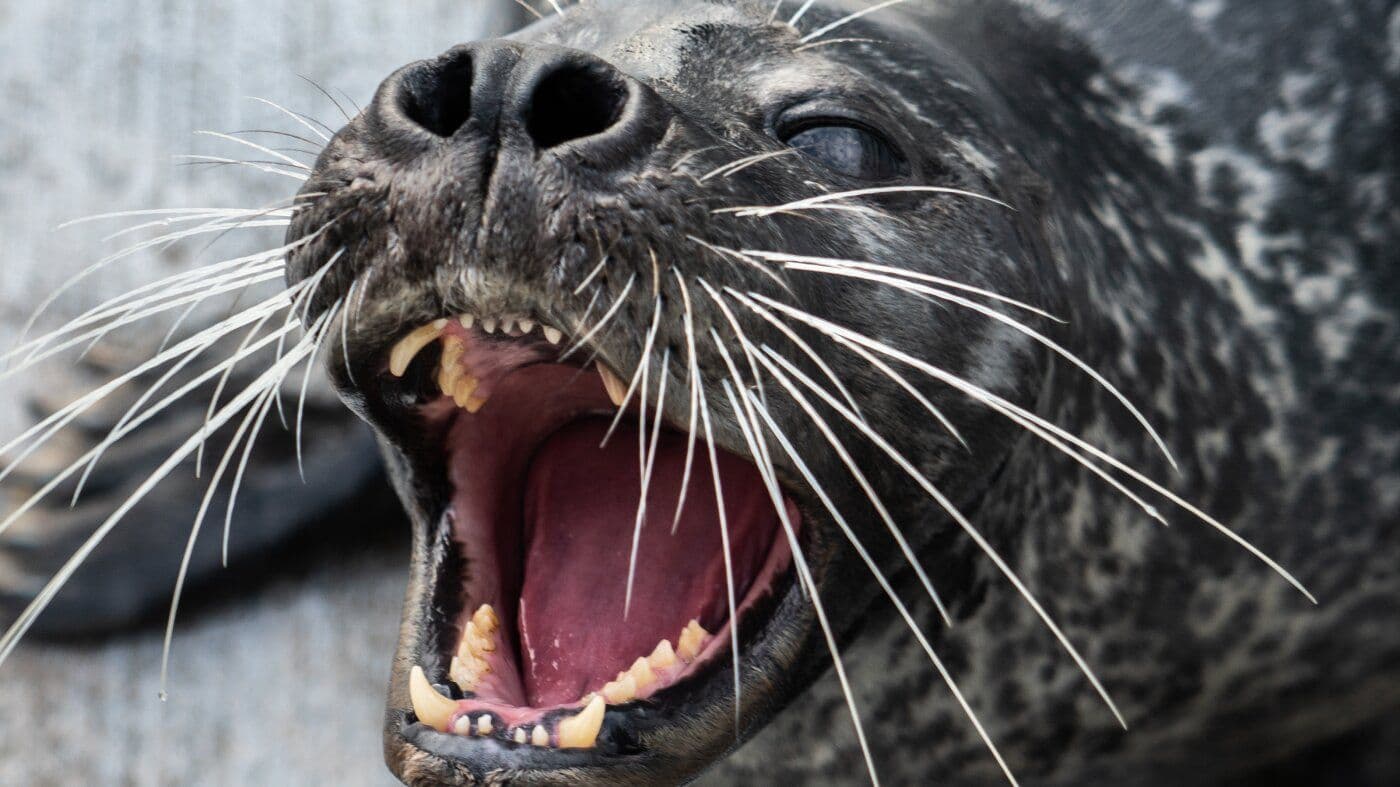
Harbor seals use their remarkable whiskers to track fish through invisible underwater trails — even in complete darkness or murky water.
The Surprising Power Behind a Seal's Whiskers
At first glance, a harbor seal's whiskers might seem like little more than a charming facial feature. But scientists are discovering that these sensitive hairs are actually one of nature's most sophisticated hunting tools — capable of detecting invisible underwater disturbances and guiding seals straight to their next meal.
A harbor seal carries roughly a hundred whiskers on its face, and each one serves a critical sensory purpose. According to Yvonne Krüger, a biologist at the University of Rostock in Germany, these specialized facial hairs allow seals to detect the subtle water movements created by swimming fish.
"These are sensory hairs in the facial region," Krüger explains. "And with these whiskers, they can sense the water movements that are generated by fish."
Reading Invisible Trails in the Water
When a fish moves through the water, it leaves behind a hydrodynamic trail — an underwater disturbance that persists long after the fish has passed. Krüger compares this phenomenon to the vapor trail left behind by a jet airplane cutting through the sky. You may not be able to see the plane anymore, but the trail reveals exactly where it has been.
Seals exploit this same principle beneath the surface. By using their whiskers to sense these lingering disturbances, they can determine not only where a fish has been, but also the direction in which it was traveling. Laboratory research even suggests that seals may be capable of distinguishing between the hydrodynamic signatures of different fish species entirely.
Outsmarting a Fish's Escape Strategy
Of course, fish are not passive targets. They have developed clever evasive strategies to avoid becoming a meal — and harbor seals appear to have evolved an equally clever counter-response.
Take the rainbow trout, one of the harbor seal's preferred prey. When threatened, a trout can contort its body into a dramatic C-shape before darting away in a completely different direction than it had been swimming. This maneuver is more than just a quick dodge — it generates two vortex rings spinning in opposite directions through the water, similar to smoke rings but made entirely of moving water.
Only one of those vortex rings — the slightly smaller one — actually travels in the direction the fish is heading. The other ring points in the opposite direction, effectively creating a false trail designed to confuse any pursuing predator.
Filou: The Seal Who Cracked the Code
Krüger set out to determine whether harbor seals could see through this fishy deception. To do so, she enlisted the help of a remarkable adult male harbor seal named Filou, who lives at a marine science center in Germany.
"He looks very beautiful," Krüger says warmly of her dark gray research partner. "We have a very strong bond. Filou likes to do everything correctly. He likes learning new things. If he makes one mistake, he gets frustrated." She laughs and sums him up simply: "He's a nerd."
Over nearly two years, Krüger patiently trained Filou to identify the larger of two artificially generated vortex rings underwater. The logic was straightforward — if Filou could reliably choose the bigger ring, it would suggest that seals in the wild might use the same size-based distinction to follow the correct trail left by an escaping trout.
The results, published in the Journal of Experimental Biology, were striking. Filou learned to differentiate between the two rings with impressive accuracy — even when the size difference between them was smaller than the width of a human thumb, a far finer distinction than what would be required in actual hunting conditions.
The Whiskers Were Everything
To confirm that his whiskers were the key sensory tool at work, Krüger covered Filou's whiskers with a nylon stocking. The result was immediate and telling: without access to his whiskers, Filou could no longer complete the task at all. The experiment strongly indicated that the whiskers were the sole mechanism through which he gathered the information needed to distinguish between the vortex rings.
What This Means for Seals in the Wild
While the study involved just one animal, Krüger and her research team believe the ability is almost certainly common among harbor seals as a species and likely plays an active role in their real-world hunting behavior.
"If we think about a harbor seal swimming in the ocean, trying to find its food, they are actually able to read where a fish has been and where it is going," says Krüger. "So if they hunt in murky waters or if they hunt at night, they don't have to see the fish."
This revelation reframes how scientists understand seal predation. Rather than relying primarily on vision, seals may be reading a constant stream of hydrodynamic data flowing across their whiskers — effectively building a real-time sensory map of everything moving through the water around them.
Broader Implications: From Ocean Science to Underwater Robotics
Robyn Grant, a sensory biologist at Manchester Metropolitan University who was not involved in the study, praised the research as a meaningful step forward. "This is a really important step in working out how seals use their whiskers to extract tiny bits of information from these hydrodynamic trails," she said.
Grant also highlighted the broader relevance of understanding how animals like harbor seals perceive their environment. As extreme weather events become more frequent and ocean conditions grow more unpredictable, disruptions to the subtle water signals seals depend on could have real consequences for their ability to hunt and survive.
Beyond conservation concerns, the findings carry exciting technological potential. Grant suggests that insights gleaned from seal whisker sensitivity could inspire the development of advanced sensors for underwater robots — machines that might one day use similar principles to navigate ocean environments for purposes such as archaeological exploration, deep-sea mining, or marine biological surveys.
In that sense, Filou's contribution to science may extend far beyond the walls of his marine center — charting a course that engineers and researchers may be eager to follow for years to come.