The Real Science Behind Project Hail Mary: What NASA Experts Actually Think
Project Hail Mary is thrilling audiences worldwide, but how accurate is the science? NASA scientists and medical experts weigh in on what's real.

The Real Science Behind Project Hail Mary
The blockbuster film Project Hail Mary has crossed the $400 million mark at the global box office and is already drawing serious Oscar attention. Beyond its commercial success, the movie has reignited public enthusiasm for science fiction — and genuine science itself. But just how grounded in reality is the film's portrayal of interstellar travel, induced comas, and extraterrestrial encounters?
NPR reached out to NASA researchers and medical professionals to break down the facts behind the film's most jaw-dropping moments.
Could Humans Ever Travel to Tau Ceti?
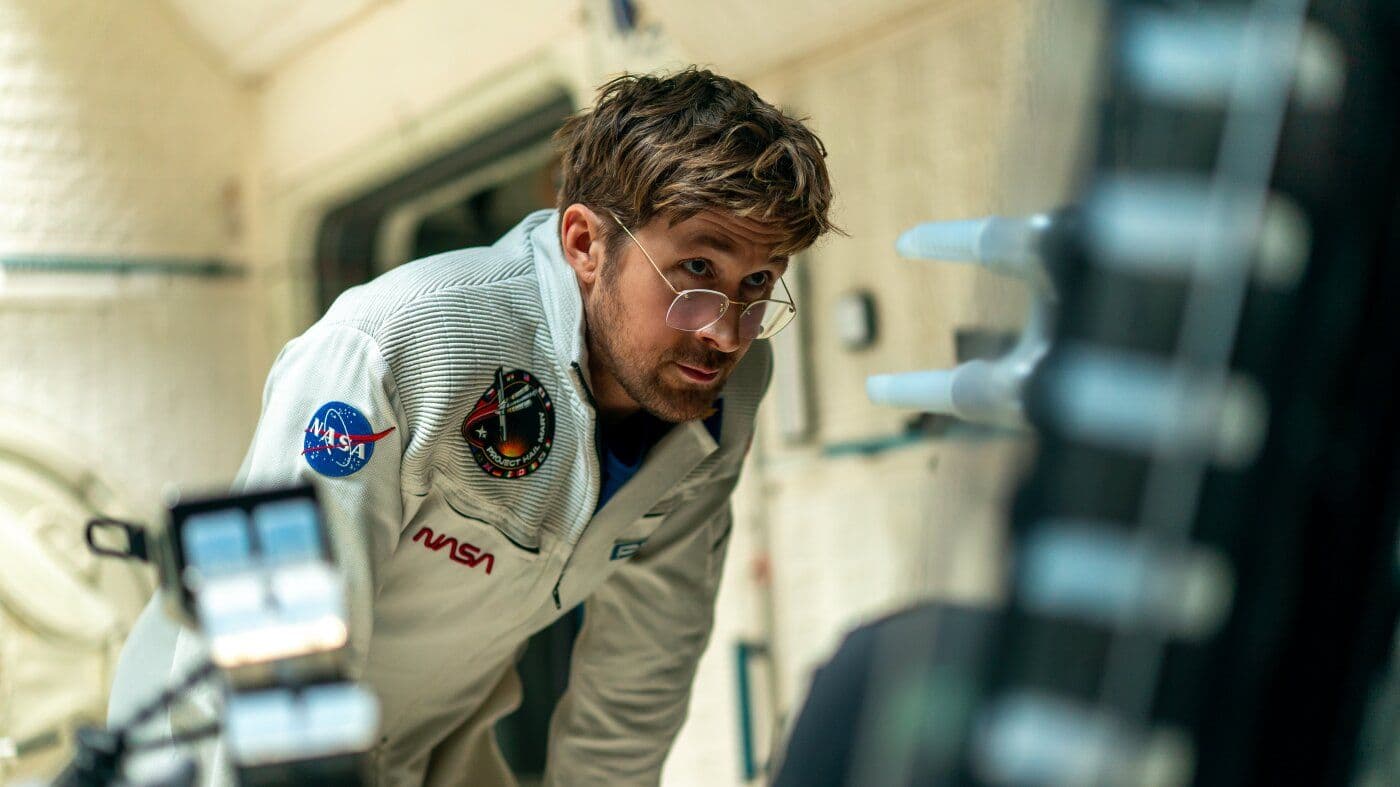
In the film, middle school teacher turned reluctant space hero Ryland Grace — played by Ryan Gosling — is launched on a desperate mission to Tau Ceti, a real star located approximately 11.9 light years from Earth, believed to have as many as three orbiting planets. His mission: stop a mysterious cosmic microbe from consuming the Sun's energy and destroying life on Earth.
The idea of humans traveling that far is firmly in the realm of science fiction — for now. Lisa Carnell, Division Director for NASA's Biological and Physical Sciences Division, is candid about our current limitations.
"I don't think we are fully prepared to send humans to Mars, let alone light years away," she says. However, she stopped short of calling it impossible in the long run. "From what I know about how we've evolved in aviation and space exploration, yes, I believe it's possible one day."
Keeping Astronauts Healthy on Extremely Long Missions
Even a six-month journey to Mars poses significant challenges to astronaut wellbeing. The psychological toll of isolation and monotony is a major concern, and NASA has already explored strategies to keep crew members mentally engaged on extended voyages.
For a mission spanning light years, Carnell suggests some form of induced hibernation — known medically as torpor — might become a necessity. "I don't think we're realistically looking at torpor as a possibility for Mars, but for some long, deep-space mission light years away, it would probably need to happen," she explains.
The obstacle is a critical lack of data. Scientists still don't fully understand how torpor would affect human cognitive function, long-term physiology, or psychological health. "There's so much we don't know and understand," Carnell acknowledges, adding that meaningful research into the subject remains many years away.
What Would Really Happen After Four Years in a Coma?
One of the film's most dramatic sequences shows Grace waking from a four-year medically induced coma and, within hours, moving around the ship with surprising ease — even climbing a ladder. Medical experts say this scenario is far from realistic.
Dr. Shyoko Honiden, Associate Professor of Pulmonary, Critical Care, and Sleep Medicine at Yale School of Medicine, explains that even shorter medically induced comas in intensive care settings come with serious physical consequences.
"We breathe for patients, support their heart function, maintain kidney health, and provide nutrition — much like the robot in the film does," she says. "But despite how advanced our technology has become, we cannot fully replicate what the human body naturally does on its own."
Muscle Loss and Physical Rehabilitation
Perhaps the most striking reality is the rate of muscle deterioration during prolonged bed rest. The human body loses an estimated 2% of muscle mass per day — including the diaphragm, which can become dangerously thin after extended time on a ventilator.
"Some of our patients go through weeks of learning how to breathe again," Dr. Honiden notes.
Dr. Rummana Aslam, Associate Professor of Orthopedics and Rehabilitation at Yale School of Medicine, adds that the muscles responsible for swallowing and movement would also be severely compromised. "After four years, you would need rehabilitation for a very long time to be able to speak, to swallow, and to move around," she says. The idea of Grace leaping out of bed moments after waking, she confirms, would simply not happen.
Skin Breakdown and Brain Function
Skin deterioration, or pressure injuries, is another serious concern for anyone bedridden for an extended period — these can begin developing within just 24 to 48 hours. Even with regular repositioning, vulnerable areas such as heels, the tailbone, and the back of the head remain highly susceptible.
Perhaps most critically, the long-term neurological impact of a four-year coma remains deeply uncertain. "We know from medically induced comas in the ICU that brain dysfunction can be significant, and neurocognitive impairment can be permanent," Dr. Honiden says. "If you really shut everything down, can you slowly turn the switch back on? I guess that's the million-dollar question."
Radiation in Space: The Invisible Threat
In the film, Grace encounters an alien named Rocky whose crewmates have all died from radiation sickness — a consequence of their civilization's apparent ignorance of radiation risks. NASA's Carnell found this plot point difficult to accept.
"Galactic cosmic radiation is pervasive — it's like you're swimming in a bath of radiation from supernovas all over the universe," she says. It strains credibility, she suggests, that any civilization capable of achieving spaceflight would not have already encountered and studied radiation.
How NASA Manages Radiation Risk
NASA monitors space weather using satellites and moves astronauts to better-shielded areas of their spacecraft when a significant solar event is predicted. Water, for example, is an effective radiation absorber and is often strategically stored aboard spacecraft for this purpose.
The danger intensifies when astronauts travel beyond Earth's magnetosphere — the planet's natural magnetic shield. The Artemis II mission, which recently made headlines for its historic lunar flyby, took astronauts beyond this protective barrier for the first time in decades.
"They are really going to be exposed to the full force of a solar storm," Carnell explains. To address this, NASA engineered a dedicated storm shelter within the Orion spacecraft. "You open it up and climb down inside, and you're surrounded by all this extra material that helps reduce the effect of incoming radiation."
The Verdict: Inspiring Fiction Rooted in Real Science
Project Hail Mary takes considerable creative liberties — as all great science fiction does. But the questions it raises about interstellar travel, human endurance, and cosmic radiation are grounded in genuine scientific inquiry. For NASA researchers and medical professionals alike, the film represents an exciting opportunity to bring real scientific challenges into the public conversation, even if Hollywood's version makes them look a little easier than they actually are.

