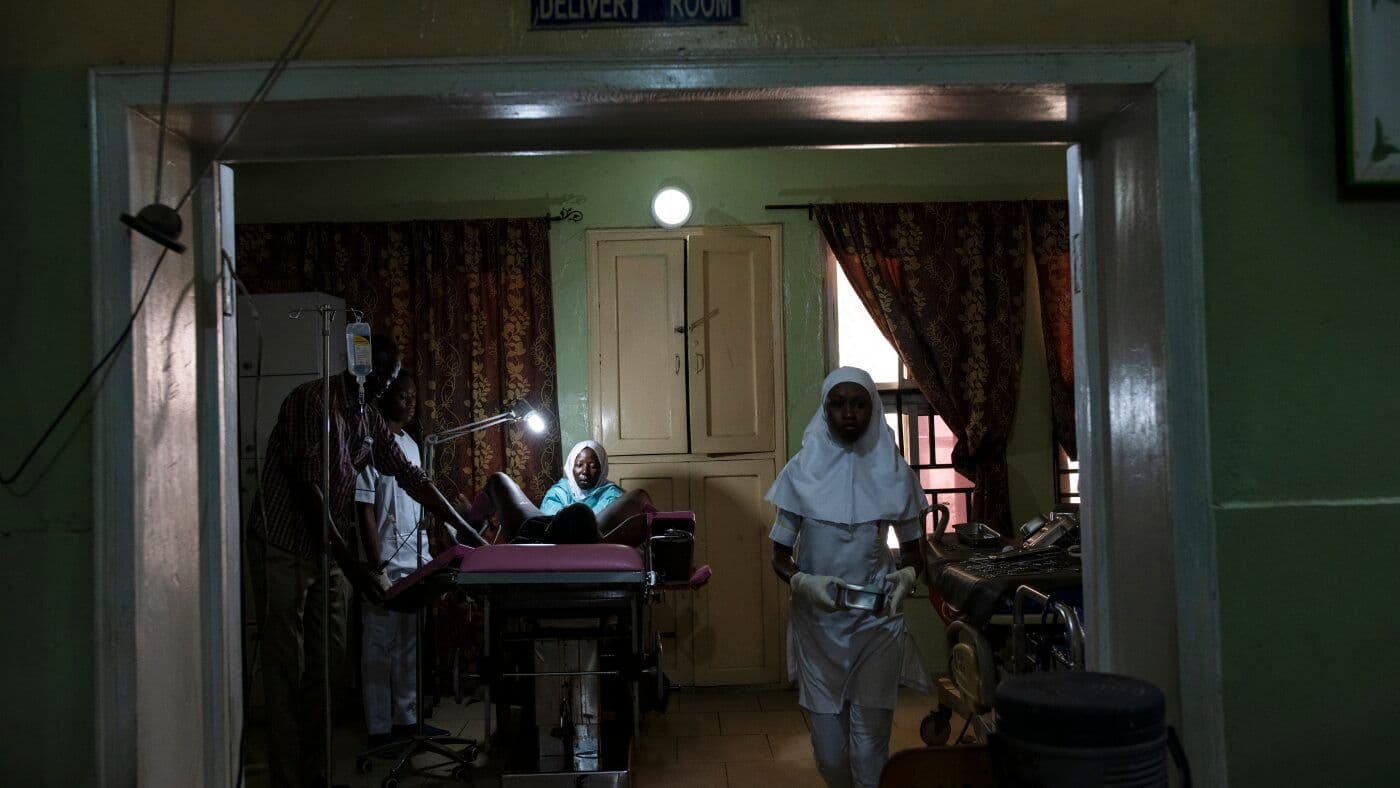
The Race Against Time: How the World Can End Postpartum Hemorrhage Deaths
Every year, 43,000 women die from postpartum hemorrhage — a tragedy that experts say is largely preventable with the right tools and training.
A Crisis Hidden in Plain Sight
Every year, approximately 43,000 women around the world lose their lives to postpartum hemorrhage — excessive bleeding following childbirth. It is the single leading cause of maternal death globally, and yet experts say the vast majority of these deaths are entirely preventable.
A landmark three-part series recently published in The Lancet is putting this urgent issue front and center, outlining both the scale of the problem and a clear, evidence-backed roadmap for solving it.
A Memory That Never Fades
For Dr. Olufemi Oladapo, this issue is deeply personal. Early in his medical career in Nigeria, he watched a woman die of postpartum hemorrhage — a patient who had waited six years to become pregnant. Despite his desperate efforts to secure blood transfusions, he arrived too late.
"I was running around hospitals trying to get blood. By the time I got back, she was gone."
That experience has driven Dr. Oladapo, now a physician with the World Health Organization's Special Programme on Human Reproduction, to co-author this sweeping new research series aimed at preventing similar tragedies.
The Scale of the Problem
Postpartum hemorrhage affects an estimated 27 million women each year. While some degree of bleeding is a normal part of the birthing process, excessive blood loss can escalate into a life-threatening emergency with alarming speed.
"It can become a medical emergency very quickly," warns Dr. Adam Devall, a professor of maternal health at the University of Oxford. A woman who experienced a completely routine labor can deteriorate within mere minutes if the hemorrhage is not identified and addressed promptly.
Women themselves often recognize the severity instinctively. According to Dr. Ioannis Gallos of the WHO's Maternal and Perinatal Health Unit, patients frequently report feeling as though they are dying — because they are.
"If no one was to act on it, within 10 to 20 minutes, easily a woman can die," he says.
This stark reality is why postpartum hemorrhage is widely described among medical professionals as a race against time.
Simple Solutions That Save Lives
One of the most significant findings from the research series centers on the importance of accurately measuring blood loss. Studies show that visually estimating blood loss — a common practice — misses hemorrhages approximately half the time.
A straightforward solution already exists: a specially designed plastic drape placed beneath the mother during delivery. The drape collects blood into a calibrated pouch, allowing medical staff to quickly and accurately assess the volume of blood lost.
"These lines allow midwives and doctors to easily see the amount of blood loss after the birth," explains Dr. Devall.
Once excessive bleeding is detected, a coordinated set of interventions can be deployed simultaneously, including:
- Uterine massage to stimulate contractions
- Medication to control bleeding
- Intravenous fluids to stabilize the patient
Evidence From the Field
To test this bundled approach, researchers conducted a large-scale clinical trial spanning Nigeria, Kenya, Tanzania, and South Africa, involving more than 200,000 women. The results were striking — early detection combined with clear treatment protocols produced a massive decrease in severe bleeding outcomes.
A Tale of Two Worlds
Perhaps the most troubling finding in the report is not about the frequency of postpartum hemorrhage, but about survival rates. The condition occurs at roughly equal rates in both wealthy and low-income countries — but the outcomes are dramatically different.
In well-resourced nations like the United States, the mortality rate from postpartum hemorrhage can be more than 200 times lower than in under-resourced countries such as Afghanistan, Vietnam, or Nigeria.
"What is different is what is given when these conditions are identified," says Dr. Oladapo.
A key factor in this disparity is access to oxytocin, the primary drug used to control postpartum bleeding. While effective, it requires refrigeration — a significant logistical challenge in regions with unreliable infrastructure.
The researchers also emphasize the need for simulation-based team training, comparing it to the kind of coordinated, pit-crew-style rehearsal that emergency medical teams use to respond to crises efficiently and without hesitation.
A Call to Action — and Reason for Hope
The report has drawn praise from global health leaders. Dr. Harshad Sanghvi, former Chief Medical Officer at Jhpiego — a nonprofit dedicated to women's and children's health — described the series as "a tremendous effort" and "a significant call to action."
Dr. Doreen Kainyu Kaura, a professor of midwifery at the University of the Western Cape in South Africa, echoed this sentiment. Having spent years in delivery rooms across the continent, she sees the research as a validation of what frontline workers already know.
"It will be a fantastic approach to ensure that we have these lifesaving interventions that reach women at the right place, at the right time," she says.
The Economics of Prevention
Beyond the humanitarian case, there is also a compelling financial argument for action. Dr. Oladapo points out that the current cost of treating postpartum hemorrhage — and bearing the economic consequences of maternal death — far exceeds what prevention would require.
"If you invest even 5% of the cost of postpartum hemorrhage in preventing it, you're going to not just save lives but also save money."
His conclusion is both sobering and hopeful: with existing knowledge and tools, more than 95% of postpartum hemorrhage deaths could be prevented.
"Women should not be dying from PPH in this day and age, given what we know," he says.
Dr. Sanghvi shares that optimism, suggesting that the elimination of postpartum hemorrhage as the world's leading cause of maternal death is not a distant dream — it is an achievable goal within this very decade.
"I think it is within our reach."