The MacBook Neo Effect: How Rivals Are Responding to Apple's Budget Laptop Strategy
Dell and Microsoft are launching 8 GB RAM laptops in Apple's wake. One gets it right—the other completely misses the point.

The MacBook Neo Is Setting the Tone for Budget Premium Laptops
Apple's MacBook Neo sparked widespread debate when it launched with just 8 GB of RAM in its base configuration. Now, major Windows PC makers are following suit—but not all of them are learning the right lessons. Dell and Microsoft have both introduced new laptops that start with 8 GB of RAM, yet the two companies have taken dramatically different approaches. One has crafted a genuinely compelling alternative. The other has simply cut specs and expected consumers to be grateful.
Dell XPS 13: Taking the Right Notes From Apple
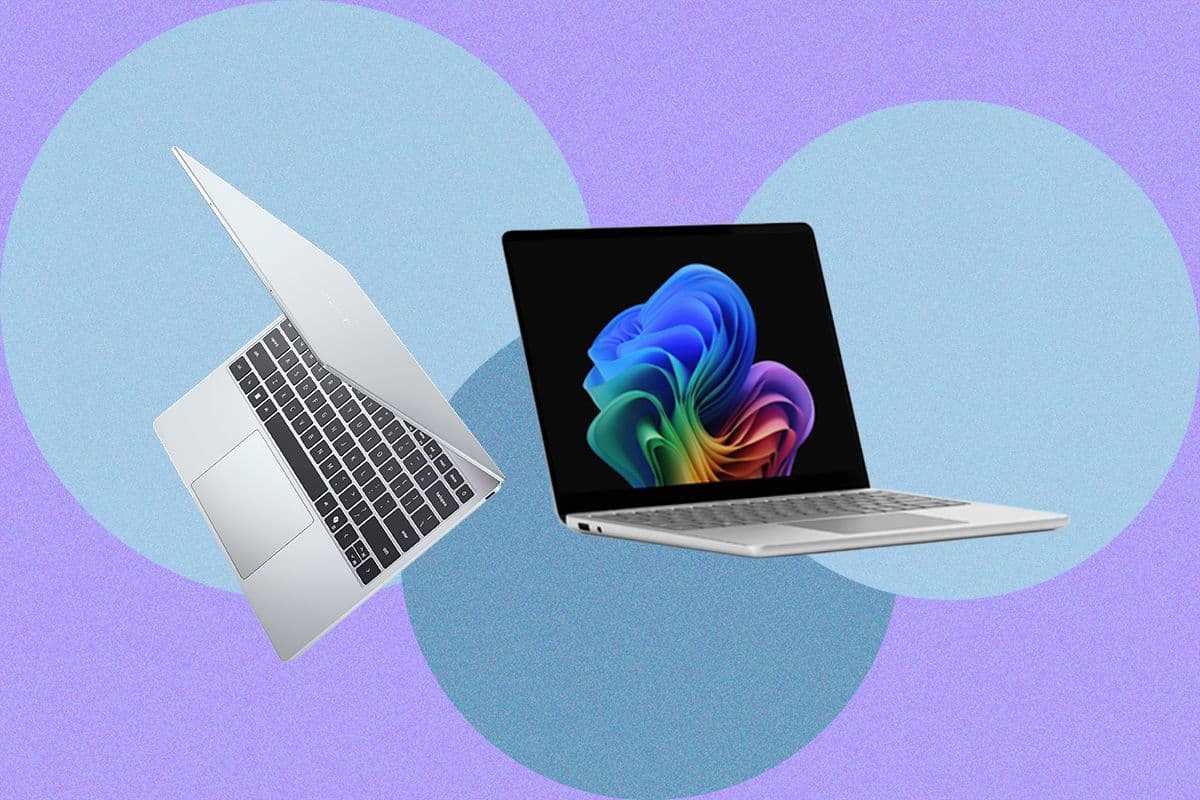
The new Dell XPS 13 is perhaps the most deliberate response to the MacBook Neo in the Windows world. Built entirely from aluminum and measuring just half an inch thick, it radiates the same premium aesthetic that XPS laptops have always been known for. Dell didn't just copy Apple's price point—it copied Apple's philosophy.
The XPS 13 features a high-quality IPS display running at 2560 x 1600 resolution with a 120 Hz refresh rate and up to 500 nits of brightness. Those numbers aren't accidental. They mirror the MacBook Neo's display specs almost exactly, with the added bonus of a faster refresh rate. Starting at $699—or just $599 for students—the XPS 13 positions itself as a serious premium alternative at an accessible price.
Trade-Offs That Make Sense
Like the MacBook Neo, the XPS 13 does make some calculated compromises. The base model ships with 8 GB of RAM, 256 GB of storage, and an Intel Core 5 processor rather than a top-tier Intel Core Ultra chip. This mirrors Apple's decision to power the Neo with a slower iPhone-derived chip rather than a full M-series processor.
However, Dell has a meaningful advantage over Apple in one important area: configurability. While the MacBook Neo has fixed limits on memory and storage, the XPS 13 can be upgraded to 32 GB of RAM and 1 TB of storage—giving buyers a genuine upgrade path as their needs evolve.
The Budget Windows Landscape: More Options Than Ever
The MacBook Neo has also inspired a wave of more conventional competitors. Laptops from Acer, Lenovo, and HP in the $500 to $600 price range are fighting back with stronger raw specifications—16 GB of RAM and more powerful processors being standard offerings. These machines make a compelling argument on paper.
But here's the catch: none of them match the MacBook Neo or the Dell XPS 13 in display quality or build materials. There's clearly a segment of buyers who prioritize how a laptop looks and feels over benchmark scores, and that audience is precisely who Apple and Dell are courting. Devices like the HP OmniBook 3 serve a different purpose entirely and shouldn't be judged by the same standards.
Microsoft Surface Laptop: A Step in the Wrong Direction
If Dell represents the right way to respond to the MacBook Neo, Microsoft may represent the wrong one. The company recently unveiled two new Surface Laptop for Business models: a higher-end 13.8-inch version and a more affordable 13-inch variant.
The larger model is a solid generational update, featuring Intel's new Core Ultra X7 368H Panther Lake chip and a respectable 16 GB of RAM as the starting configuration. No complaints there.
The Problematic 13-Inch Model
The 13-inch version, however, raises serious questions. Despite carrying a starting price of $1,200, this configuration ships with only 8 GB of RAM. Unlike Dell, Microsoft hasn't compensated for the reduced memory with a thinner chassis, a higher-resolution screen, or any other meaningful premium upgrade. It simply offers less performance and presents it as a budget-friendly option.
To be fair, this 8 GB configuration is being positioned as an optional variant launching later in the year, separate from the 16 GB and 24 GB models. But the very fact that Microsoft is willing to sell an 8 GB business laptop in 2026 feels like a direct consequence of Apple normalizing the spec reduction—without the justification that made the MacBook Neo's trade-offs acceptable.
For context, the consumer Surface Laptop 13 launched with 16 GB of RAM as standard. Dropping below that threshold in a newer model feels like a genuine regression, not an innovation.
What Microsoft's Next Move Could Reveal
All eyes are now on Microsoft's anticipated consumer Surface Laptop 8th Edition, which could be unveiled as early as June at the company's Build developer conference. If the new consumer model launches with only 8 GB of RAM at a $600 price point, it will confirm that Microsoft is imitating Apple's pricing strategy without understanding the value proposition that makes the MacBook Neo successful.
Meanwhile, buyers who want a dependable Surface experience can still find the 2024 Surface Laptop 7th Edition with 16 GB of RAM for under $800—a genuinely strong value that continues to earn recommendations.
A Memory Shortage Is Reshaping the Entire Industry
Underlying all of these product decisions is a broader industry-wide memory shortage that is forcing manufacturers to make difficult choices. Companies that can afford to maintain higher specs are doing so. Others are pivoting toward Apple's premium-on-a-budget approach. The result is a remarkably diverse range of options for laptop buyers across every price tier.
And the competition is only intensifying. Qualcomm recently announced the Snapdragon C—a new low-cost chip designed specifically for Windows laptops starting at $300. As more affordable silicon enters the market, the battle for the budget premium laptop space is set to become even more intense. For consumers, that kind of competition can only be a good thing.