The Legendary French Actor Who Remains Hollywood's Best-Kept Secret
At 76, Daniel Auteuil commands Cannes with two films and five decades of masterful work — yet outside France, most people have never heard his name.

The Legendary French Actor Who Remains Hollywood's Best-Kept Secret
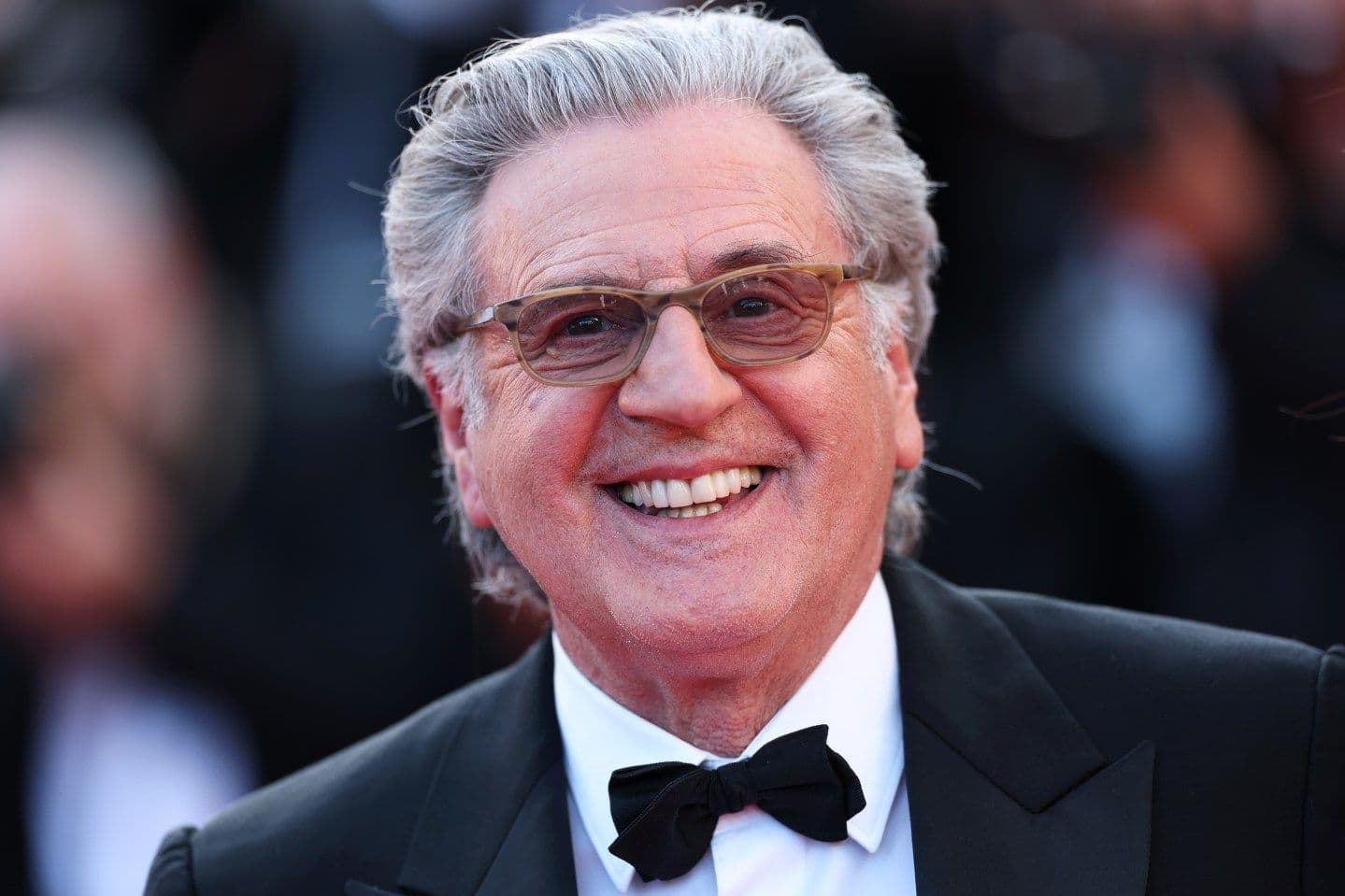
At 76 years old, Daniel Auteuil showed up to a recent interview over Zoom in the most unexpected fashion. Mid-conversation, he paused to apologize — not for a technical glitch or a scheduling conflict, but because a parrot had just landed squarely on top of his head.
The camera flicked on to confirm it: a grey parrot, perfectly content, roosting in his silver hair as though it had found its natural habitat.
"It's because of all my gray hair," Auteuil said, laughing warmly. "She thinks it's her nest."
It was, in its own strange way, a fitting image. One of the most accomplished actors in the history of French cinema, sitting in quiet dignity with a bird perched on his head — utterly unruffled, entirely at ease, and still somehow underestimated by the wider world.
Five Decades at the Top — and Still Under the Radar
For over fifty years, Daniel Auteuil has held a unique and commanding position within French cinema. He has reinvented himself repeatedly across that time — from broad comedy star to romantic lead, from physically transformative character actor to a practitioner of devastating minimalism. Few performers of his generation have demonstrated the ability to move so fluidly between crowd-pleasing mainstream entertainment and the demanding world of auteur filmmaking without ever appearing miscast in either.
The numbers alone speak to his stature. Auteuil holds the record as the most-nominated actor in the history of the César Awards — France's equivalent of the Academy Awards — accumulating an extraordinary 14 nominations and taking home two Best Actor prizes. For context, the iconic Catherine Deneuve has 11 nominations. He has appeared in more than 120 films and television productions across his career, collaborating with some of the most celebrated directors in European cinema.
And yet, beyond France and the international festival circuit, his name still draws blank stares — particularly among audiences under fifty. Unlike contemporaries such as Gérard Depardieu, Jean Reno, or Jean Dujardin, Auteuil scaled the very heights of French cinema without ever making a significant push into Hollywood.
"It's true," he acknowledges with a characteristic shrug. "I shot movies in Italy and in England with my bad English, but I never went to Hollywood. At least not yet."
That final phrase — not yet — floats in the air with deliberate ambiguity. Part wistfulness, part dry humor, entirely noncommittal. It is, in many ways, pure Auteuil.
Cannes, Again — With Two Films in Tow
This year's Cannes Film Festival marks roughly Auteuil's fifteenth appearance on the Croisette, and he arrives with a rare distinction: two films premiering simultaneously, one in which he acts and one which he has directed himself. By any reasonable measure, he is one of the defining presences in the festival's modern history.
His breadth as an artist extends well beyond acting. Auteuil is a formidable quadruple threat — actor, screenwriter, director, and singer. He first found his footing in the performing arts as a cast member on the French touring production of Godspell, and in 2023, at the age of 71, he released his debut album of classic French chansons. The range is staggering, the ambition unrelenting.
He has worked alongside some of cinema's most revered figures, including André Téchiné, Michael Haneke, Agnès Varda, Claude Berri, and Claude Sautet. He starred opposite Catherine Deneuve — whom he affectionately calls "my sister of cinema" — in both My Favorite Season (1993) and Thieves (1996), and appeared alongside the legendary Romy Schneider in The Lady Banker (1980).
"A small role," he says of the Schneider film. "But what a joy to play with one of the greatest actresses in the world."
Rejected, Resilient, and Refusing to Quit
Auteuil's path to greatness was anything but smooth. At the age of 19, he was rejected three times by France's National Academy of Dramatic Arts — the kind of repeated early failure that sends most aspiring performers in search of an alternative profession.
He had no alternative in mind.
"I didn't have a Plan B, so I had to stick it out," he says. "I think that's the strength of youth. You're completely unaware of the risk. Giving up was never part of my plan."
For several years, he navigated a patchwork career through musical theater, television roles, and minor film appearances. His commercial breakthrough finally arrived in 1980 with Les sous-doués (The Under-Gifted), Claude Zidi's enormously popular French teen comedy about students cheating their way through the baccalaureate exams. The film made him famous — but it also boxed him in.
"People thought I was light," Auteuil recalls. "I knew I could do other things. But nobody asks you for what they cannot imagine."
Jean de Florette and the Role That Changed Everything
The director who first dared to imagine something different was Claude Berri.
Berri cast Auteuil in his sweeping period epic Jean de Florette (1986), in the role of Ugolin — a hunched, obsessive Provençal farmer ultimately destroyed by his own emotional limitations and inability to love. It required a complete physical and psychological reinvention. Auteuil disappeared so thoroughly into the character that he barely resembled himself.
"When I saw myself made up as Ugolin, I thought: 'Finally, people won't recognize me,'" he recalls. "He really changed my stature, the way people looked at me as an actor."
The performance was a revelation. It earned him both a BAFTA and a César Award, and firmly established his credentials as a serious dramatic actor. Another performer might have used that momentum to pursue bigger, bolder, more externally expressive roles — the kind of showy physical transformation that his Jean de Florette co-star Gérard Depardieu would ride to international stardom, landing opposite Andie MacDowell in Peter Weir's Green Card just four years later.
Auteuil moved in precisely the opposite direction.
"I'm afraid I'm not much of a dreamer. I'm very pragmatic," he says. "I never chose roles thinking about my career. It was always about my desire to spend time with a certain director, with certain actors. It was always about the work."
Claude Sautet and the Art of Saying Nothing
If Claude Zidi gave Auteuil fame and Claude Berri gave him respect, it was Claude Sautet who elevated him to genuine greatness.
His performance in Sautet's A Heart in Winter (1992) stands as one of the most quietly devastating works in the canon of modern French cinema. As Stéphane, a gifted violin restorer who is emotionally sealed shut and incapable of genuine connection, Auteuil operates almost entirely through restraint. The performance is built from small hesitations, barely perceptible glances, and deliberate emotional withdrawal. He withholds so completely that audiences find themselves leaning toward the screen, straining to catch any flicker of feeling beneath the surface.
"Claude Sautet really changed my acting, from extrovert acting to introvert acting," Auteuil reflects. "It was a major step for me."
That mastery of radical interiority would find its most fully realized expression years later in Michael Haneke's Caché (2005), in which Auteuil plays Georges Laurent — a polished Parisian television host whose comfortable, controlled existence begins to fracture as mysterious surveillance tapes force a dark secret from his past to the surface. The performance is a masterclass in moral ambiguity. Georges is so psychologically fortified that even his own guilt appears inaccessible to him. Caché premiered at Cannes, where it won Best Director and the International Critics' Prize.
Three Claudes, One Career
Looking back across fifty-plus years, Auteuil distills his extraordinary journey with characteristic clarity.
"Together, it was these three Claudes — Claude Zidi, Claude Berri, and Claude Sautet — that made my career," he says. "They made me comfortable doing everything: comedy, drama, playing open or playing closed and mysterious."
It is a remarkably gracious summation from a man whose talent, range, and longevity would justify considerably more self-congratulation. But then, that quiet, unassuming quality — the same quality that has kept him just beyond the reach of global superstardom — is also precisely what makes him so compelling to watch.
The parrot, for its part, clearly knew where it belonged.