The Invisible Millions: How Birth and Death Records Shape Global Health
Nearly half of all deaths and a quarter of births go unrecorded worldwide. One photographer's powerful project reveals what it truly means to be uncounted.

When a Document Defines Your Existence
For most people, a birth certificate is simply a piece of paper tucked away in a drawer. But for millions around the world, the absence of that document means something far more profound — the absence of a legal identity, access to social services, and basic human rights.
This stark reality sits at the heart of "The Uncounted", a compelling photographic project by Colombian-American photographer and filmmaker Juan Arredondo. Traveling across six countries, Arredondo captured the human stories behind one of public health's most overlooked crises: the failure to document births and deaths on a global scale.
His photographs are currently featured in the open-air Photoville exhibition in Brooklyn, New York, on display through May 30.
A Crisis Hidden in Plain Sight
The numbers are staggering. According to Arredondo, nearly half of all deaths and 25% of all births go unrecorded every year across the globe. These are not simply administrative oversights — they are gaps in human visibility that carry serious consequences.
Jennifer Ellis, who leads the Bloomberg Philanthropies Data for Health Initiative, puts it plainly: understanding what birth and death data tells us is absolutely fundamental to public health. Yet across low-income and remote regions, even when records are created, they often remain unfiled, undigitized, and effectively out of reach.
In many developing nations, the majority of deaths occur at home rather than in hospitals or clinics. As a result, no clinical cause of death is ever recorded. Without this data, communities and governments are left without the tools to identify emerging health threats, track communicable disease outbreaks, or allocate healthcare resources where they are needed most.
From Bangladesh to Zambia: Stories Behind the Statistics
Bangladesh: Birth Certificates as a Gateway to Aid
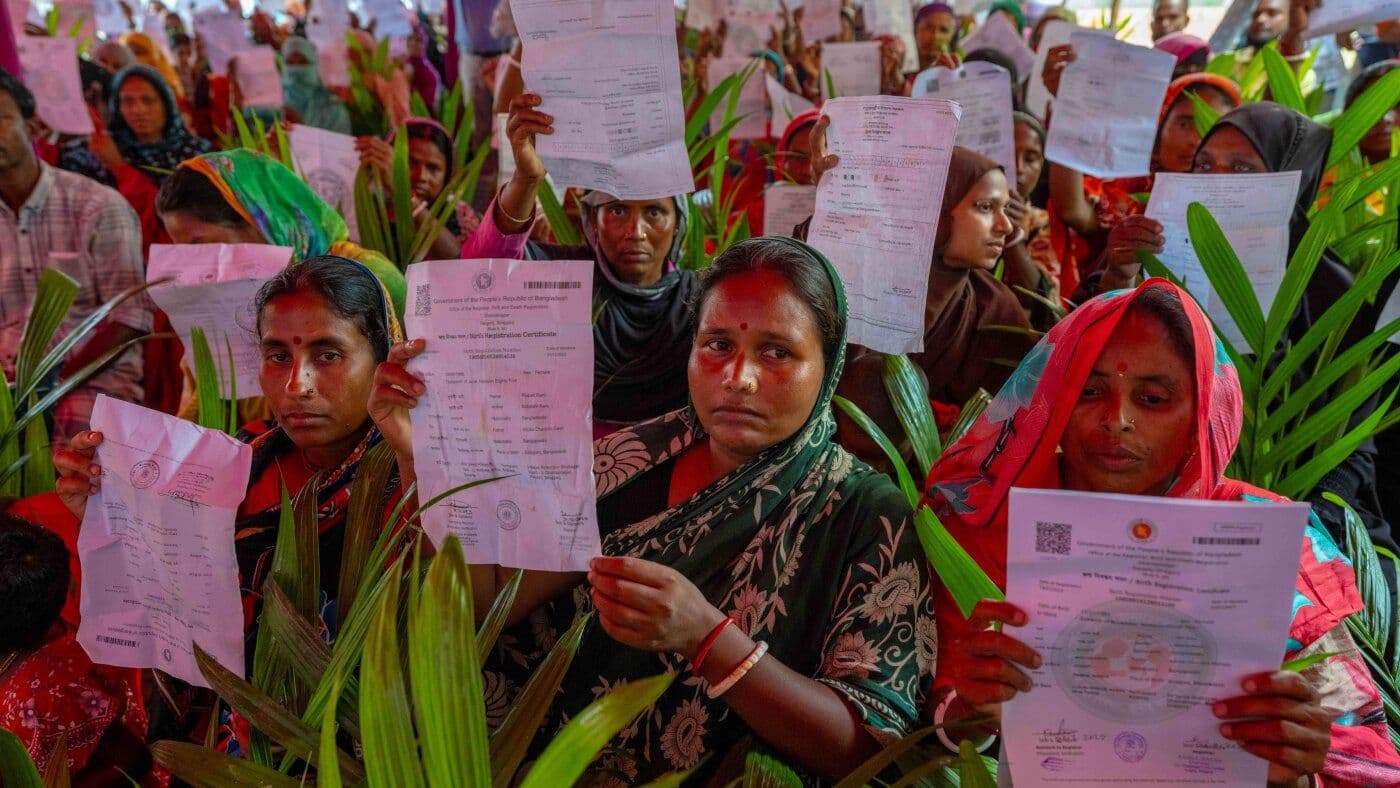
In Sirajganj, Bangladesh, a government registration drive made a tangible difference in people's daily lives. Mothers who had never possessed official birth certificates — for themselves or their children — were finally able to obtain the documents through a campaign in Dhamainagar Union. With these certificates in hand, families became eligible to enroll in vital food assistance programs, illustrating how a single document can unlock access to an entire network of social support.
Rwanda: Bridging Paper Records and the Digital Age
In Rwanda's Musanze District, civil registration officers work diligently to sort through vast paper archives, searching for birth and death records on behalf of citizens tracing their family histories. Rwanda is actively digitizing its civil records, though physical documents are still required for certain official processes. The shift toward digital systems promises to dramatically improve accessibility for future generations.
Zambia: How Data Saved Children's Lives
Perhaps one of the most powerful examples of data-driven change comes from Zambia. When the Bloomberg Philanthropies program analyzed a childhood mortality study, the findings were alarming: 75% of children born with HIV who went untreated would die before their fifth birthday.
This data prompted a significant shift in government health policy. Authorities implemented programs to ensure at-risk children were tested and, where necessary, treated. The results were dramatic — the rate of children receiving testing and treatment climbed from a low of just 3% to an impressive 85%. This transformation would not have been possible without reliable health records driving the decision.
Philippines: Recording Life From Its Very First Moments
At the Agusan del Norte Provincial Hospital, nurses carry out initial health checks on newborns precisely on the date of their recorded birth — a practice that ensures each new life enters the official record from day one. Meanwhile, in Quezon City, initiatives are underway to support families who cannot afford funeral expenses, offering free services while simultaneously ensuring that deaths are properly documented.
Verbal Autopsies: Giving the Uncounted a Voice
In Rwanda's Rulindo District, a quiet but meaningful process takes place in homes across the region. Verbal autopsy officers visit families to document the circumstances surrounding a loved one's death. By speaking directly with relatives and gathering detailed accounts, these officers help create death records for individuals who passed away without ever entering a hospital or clinic.
It is a deeply human approach to a deeply human problem — and it forms part of Rwanda's broader national effort to improve the accuracy and completeness of its vital statistics.
The Bigger Picture: Why Every Record Matters
Arredondo's project was developed in collaboration with the Bloomberg Philanthropies Data for Health (D4H) Initiative, alongside public health organizations Vital Strategies and the CDC Foundation. Together, these organizations are working to close the documentation gap that leaves hundreds of millions of people invisible to the systems designed to protect them.
The lesson woven through every photograph in "The Uncounted" is both simple and urgent: a life recorded is a life acknowledged. Every birth certificate issued is a child granted rights. Every death properly documented is a potential health crisis prevented.
In a world where data increasingly drives policy, the people left out of the data are the ones most at risk of being left behind entirely.