The Hidden Price of Nickel: How Indonesia's Mining Boom Is Reshaping Lives and Landscapes
Indonesia supplies over half the world's nickel, but the true cost extends far beyond economics — local communities and fragile ecosystems are paying a steep price.

Indonesia's Nickel Dominance Comes at a Steep Environmental and Human Cost
Indonesia has emerged as the undisputed heavyweight of global nickel production, supplying more than half the world's total output. Over the last ten years, the country's nickel industry has expanded at a breathtaking pace, fueled by surging demand for stainless steel and, increasingly, for the batteries powering electric vehicles and data centers. Yet behind these impressive figures lies a far more complicated story — one involving environmental degradation, displaced fishing communities, and the uncomfortable tension between economic ambition and ecological responsibility.
A Government With Green Ambitions, but a Mining Sector Far From Clean
Jakarta has positioned Indonesia as a future powerhouse in the global green-energy transition, eager to capitalize on the world's growing appetite for battery materials. However, the way nickel is currently extracted and processed contradicts the clean-energy narrative the government is keen to project. The industry remains environmentally damaging, and the communities living closest to mining operations often bear the heaviest burden.
Foreign investment — predominantly from Chinese corporations, which control most of the country's refining infrastructure — has been the backbone of Indonesia's nickel sector. More recently, the United States struck a trade agreement to secure its own access to Indonesian nickel, reflecting a broader geopolitical effort to reduce dependence on Chinese supply chains.
Sulawesi: Ground Zero for Indonesia's Nickel Rush
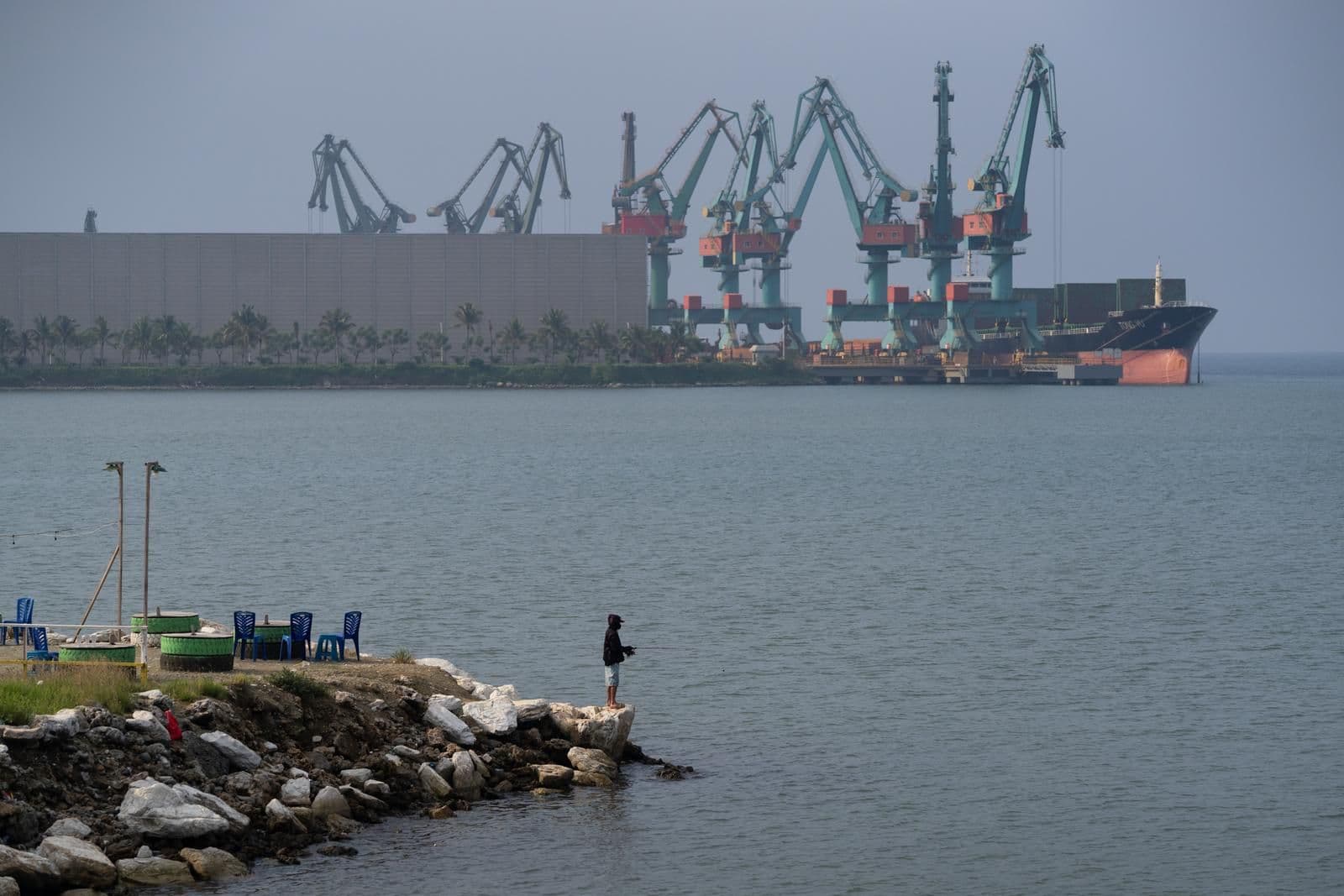
The island of Sulawesi sits at the epicenter of Indonesia's nickel boom. What were once quiet, small-scale villages have been transformed into industrial hubs devoted to mining and ore processing. The numbers tell a dramatic story: active nickel-mining licenses in Sulawesi surged from just one in 2005 to a staggering peak of 408 in 2022, according to the latest available government data. A modest decline in 2023 reflects the government's attempts to regulate the sector and address concerns about oversupply.
To understand what this transformation looks like on the ground, journalists visited six different communities across Sulawesi, speaking with residents whose daily lives have been fundamentally altered by the industry's expansion. The picture that emerges is deeply uneven — some villages have gained jobs and economic activity, while others are wrestling with pollution, displacement, and a growing sense of powerlessness.
Two Villages, Two Realities
Labengki: Life Before the Full Impact Arrives
On a small, remote island home to roughly 500 residents, many of whom belong to the Bajau — an Indigenous community with a centuries-long tradition of nomadic sea fishing — life still moves at a traditional rhythm. Families live in stilted homes rising above coastal waters and continue to fish for both sustenance and income, relying on the rich marine environment just off their shores.
Because of the island's distance from the Sulawesi mainland, the community has so far been spared the worst consequences of nearby mining activity. The surrounding waters remain notably clear, teeming with coral and diverse marine life. But travel just one hour by boat toward the mainland, and the contrast becomes impossible to ignore.
Boenaga: When Mining Moves In
In Boenaga, the mining industry has taken firm hold, and village officials argue that economic benefits have followed. Yet for the fishermen who once cast their nets just steps from their homes, the reality is far grimmer. Today, they must venture significantly farther from shore to find fish, burning more fuel and cutting into already thin margins.
Village secretary Agussalim — who also serves as a spokesperson for one of several nearby mining companies — acknowledges that mining firms provide tangible benefits to residents, including covered utility bills and monthly payments tied to nickel shipments. These arrangements, he notes, are not common across all mining-affected villages in the region.
Still, a quiet resignation has settled over many residents. Those who benefit financially from the industry say they feel they have forfeited the right to voice concerns about environmental damage. For fishermen who depend entirely on the sea, the situation is simply a daily struggle for survival.
"If I can't afford gas, I can't go fishing," one Boenaga fisherman explained plainly. "Sometimes I can't even afford cigarettes."
A Marine Ecosystem Under Threat
Between the contrasting worlds of Labengki and Boenaga, local conservationist Habib Nadjar Buduha, 61, has spent years quietly documenting the environmental toll. His focus is the giant clam — a critically endangered species — whose populations in the region have declined noticeably over the past decade as mining activity has intensified.
Even at distances of up to five miles from the nearest active mine, the water has turned murky, and sediment has begun to smother coral reefs. Giant clams, which feed by filtering water through their gills, are particularly vulnerable: sediment can block their respiratory systems, while heavy metals carried in runoff pose the risk of toxic accumulation within their tissues.
Habib remains cautiously hopeful that his research will motivate mining companies to adopt more responsible environmental practices. "We need to find another way, because balance between mining and the sustainability of marine ecosystems is genuinely possible," he said.
How Nickel Goes From Ground to Global Market
Extraction
Indonesia's nickel deposits are predominantly lateritic ore — a reddish-brown, iron-rich soil found near the surface in tropical regions. Extraction typically involves open-pit mining, which requires clearing land of vegetation and removing the uppermost layers of soil.
The Runoff Problem
Once the land is stripped, heavy rainfall — common in tropical Sulawesi — loosens the exposed soil and carries sediment into rivers, coastal waters, and drinking water sources. Heavy metals within this runoff can contaminate freshwater supplies and disrupt fragile ocean ecosystems, with consequences that ripple far beyond the immediate mining sites.
Processing and Refining
After extraction, nickel ore is transported by truck or ship to large industrial processing parks. Because Indonesia's lateritic ore tends to have relatively low nickel content, it must undergo intensive processing — involving extreme heat or chemical treatments — before it can be smelted and refined into the high-grade metal demanded by global manufacturers.
The Bigger Picture
Indonesia's nickel story is a microcosm of a global dilemma: the materials powering the clean-energy future must be extracted from somewhere, and that somewhere is paying a price. The communities of Sulawesi are living proof that the road to green technology is not, itself, always green. Whether Indonesia can find a more sustainable path forward — one that balances industrial ambition with environmental stewardship and genuine respect for local livelihoods — remains one of the defining questions of the country's development in the decades ahead.