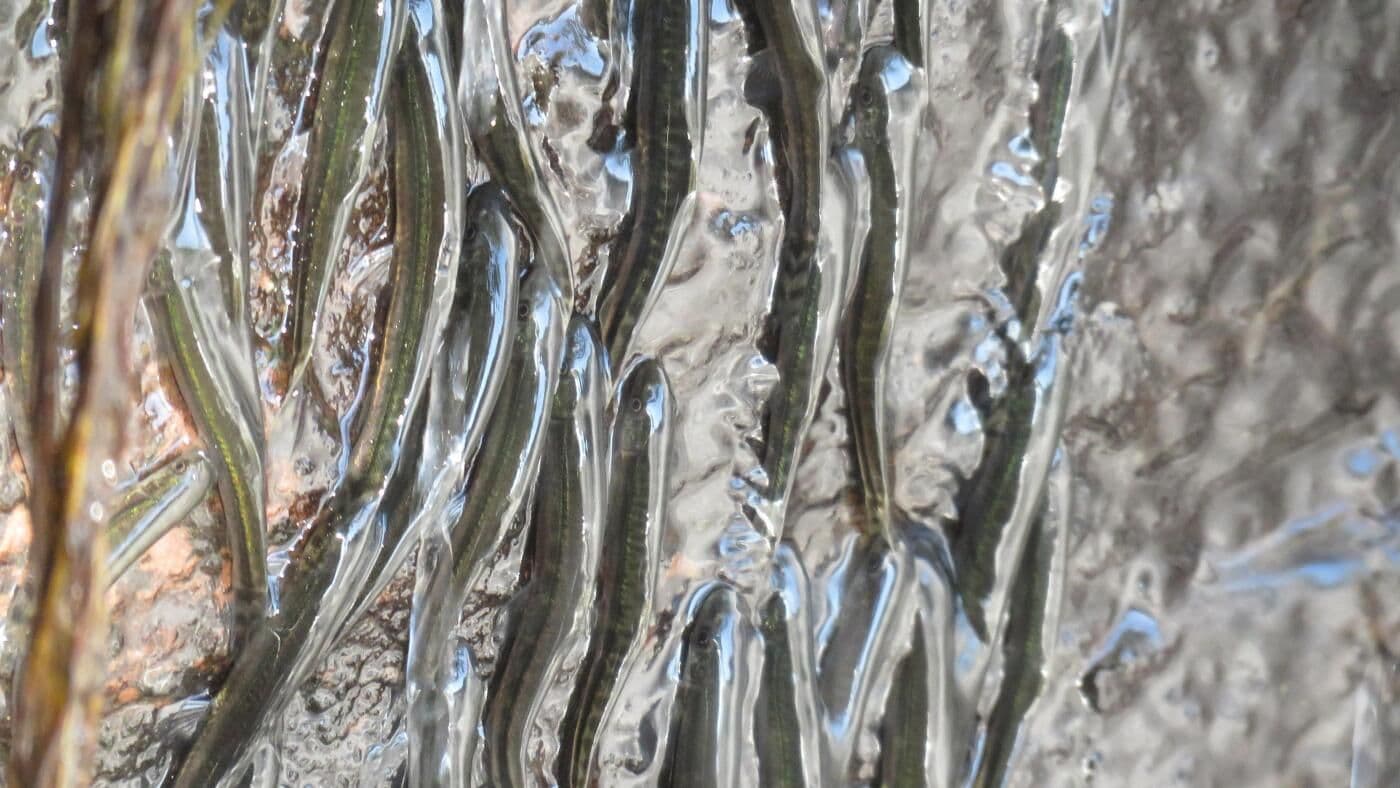
The Fish That Defies Gravity: How One Species Scales 50-Foot Waterfalls
Scientists have uncovered a remarkable fish species in the Congo that can climb towering waterfalls using unique physical and behavioral adaptations.

A Small Fish With an Extraordinary Talent
Deep within the Democratic Republic of Congo, researchers have made a discovery that is rewriting what we thought we knew about the physical limits of fish. A species native to the region has been observed doing something that seems almost impossible — scaling waterfalls that rise as high as 50 feet above the ground.
This is not a gentle slope or a modest stream bank. These are powerful, churning waterfalls, and yet this fish navigates them with a level of agility and determination that has left scientists genuinely astonished.
What the Research Reveals
A new study focused on both the behavior and the anatomy of this remarkable species sheds light on how such an athletic feat is even possible. Researchers conducted detailed observations and physical examinations to understand what combination of biological traits allows this fish to do what most creatures — let alone aquatic ones — simply cannot.
The findings suggest that the fish possesses specialized anatomical features that work in concert with distinct behavioral strategies. Together, these traits allow it to grip slick rock surfaces, resist powerful currents, and propel itself upward in a controlled and deliberate manner.
Body Built for the Climb
Unlike the vast majority of fish species, which are entirely dependent on open water for movement, this species appears to have evolved structures that make surface contact not only possible but effective. Its physical build gives it the mechanical advantage needed to shimmy upward against gravity and rushing water simultaneously — a dual challenge that would defeat virtually any other aquatic creature.
Behavior That Matches the Body
Anatomy alone does not tell the whole story. The research also highlights that the fish demonstrates purposeful, repeatable climbing behavior. This is not accidental or random movement. The fish actively seeks out and ascends waterfalls, suggesting that climbing serves an important ecological or biological purpose — possibly related to migration, feeding, or reproduction.
Why This Discovery Matters
Findings like these expand our understanding of evolutionary biology and the surprising directions in which life can develop. The Congo River basin is one of the most biologically diverse aquatic environments on Earth, and discoveries emerging from it continue to challenge scientific assumptions.
This research is a powerful reminder that nature is still full of secrets waiting to be uncovered — sometimes in the most unexpected places, and in the most unexpected creatures.