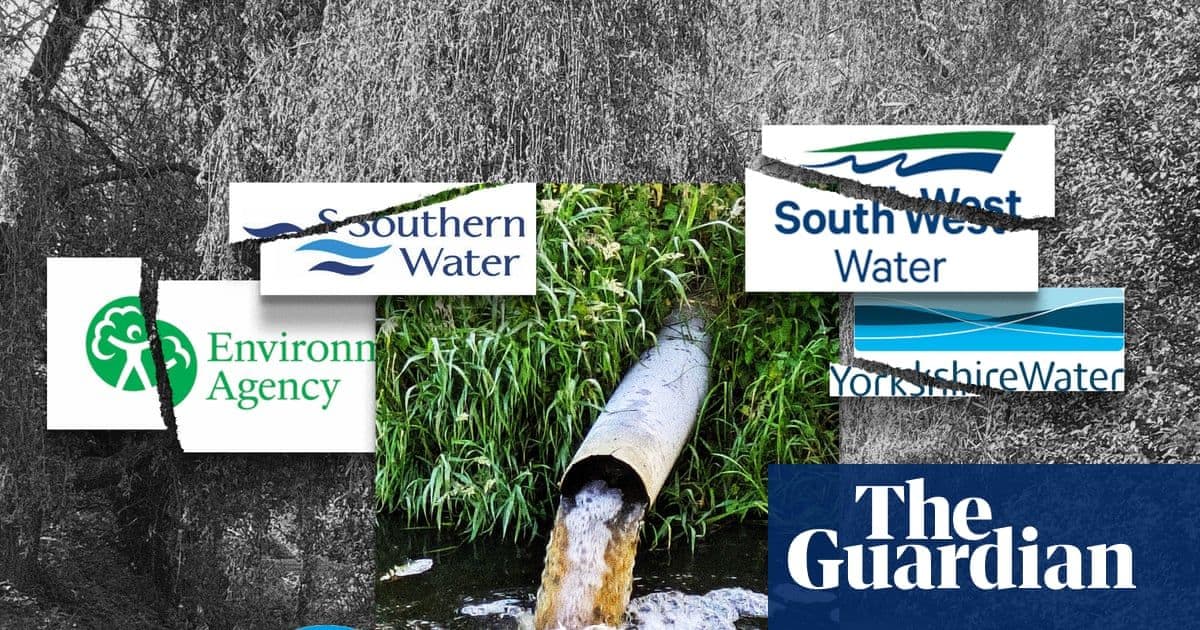
The Faces Behind the Sewage Scandal: Where Are They Now?
As public outrage over the UK's sewage crisis grows, we track the key figures at the center of the scandal and what they're doing today.

The Faces Behind the UK's Sewage Scandal — And What They're Doing Today
Britain's water industry continues to make headlines for all the wrong reasons. South West Water recently entered a guilty plea for supplying water unsafe for human consumption, while South East Water was handed a £22.5 million fine for persistent supply failures that left more than 280,000 customers without reliable service over a three-year period.
Over the past six years, as the true extent of the sewage pollution crisis has come into sharp focus, a number of high-profile individuals — at both regulatory bodies and privatised water companies — have faced intense public criticism. Channel 4's drama Dirty Business has reignited that scrutiny, placing specific individuals under the spotlight once more.
Here is a closer look at some of the central figures in this ongoing scandal and where they stand today.
James Bevan — Former Chief Executive, Environment Agency
A former Foreign Office diplomat, Sir James Bevan led the Environment Agency from 2015 until March 2023. His tenure has been widely criticised both internally and externally. Critics accused him of failing to hold water companies accountable, cutting back on frontline environmental monitoring, muzzling agency staff, and even attempting to dilute strict regulations at a time when public concern over river pollution was rising sharply.
Bevan was a vocal supporter of operator self-monitoring — a system that allowed water companies to self-report their own pollution levels, a practice critics likened to students marking their own exam papers. The current Labour government has since moved to abolish the practice. When questioned by MPs, Bevan defended the approach, claiming the agency had "quite sophisticated ways to check that data."
In February 2025, Bevan was appointed as a non-executive director at Dŵr Cymru (Welsh Water), a not-for-profit water utility with no shareholders. The company praised his background in environmental regulation and public policy as valuable during a time of significant reform and investment.
David Black — Former Chief Executive, Ofwat
David Black served as chief executive of the water industry regulator Ofwat from April 2022 until 2025, having originally joined in 2012 as director of economics before being promoted to chief regulation officer.
During his time at the helm, water companies expanded their debt levels well beyond Ofwat's 60% benchmark, constructed complex offshore financial structures to reduce tax liabilities, and continued paying out substantial dividends to investors while neglecting critical infrastructure. Economist Dieter Helm characterised the way the private sector has managed the water industry as "great financial engineering."
Black departed Ofwat in August 2025 following the government's announcement that the regulator would be replaced. He is scheduled to speak at the Weekend of Mistakes Festival 2026 at Hay-on-Wye, where he will discuss what went wrong with the UK water sector and how it might be reformed — at £150 a ticket.
Richard Aylard — Director, Thames Water
A retired Royal Navy officer, Richard Aylard joined Thames Water in 2002 as its corporate responsibility director before moving into the role of external affairs and sustainability director.
Aylard became a prominent face during public fury over sewage discharges and water supply disruptions across south-east England. He remains at Thames Water today, serving as both a director and special adviser to the chief executive. He continues to act as a key spokesperson on the company's environmental performance and investment commitments related to sewage infrastructure.
Matthew Wright — Former Chief Executive, Southern Water
Matthew Wright led Southern Water between 2011 and 2016 — the very period during which the company illegally discharged billions of litres of untreated sewage into protected waterways across Hampshire and Kent.
In 2020, a judge imposed a then-record £90 million fine on Southern Water after the company was found to have dumped between 16 billion and 21 billion litres of raw sewage into some of England's most environmentally sensitive areas, while also falsifying data through significant under-reporting of illegal pollution incidents. Ofwat had already levied a record £126 million penalty in 2019 for the same misconduct.
Wright, who earned more than £5 million during his time as chief executive, left Southern Water in December 2016. He subsequently became UK director of Danish renewable energy company Ørsted before later working at National Grid ESO. He served as chief operating officer of Exagen Group until February 2024. Wright has acknowledged that the offences occurred "partly on my watch."
Susan Davy — Former Chief Executive, South West Water
Susan Davy served as chief executive of South West Water for five years and had previously held the role of chief financial officer from 2015 before retiring in December 2024. Her tenure coincided with repeated sewage pollution incidents, a two-star environmental performance rating, and the supply of water deemed unfit for human consumption to approximately 2,500 households in 2024 — an offence the company admitted to in court on 4 March.
In her final year, Davy received a pay package worth £803,000, which included £191,000 in long-term bonuses. Upon her departure, she described running a water company as "always interesting, often challenging, but totally fulfilling."
Ofwat launched enforcement action against South West Water last summer, resulting in a £24 million penalty following a three-year investigation. The regulator found that the company had failed to upgrade treatment facilities, neglected its sewer network management, and failed to allocate adequate resources for monitoring its treatment works.
Nicola Shaw — Chief Executive, Yorkshire Water
Nicola Shaw, the chief executive of Yorkshire Water, had her bonus withheld last year under legislation introduced by the Labour government in 2025, which prevents bonuses being awarded to leaders of water companies ranked among the worst offenders for sewage dumping.
Yorkshire Water was fined £47 million in 2024 for excessive sewage discharges from storm overflows due to poor maintenance practices. Ofwat concluded that the company routinely released untreated sewage in circumstances far beyond what is legally permitted, causing tangible harm to both the environment and customers.
Despite the bonus ban, Shaw received additional payments totalling £660,000 through Yorkshire Water's Jersey-registered parent company, Kelda Holdings, across the 2023–24 and 2024–25 financial years.
Sarah Bentley — Former Chief Executive, Thames Water
Sarah Bentley became chief executive of Thames Water in September 2020, arriving from Severn Trent with promises of an eight-year turnaround plan for the struggling utility. She departed abruptly in June 2023 amid public outrage over sewage discharges into rivers and the company's repeated failure to meet pollution and sewer flooding targets.
In 2023, Bentley publicly announced she would waive her bonus for the 2022–23 financial year — a gesture that was quickly dismissed as a hollow PR move when it emerged that she had still received a total pay package of nearly £1.5 million, almost double her annual salary.
During her tenure, Bentley did little to curb Thames Water's mounting debt pile, which now stands at close to £20 billion, or to address record levels of sewage pollution. She left the company while it was under a major Ofwat investigation into illegal sewage discharges from nearly three-quarters of its treatment plants. In June 2024, Ofwat imposed a £104 million fine on Thames Water, noting that almost 70% of its treatment plants had operational failures.
Christine Henderson — Former Chief Executive, Water UK
Christine Henderson led Water UK, the industry's main trade body, during a pivotal period when water companies were in active negotiations with Ofwat — seeking reductions in pollution-related fines and pushing for greater returns on investment. Henderson previously held a senior advisory role in Downing Street, serving both Gordon Brown and David Cameron over the course of her career.
David Miliband — Former Environment Secretary
David Miliband was serving as Environment Secretary in October 2006 when the government approved Macquarie's takeover of Thames Water — a deal now widely seen as a turning point that accelerated the financialisation of the UK water industry. Since 2013, Miliband has been president and chief executive of the International Rescue Committee (IRC), one of the world's leading humanitarian aid organisations.
The sewage crisis has exposed deep systemic failures across both the regulatory framework and the private companies entrusted to manage England's water infrastructure. As the government moves to overhaul Ofwat and end operator self-monitoring, the question of accountability for those at the centre of these failures remains very much unresolved.