The Clever Deception That Brought Ospreys Back to Dorset After 180 Years
Scientists used a fascinating psychological trick to reintroduce ospreys to Dorset's Poole Harbour — convincing the birds the region was their birthplace.
How Scientists Fooled Ospreys Into Calling Dorset Home
After nearly two centuries without a single breeding osprey on England's south coast, conservationists have pulled off one of the most ingenious wildlife reintroductions in recent British history — and it all came down to a carefully orchestrated deception.
Today, a pair of ospreys at Poole Harbour in Dorset are incubating an impressive clutch of four eggs, with wildlife enthusiasts glued to a live nest camera eagerly awaiting the hatching of the first chick of the season.
A Five-Year Mission to Restore a Lost Species
The journey to this moment began in 2017, when the Birds of Poole Harbour charity launched a five-year translocation programme aimed at re-establishing ospreys in the region. Female CJ7 and male 022 became the first breeding pair to emerge from the project — a milestone that represented years of meticulous planning and fieldwork.
But convincing ospreys to settle in Dorset was far from straightforward. The central challenge lies in the biology of male ospreys, which display a behaviour known as natal philopatry — an instinctive drive to return to their birthplace when the time comes to breed. With no osprey population in southern England for roughly 180 years, there was simply no established home for the birds to return to.
"When you wipe out a population of something, there are traits that prevent them from naturally returning to that area," explained Paul Morton, founder of the Birds of Poole Harbour charity. "It's the males that set up territories, so over time we tricked them into believing this was their natal site."
Spotting the Opportunity
The seeds of the project were sown when conservationists began noticing migrating ospreys passing through Poole Harbour each autumn, travelling from their breeding grounds in Scotland to wintering sites in north Africa. Two or three birds were regularly observed making the journey.
"It was obvious there was enough food for them, so we applied for a licence to bring ospreys down from Scotland," said Morton.
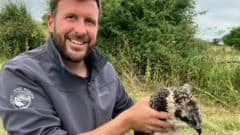
Working closely with the Roy Dennis Wildlife Foundation — which oversees dozens of nests across central-eastern Scotland — the team was permitted to carefully remove around 14 chicks per year. The birds were taken at approximately five weeks of age, old enough to feed themselves but not yet capable of flight.
The Art of a Careful Relocation
The logistics of transporting young ospreys required considerable care and sensitivity. Each chick was placed individually into a cardboard box designed to replicate the feel of a nest, then driven overnight to take advantage of cooler temperatures.
Upon arriving at dawn, the birds were placed into holding aviaries alongside a small number of other chicks, allowing them to bond as a group while minimising any exposure to humans.
Feeding was equally methodical. The team prepared between 9 and 10 kilograms of fish daily, starting with thumbnail-sized pieces and progressively increasing portion sizes until the young birds were strong enough to grip half a trout in their talons and tear through it with their beaks. Food was passed through a letterbox-style slot to preserve the birds' natural wariness of humans, while CCTV cameras monitored their eating habits, physical activity, and general health around the clock.
Release and the Critical First Month
By July, the ringed and tagged juveniles were ready for release — but Morton is clear that this was only the beginning of the most demanding phase of the project.
"When an osprey flies for the first time, it still returns to the nest three to four times a day to be fed, and this continues for around a month," he said. "So we would sneak out early each morning and place whole fish on the nests."
That first month was described as the most critical window of the entire operation. Had the young birds wandered too far before they were ready, the consequences could have been fatal. Gradually, their confidence grew — venturing a few hundred metres in the first week, and ranging widely across the landscape by the end of the month, effectively mapping their new territory.
By the time the juveniles migrate south in August or September, Poole Harbour is firmly embedded in their memory. When they reach breeding maturity — typically after two to three years — that imprinted location draws them back.
Signs of a Lasting Legacy
Both breeding males currently resident at Poole Harbour originated from the translocation programme, confirming that the deception worked precisely as intended. Encouragingly, a three-year-old male designated 5H3 — a bird that fledged from CJ7 and 022's own nest — was recently spotted in the area, raising hopes that he may soon attract a passing female and establish a third breeding pair.
The birds are identified solely by their ring numbers rather than names, as they remain part of an active scientific study.
A Symbol of Broader Species Recovery
For Morton, the ospreys represent something far larger than a single conservation success story.
"It's remarkable, but there's a much greater story than just the ospreys," he reflected. "Within hours, in one location, we've observed white-tailed eagles, red kites, and peregrine falcons — all species that were historically persecuted to the brink of local extinction."
"Species recovery is happening, and the ospreys are symbolic of a much bigger set of stories unfolding right here in Poole Harbour."