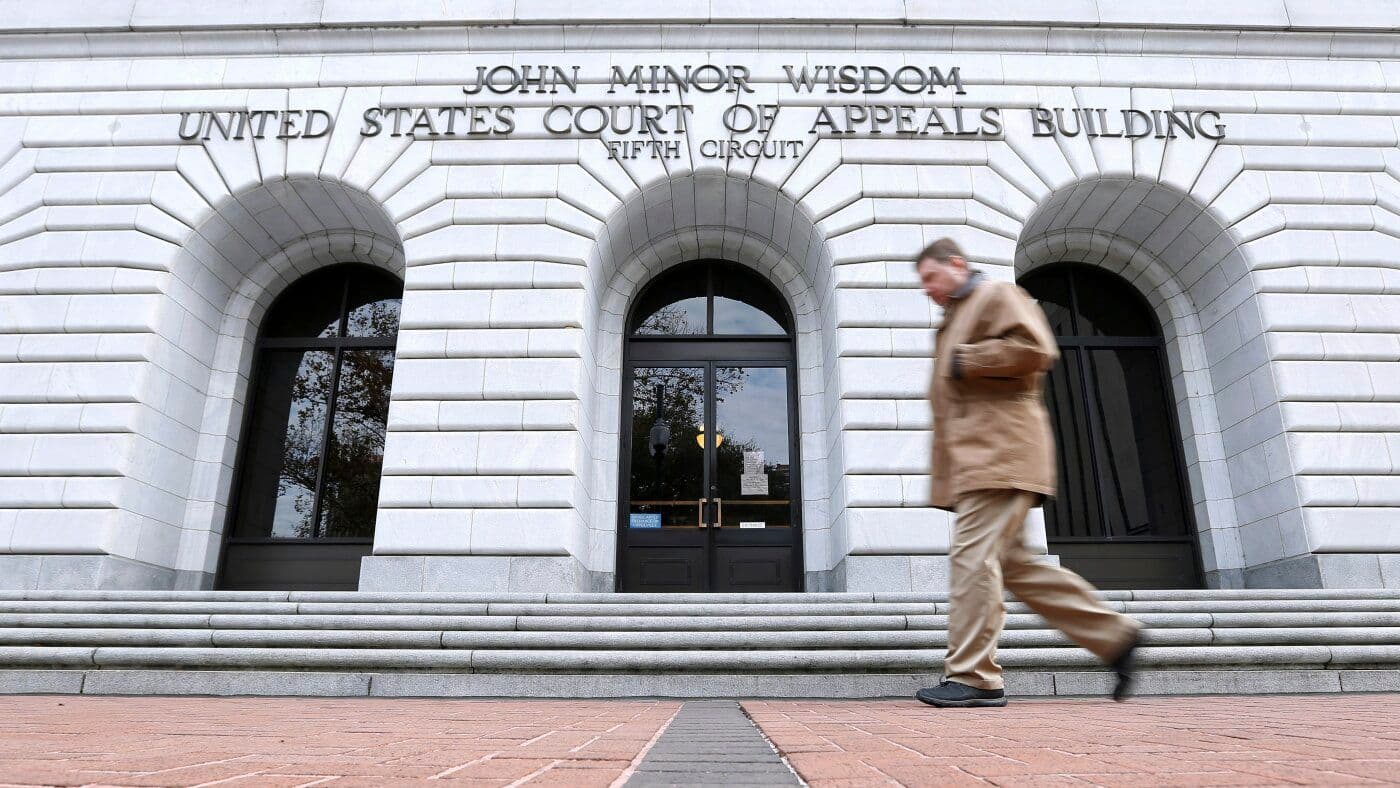
The Abortion Pill Battle: What the Latest Court Rulings Mean for Mifepristone Access
Legal battles over mifepristone have thrown telemedicine abortion access into uncertainty. Here's a clear breakdown of where things stand.
The Abortion Pill Is at the Center of a Legal Firestorm — Here's What You Need to Know
In recent days, the legal status of mifepristone — one of two medications used in a standard medication abortion — has shifted dramatically, leaving patients, providers, and policymakers scrambling to keep up. If you've been trying to follow the story but found yourself lost in the legal back-and-forth, you're not alone.
Here's a clear, straightforward breakdown of everything that has happened and what may come next.
Background: How Mifepristone Access Has Evolved
When the U.S. Food and Drug Administration first approved mifepristone in 2000, patients were required to obtain it in person at a licensed clinic or physician's office. That restriction remained in place for two decades.
The COVID-19 pandemic changed everything. As telemedicine expanded rapidly across the healthcare sector, the FDA began permitting mifepristone to be prescribed remotely and delivered either through local pharmacies or by mail. The agency formally cemented this updated policy in 2023 — notably, after the Supreme Court had already overturned the constitutional right to abortion through its landmark Dobbs decision.
The impact was significant. Telemedicine abortion now accounts for roughly one in four abortions performed across the United States. Experts believe this expanded access is a major reason why the total number of abortions has actually risen since Roe v. Wade was overturned. According to the Guttmacher Institute, a nonprofit research organization that supports abortion access, approximately 1.1 million abortions were performed in the U.S. in 2025.
Louisiana Leads the Charge Against Telemedicine Abortion
Louisiana has positioned itself at the forefront of anti-abortion legal action. It was the first state to classify mifepristone as a controlled substance and the first to criminally indict an out-of-state physician for providing telemedicine abortion services.
Last fall, the state filed a lawsuit against the FDA, arguing that allowing patients to receive mifepristone through telemedicine directly undermines Louisiana's strict abortion ban. The Guttmacher Institute estimates that 9,000 abortions took place in Louisiana in 2025 alone.
A federal district court initially placed the case on hold in April. Louisiana wasted no time in appealing that decision to the 5th U.S. Circuit Court of Appeals, headquartered in New Orleans.
The 5th Circuit's Bombshell Ruling
On May 1, a panel of judges at the 5th Circuit sided firmly with Louisiana. Their ruling reinstated the original in-person requirement for obtaining mifepristone — effective immediately and applicable nationwide.
Judge Stuart Kyle Duncan, a Trump appointee who authored the 19-page opinion, wrote that telemedicine access to mifepristone "injures Louisiana by undermining its laws protecting unborn human life and also by causing it to spend Medicaid funds on emergency care for women harmed by mifepristone," declaring both injuries "irreparable."
Mary Ziegler, a law professor and abortion historian at the University of California, Davis, described the ruling as "the most consequential ruling we've had since Dobbs from a lower court."
Because FDA regulations apply universally across all 50 states, the ruling had sweeping implications — affecting not only states with abortion bans but also states where abortion access is constitutionally protected.
The Supreme Court Steps In
Two pharmaceutical manufacturers immediately appealed the 5th Circuit's decision to the Supreme Court. In response, the Court issued a one-week stay on Monday, temporarily pausing the appeals court ruling. That means mifepristone can still be prescribed via telemedicine and delivered by mail at least through May 11.
Nearly two dozen Democratic-led states also filed an amicus brief urging the Supreme Court to keep the decision on hold. They argued that the appeals court had effectively elevated the policy priorities of states with abortion bans over the equally legitimate sovereign decisions of states that protect abortion access.
Additionally, a coalition of former FDA leaders filed a separate amicus brief defending the agency's rigorous, science-based approval process for mifepristone. They warned that allowing the lower court's decision to stand "would upend FDA's gold-standard, science-based drug approval system."
Real People, Real Stakes
For many Americans, this legal battle is far from abstract. The uncertainty has sent what experts describe as "shockwaves" through the medical community, particularly in rural areas with provider shortages and among low-income patients who cannot easily travel to a doctor's office.
NPR spoke with Jane, a 44-year-old Florida resident who asked to be identified only by her first name. Living under Florida's six-week abortion ban, she discovered she was pregnant in February 2024. Already the primary earner for a financially and emotionally strained household with two children, and with a history of pregnancy complications, she felt she had no realistic alternative.
"It didn't feel like an option to have a third child," she explained. She turned to a telemedicine provider, received the medication at home, and described feeling "relieved and grateful" for the access.
Other patients in rural California, Louisiana, and Georgia shared similar stories with NPR, underscoring just how critical telemedicine access has become for people across vastly different states and circumstances.
What Could Happen Next
The Supreme Court's one-week stay expires on May 11. At that point, several outcomes are possible:
Option 1: The Stay Is Extended
Justice Samuel Alito — who oversees emergency applications from the 5th Circuit — could choose to extend the temporary stay, as he did during an earlier mifepristone case.
Option 2: A Longer Stay Is Granted
The justices could issue a stay lasting until a formal appeal of the case is fully heard and decided by the Supreme Court.
Option 3: The Stay Is Lifted
The Court could decline to extend the stay altogether. If this happens, telemedicine access to mifepristone would end again nationwide while the legal process continues.
How This Case Differs From the Last Mifepristone Battle
This is not the first time mifepristone has faced a major legal challenge. In 2023, a federal judge in Texas attempted to pull the drug from the market entirely. That case eventually reached the Supreme Court, which stayed the ruling, heard arguments, and ultimately dismissed it unanimously in 2024 — concluding that the pro-life physicians who filed the suit lacked legal standing to do so.
Noteworthy, however, is that the Missouri branch of that dismissed case remains active.
Ziegler believes the Louisiana case reflects a deliberate effort to build on the lessons of the first failed lawsuit. "Focusing on the in-person dispensation requirement is more politically modest-seeming," she noted, suggesting anti-abortion advocates are pursuing a more strategically calculated approach this time around.
Where Does the Trump Administration Stand?
President Trump has maintained a noticeably low profile on abortion issues during his current term. He drew criticism from congressional Republicans earlier this year when he suggested they remain "flexible" on abortion restrictions in healthcare legislation. Abortion was also conspicuously absent from his State of the Union address in February.
While opposition to abortion remains popular among his core base, Trump's 2024 electoral coalition relied heavily on independent voters — a demographic that broadly favors abortion rights — creating a complex political calculus on the issue.
As of now, the Trump administration's FDA has not formally responded to the Supreme Court regarding this case.
A Backup Option Exists, But It Comes With Trade-offs
Some reproductive health providers have already begun preparing for the possibility that telemedicine mifepristone access could be curtailed. A medication abortion protocol using misoprostol alone — the second drug in the standard two-drug regimen — remains unaffected by the current legal proceedings and is considered equally safe and effective.
However, the misoprostol-only protocol is associated with more pronounced side effects for patients, making it a less desirable option for many seeking medication abortion care.
The coming days will be critical. The legal future of telemedicine abortion access — and the medication at the heart of it — remains very much in the balance.