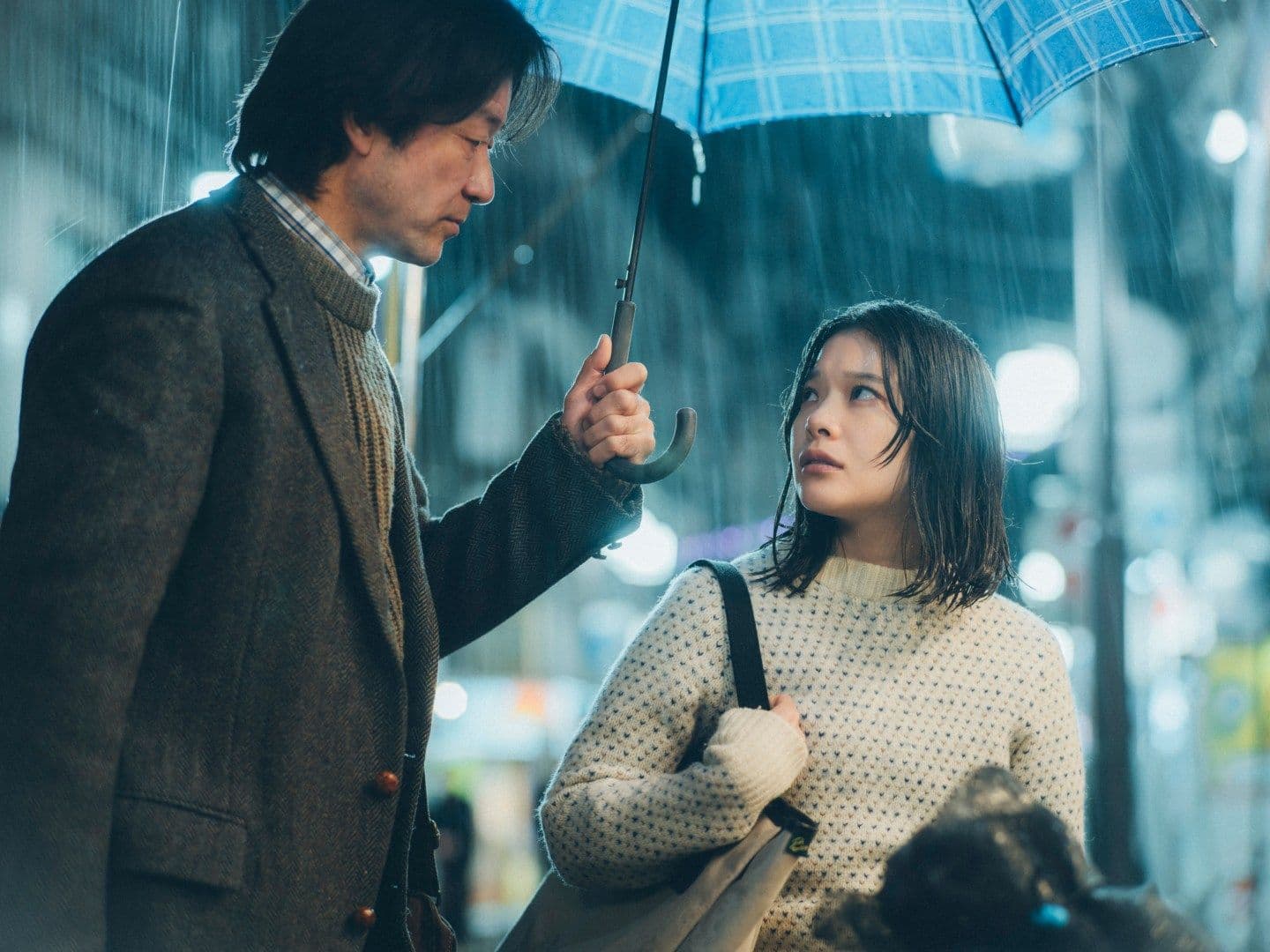
Tadanobu Asano Returns to Cannes with Intimate Romance 'All the Lovers in the Night'
Shogun star Tadanobu Asano joins director Yukiko Sode's poetic Un Certain Regard entry, a quiet love story exploring light, identity, and urban solitude.

Tadanobu Asano Brings Quiet Intensity to Cannes Romance 'All the Lovers in the Night'
Following his Golden Globe triumph for Shogun, Japanese actor Tadanobu Asano is back on the Cannes stage — this time in a far more understated role. Director Yukiko Sode's fourth feature film, All the Lovers in the Night, world-premieres in the prestigious Un Certain Regard section, offering a meditative, visually stunning portrait of loneliness, longing, and the slow unraveling of emotional self-protection.
Based on the widely celebrated novel by Mieko Kawakami — the first Japanese work ever shortlisted for the U.S. National Book Critics Circle Award — the film is a quietly arresting piece of cinema that uses a fragile, hesitant romance as a lens through which to examine deep philosophical questions about identity, visibility, and authenticity.
A Story Lived in Shadows and Half-Light
At the center of the film is Fuyuko, a freelance proofreader played with restrained brilliance by Yukino Kishii. She leads a near-reclusive existence in Tokyo — spending her days alone in a modest apartment, pouring over manuscripts with painstaking care, and venturing out only occasionally, most notably for a solitary midnight walk through the city on her birthday. Her life appears calm on the surface, but beneath it simmers an unspoken restlessness, hinted at by a growing habit of secret daytime drinking.
Her world shifts when she crosses paths with Mitsutsuka, portrayed by Asano, a softly spoken high school physics teacher she encounters at a local cultural center. Their connection develops slowly — across a series of tentative café meetings — as both characters guard their own hidden truths. He speaks in near-philosophical riddles about the behavior of light, and she listens with the attentiveness of someone starving for meaning.
Light as Metaphor: The Film's Central Philosophy
Director Yukiko Sode first came to Kawakami's novel through her producer and was immediately drawn to its conceptual core. "My interpretation of the book was that it was about light," Sode told The Hollywood Reporter. "And of course, as a filmmaker, light being a motif was an irresistible challenge. How could I not make it?"
The film uses the physics of light as a sustained metaphor for human connection. As Mitsutsuka observes, light only becomes visible when it makes contact with a physical object — and All the Lovers in the Night suggests our true selves operate in much the same way. We only become fully real, fully seen, through our relationships with others.
Fuyuko also wrestles with a question that haunts many creative minds: are the emotions and thoughts she experiences genuinely her own, or are they simply echoes of all the literature she has absorbed over a lifetime? Sode found this theme deeply personal. "Whenever you're shooting a film, you're not quite sure if you're drawing on some accumulation of the cinema that came before you, or if you've actually struck upon something original," she reflected.
Shooting on 16mm: A Deliberate Analog Choice
Sode's philosophical commitments extended into her technical decisions. She was insistent on shooting the film on 16mm film stock — a choice that initially raised budget concerns among producers but ultimately won approval after the entire cast and crew advocated collectively for the format.
"When you shoot on film, you can capture light on physical film as is," Sode explained. "Whereas if you're using digital, it might become too washed out, or you lose that quality of feeling that you really see it."
The analog approach also served a thematic purpose, mirroring Fuyuko's identity as a meticulous proofreader — someone whose slow, careful, human labor stands in pointed contrast to the rise of AI-driven automation. In a subtle nod to the contemporary moment, Sode updated Kawakami's decade-old novel with a brief reference to artificial intelligence and its looming impact on the proofreading profession — the one modernization the author suggested when the two met to discuss the adaptation.
Cinematographer Yasuyuki Sasaki — who also lensed Kiyoshi Kurosawa's Cannes-premiering Kokurojo: The Samurai and the Prisoner — renders Tokyo in gorgeous, painterly tones: smudged neon reflections, amber late-afternoon interiors, and soft city light that feels almost tangible.
Two Performances That Anchor the Film
Kishii, who gained international recognition for her role as a deaf boxer in Sho Miyake's Berlinale hit Small, Slow But Steady, delivers a performance of exceptional interiority as Fuyuko. Every guarded glance and hesitant movement communicates volumes.
Sode also used camera framing as a subtle narrative tool: in scenes with other male characters, Fuyuko is consistently shot sideways or at an angle, visually communicating her emotional withdrawal. In her scenes with Mitsutsuka, the framing gradually tightens and shifts to direct eye contact — a formal device that mirrors her slow, painful opening up.
Asano, meanwhile, brings his signature offbeat warmth to Mitsutsuka. He constructed an elaborate personal backstory for the character entirely on his own initiative — something Sode described as completely unexpected. "Boy, was it unexpected," she laughed, declining to reveal the details of what Asano invented.
A Portrait of Urban Solitude — and the Courage to Be Known
Beyond the central romance, All the Lovers in the Night offers a resonant portrait of a recognizable contemporary Tokyo archetype: the solitary urbanite in their thirties or forties who has so thoroughly armored themselves against emotional vulnerability that ordinary milestones — romantic partnership, family — have quietly slipped out of reach.
"The metropolis allows people to blend in and to disappear within it," Sode said. "If you choose not to associate with anybody and just live your life, that means there's less possibility that you'll be hurt. But at the same time, we as people, as humanity, cannot exist without others — and so there is that yearning, that longing as well."
For all its melancholy texture, Sode is clear that Fuyuko's journey ends not in tragedy but in something approaching grace. By allowing herself to love — regardless of outcome — Fuyuko joins the vast, quietly suffering community of people across the world who have known great love. "She's found nakama — companionship — in a community where everybody feels a little bit alone," Sode said.
Kawakami, for her part, gave Sode total creative freedom throughout the adaptation process, offering no notes or directives. "She basically said, it's in your hands," Sode recalled — a level of trust that the finished film appears more than worthy of.

