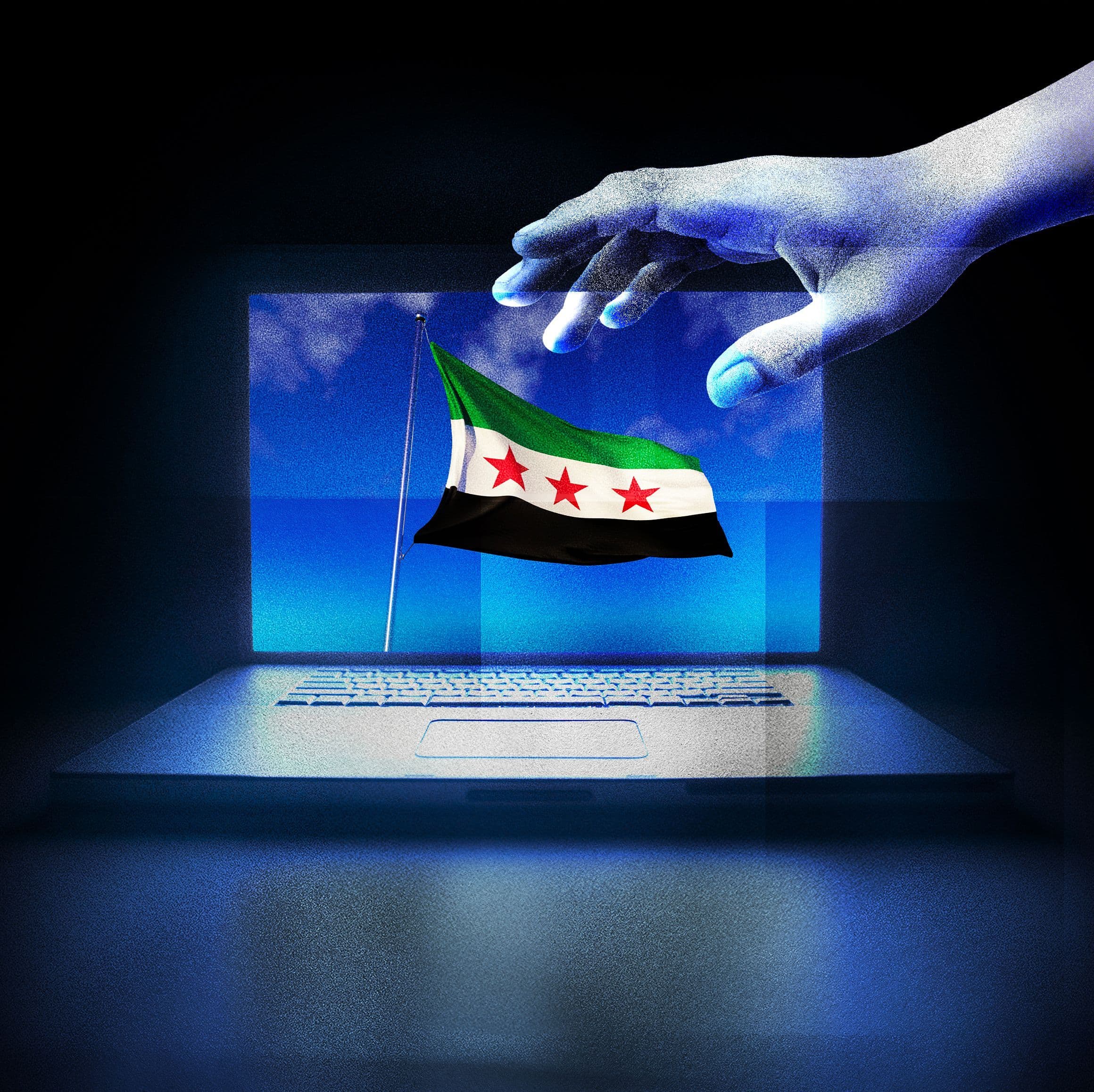
Syria's Government Hack Reveals Critical Cybersecurity Vulnerabilities
A wave of account takeovers on X exposed Syria's dangerously weak digital defenses. Experts warn the incident is just the surface of a deeper crisis.

How a Social Media Hack Laid Bare Syria's Digital Security Crisis
What initially appeared to be random online chaos turned out to be something far more alarming. When Syrian government accounts on X suddenly began posting pro-Israel slogans, sharing explicit content, and adopting the names of Israeli officials in early March, observers quickly realized this was no mere prank — it was a window into a state with critically vulnerable digital infrastructure.
Among the compromised accounts were those tied to the presidency's General Secretariat, the Central Bank, and several government ministries. The infiltration was brief but damaging, raising immediate questions about how well-protected Syria's official digital presence actually is.
The Ministry of Communications and Information Technology responded by announcing emergency measures to reclaim the accounts and tighten security protocols. However, the more uncomfortable question lingered long after the accounts were restored: just how secure is Syria's digital foundation?
More Than a Political Stunt
On the surface, the timing of the breach — pro-Israel content appearing on verified Syrian government profiles during a period of regional tension — suggested a politically motivated attack. Yet cybersecurity analysts were quick to look past the optics.
"We still do not know exactly what happened. Whether the accounts were directly hacked or accessed through weak or reused credentials, the conclusion is much the same: very poor digital security practices," said Noura Aljizawi, a senior researcher at the Citizen Lab, an organization dedicated to monitoring digital threats against civil society.
No group claimed responsibility for the breach, and Syrian officials offered no clarity on whether internal systems beyond social media were affected. The absence of answers only deepened concerns.
A Single Point of Failure Across Multiple Institutions
One of the most telling signs of systemic weakness was the pattern of the attack itself. Several government accounts displayed identical messaging almost simultaneously — a strong indicator that shared login credentials or centralized account management was in place.
Shared Credentials, Shared Risk
"The fact that several official X accounts seemed to fall in quick succession suggested some form of centralized control, possibly with the same credentials used across multiple accounts," explained Muhannad Abo Hajia, a cybersecurity expert at the Damascus-based organization Sanad. "That kind of setup is not inherently wrong, but only if proper safeguards are in place."
Experts point to a predictable cluster of vulnerabilities that likely enabled the breach: password reuse across platforms, successful phishing attacks, compromised account recovery channels, or a complete absence of multifactor authentication (MFA). Any one of these weaknesses, left unaddressed, can hand a bad actor control over multiple high-profile accounts at once.
"Account takeovers of this kind are common enough globally and usually result from familiar vulnerabilities: phishing, password reuse, compromised recovery emails, weak credentials, or the absence of MFA," noted Rinad Bouhadir, a cybersecurity engineer monitoring the region's threat landscape.
Inherited Dysfunction and Structural Neglect
Beyond the technical failures, analysts argue the incident reflects a deeper institutional problem — one rooted in years of neglect and a lack of urgency around digital security.
"The current authorities inherited a near-nonexistent cybersecurity system and have yet to treat repairing it as a real priority," said Dlshad Othman, a Syrian cybersecurity specialist.
Othman believes the breach likely originated from either a centralized team managing multiple official accounts or a shared third-party tool deployed across ministries. Both approaches create a dangerous single point of failure — one compromised password or tool potentially unlocking access to an entire government's online presence.
The Real-World Consequences of a Fake Post
The stakes of this vulnerability extend well beyond embarrassment. A verified government account can become a powerful weapon for disinformation, especially during periods of regional instability. A falsified emergency announcement or a fabricated diplomatic statement published through an official channel could trigger panic, international misreporting, or even real-world escalation — all before a correction can be issued.
Abo Hajia also highlighted a deeper cultural issue: "Syrian government organizations and the general public lack awareness of basic cybersecurity fundamentals. We wait to get hacked before taking precautions and understanding their importance."
Even fundamental protections like two-factor authentication remain inconsistently applied across Syrian government platforms, according to Aljizawi.
A Modernization Narrative That Doesn't Hold Up
In recent years, Syria has promoted an image of digital advancement — rolling out e-government platforms and speaking the language of technological reform. But cybersecurity analysts say these appearances frequently conceal fragile, outdated systems operating well below international standards.
"More troubling still are the attacks the public never hears about," Othman warned. "Syria has repeatedly been targeted by serious cyber operations, including attacks on its telecommunications infrastructure and top-level domain, by both regional and international state-backed actors."
What surfaced on X, in other words, may represent only a small, visible fraction of an ongoing and much larger vulnerability.
Mohammad Mostafa, a digital expert at Sync, summed up the root causes plainly: "This happened because of basic errors — it could have been the result of a targeted phishing attempt against a communications staffer, password reuse across multiple government profiles, or a compromised recovery email or phone number tied to several accounts at once. None of those scenarios requires elite capability. They require basic lapses."
What Real Digital Security Looks Like
Recovering hacked accounts is the easy part. Fixing the underlying vulnerabilities is far harder — and far more important. Analysts argue that Syria, like many nations with underdeveloped cyber infrastructure, must begin treating digital security as a pillar of national defense rather than an afterthought.
That means investing in staff training, enforcing institutional security standards, mandating MFA across all official platforms, and building accountability structures that don't wait for a breach to prompt action.
Until those investments are made and those structures are built, Syria's confident digital presence will remain exactly what experts call it: a thin facade — one successful phishing email away from going completely silent.

