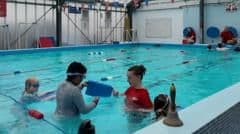
Swimming Clubs Push for Stronger Water Safety Education in UK Schools
With pool closures rising and drowning incidents claiming lives each summer, experts and swimming clubs are calling for urgent reform in how schools teach water safety.
Swimming Clubs Demand Stronger Water Safety Lessons in Schools
As the UK prepares to roll out a revised national curriculum this autumn, swimming clubs and water safety experts are urging schools to go further in equipping children with the skills they need to survive in and around water.
Currently, all primary school children in England are expected to be able to swim at least 25 metres before leaving school. However, only 77% of children actually meet this benchmark by the time they complete primary education — a figure that experts say is simply not good enough.
A New Water Safety Framework Is Coming
From September, a newly established Water Safety Forum will introduce a structured framework into both primary and secondary schools across the country. The initiative goes beyond basic swimming ability, aiming to teach children how to handle genuinely dangerous situations in the water.
Key safety messages embedded in the new curriculum include:
- Stop and Think — pause before entering unfamiliar water
- Stay Together — never swim alone
- Float — use floating as a survival technique
- Call 999 — act quickly in an emergency
Despite welcoming the new framework, the City of Southampton Swimming Club believes schools still need to place greater emphasis on fundamental swimming instruction before progressing to broader safety lessons.
The Real Cost of Swimming
For millions of families across the UK, accessing swimming lessons has become increasingly difficult. A combination of rising costs and widespread pool closures — accelerated significantly since the COVID-19 pandemic — has created serious barriers to participation.
Matt Heathcock, Head Coach at the City of Southampton Swimming Club, highlighted just how expensive a simple family swim has become. "For myself and my family, you're looking at over £20 to £25 just to go for maybe an hour of swimming," he said. "And with pools closing, lessons are becoming more expensive too."
Adam Goymer, Head of National Water Safety, described the wave of pool closures as a "terrible investment" and called on the government to step in. "That is certainly a call to action for government to invest in swimming pools to keep them running," he said. "Schools that are fortunate to have their own pool — it would be a sheer loss if they couldn't keep it because of costs."
Governing body Swim England reports that around 90% of children in the south of England say they enjoy swimming, underscoring the demand. Yet access remains deeply unequal.
Drowning Remains a Deadly Risk
The urgency behind these calls is backed by sobering statistics. During a heatwave at the end of May, at least 11 people across the UK lost their lives in water-related incidents, including a 14-year-old at Hawley Lake near Farnborough.
Perhaps most alarming is data from the National Water Safety Forum showing that 61% of drowning victims between the ages of 8 and 18 were considered able swimmers by those who knew them. This reveals a critical gap between pool-based swimming ability and real-world water survival skills.
Learning to Float Could Save Your Life
Professor Mike Tipton, a physiology expert at the University of Portsmouth and chair of the National Water Safety Forum, argues that the ability to float is the single most important survival skill children can learn.
"Because you can swim 25 metres in an indoor pool, that doesn't necessarily prepare you to survive in open water," Professor Tipton explained. "If you find yourself in trouble in cold water, the message is float to live — roll onto your back, tilt your head into the water, and do as little as possible until your breathing comes under control. That takes about a minute."
While the new curriculum represents a meaningful step forward, experts agree that without government investment in keeping public pools open and affordable, progress will remain limited. Giving every child the chance to swim — and survive — must become a national priority.