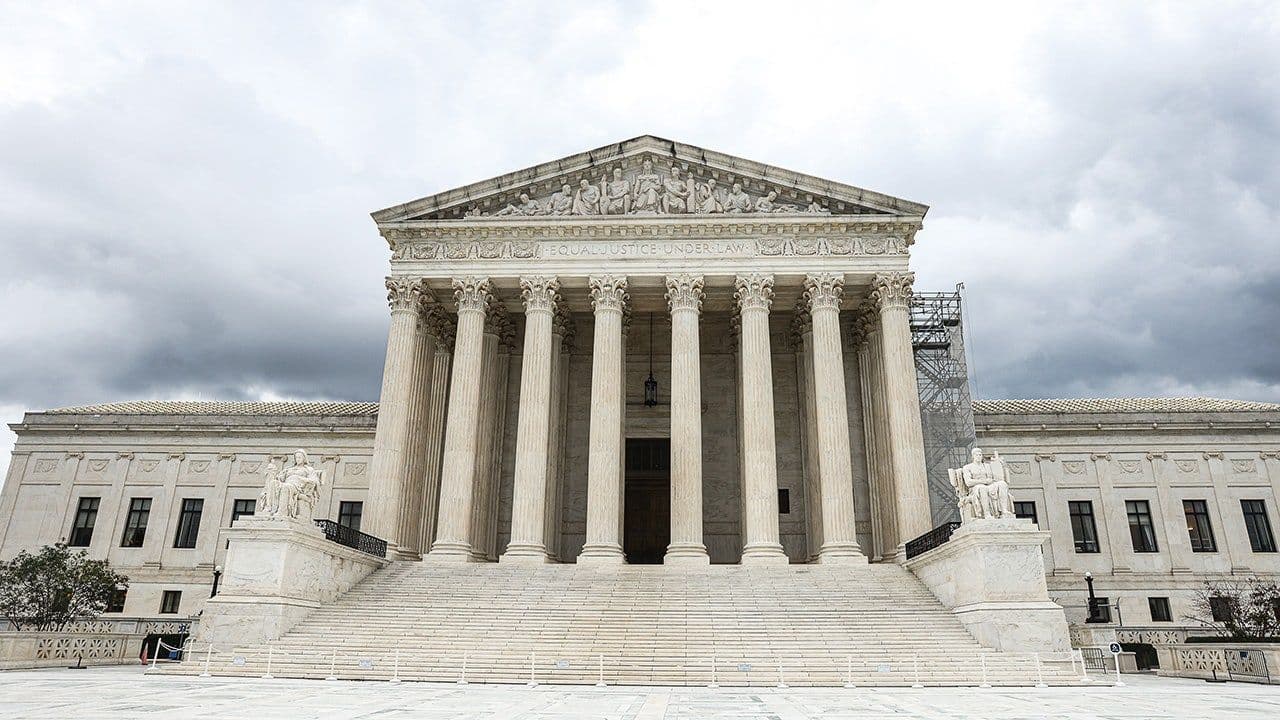
Supreme Court Rules Schools Must Get Parental Consent Before Socially Transitioning Children
A landmark Supreme Court ruling in Mirabelli v. Bonta confirms that parents — not school administrators — hold constitutional authority over their children's upbringing.

A Landmark Ruling That Reshapes School Authority Over Children
The United States Supreme Court has delivered a watershed decision that carries profound implications for public schools nationwide. In Mirabelli v. Bonta, the Court ruled that a California law permitting schools to conceal a student's claimed gender identity from their parents directly violates both the First Amendment's Free Exercise Clause and the substantive due process protections guaranteed under the Fourteenth Amendment.
Simply put, the highest court in the land has reaffirmed what many parents have long argued: the government does not have the authority to socially transition a child at school without the knowledge or consent of that child's parents.
What the Court Actually Decided
The Supreme Court's ruling centered on California's policy of allowing schools to facilitate a student's social gender transition — including using different pronouns and names — while actively keeping that information hidden from parents. The Court found this practice likely violates the free exercise rights of parents who hold sincere religious beliefs about sex and gender and who feel a moral and spiritual obligation to raise their children in accordance with those convictions.
The justices also noted that this type of unconsented facilitation goes even further than the LGBTQ storybook indoctrination the Court addressed the previous summer in Mahmoud v. Taylor — a case in which Montgomery County Public Schools in Maryland was found to have violated parental rights and ultimately paid $1.5 million to settle the dispute.
Beyond religious liberty concerns, the Court emphasized that California's secrecy policy likely infringes upon parents' well-established constitutional right to direct the upbringing and education of their children — and that being denied this right constitutes irreparable harm.
What This Means for Schools Across the Country
The practical consequences of this ruling are sweeping. Schools throughout the United States are now on notice that they must obtain parental consent before facilitating any form of social gender transition for a student. This includes:
- Addressing a student by opposite-sex pronouns
- Using a different name that reflects a different gender identity
- Allowing a student to use bathrooms or locker rooms designated for the opposite sex
No school district can legally continue hiding such activities from parents or claim ignorance of the law.
A Direct Challenge to Existing School Policies
California is far from the only state where school districts have adopted policies designed to keep parents in the dark. In Virginia, for example, Loudoun County Public Schools' Regulation 8040 explicitly states that a student's gender identity or transgender status should not be shared without the student's consent. Internal teacher training documents from the same district instruct staff that privacy is critical for transgender students whose families may not affirm their gender identity — and that cases where students do not want parents informed should be handled on a case-by-case basis.
Applied against the Supreme Court's ruling in Mirabelli, such policies have only one legal standing: unconstitutional. School boards that choose to maintain these frameworks do so at enormous legal and financial risk, potentially exposing individual board members and administrators to personal lawsuits and punitive damages.
Any Parent Can Take Legal Action
One of the most significant aspects of this ruling is its broad standing provisions. The Court made clear that parents do not need to have a child who has already been socially transitioned at school in order to sue. Any parent whose school district maintains a policy similar to Loudoun County's qualifies as an object of that challenged policy and therefore has standing to pursue legal action — whether individually or through a class action lawsuit — for violations of their free exercise and substantive due process rights.
The Locker Room Question
The ruling also opens the door to a broader set of parental rights claims. Consider a scenario where a male student is permitted to use a girls' locker room as part of a school-facilitated gender transition. The parents of female students using that same locker room may hold legitimate religious, philosophical, or safety-based objections to their daughters sharing that space with a male peer. If those parents are not informed beforehand, they are effectively stripped of their constitutional right to take the protective action they deem appropriate for their children.
This is not a hypothetical — it is reportedly occurring in districts like Loudoun County right now.
The Bottom Line for Parents
Despite this unambiguous ruling, some school administrators and board members may choose to resist compliance. For those who do, the legal consequences should be swift and significant. Courts should hold noncompliant officials accountable and require them to pay serious financial penalties for their defiance.
The Supreme Court's decision in Mirabelli v. Bonta does not create new rights — it reaffirms rights that have always existed under the Constitution. Parents have a legally protected authority to guide the upbringing and education of their children. That authority does not disappear the moment a child walks through a school's front door. Parents now have both the legal precedent and the constitutional backing to enforce these rights — and they should not hesitate to do exactly that.

