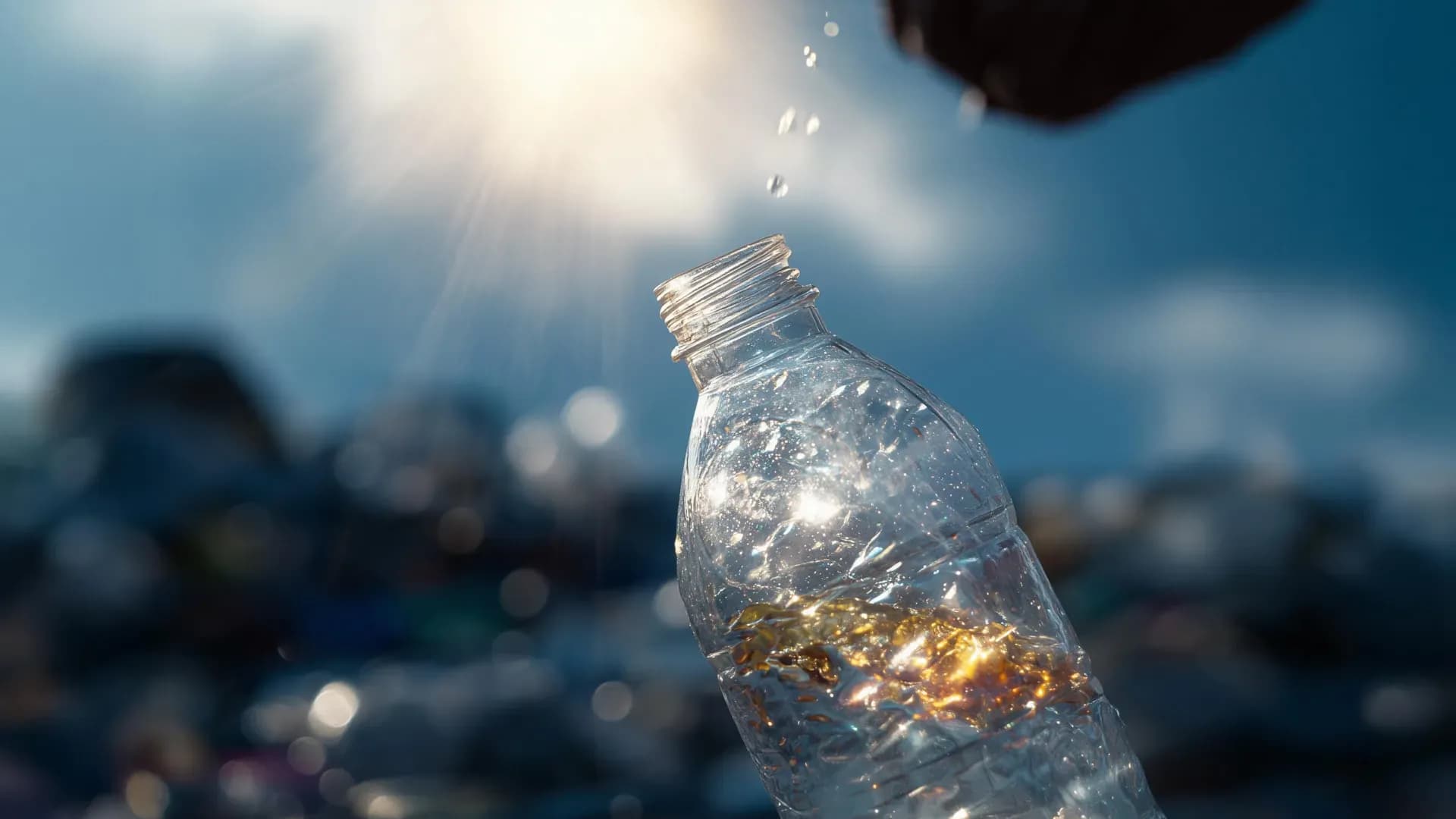
Sunlight Could Turn Plastic Trash Into Clean Hydrogen Fuel
Researchers are harnessing solar energy to convert plastic waste into hydrogen fuel, offering a powerful dual solution to pollution and the global clean energy crisis.
Turning Plastic Waste Into Fuel With the Power of Sunlight
A growing body of research is pointing toward a remarkable possibility: the mountains of plastic waste choking our planet could one day serve as a source of clean energy. Scientists are now developing solar-powered systems capable of breaking down discarded plastics into hydrogen fuel and other valuable industrial chemicals — a breakthrough that could simultaneously address two of the most pressing challenges of our time.
A Dual Solution to Pollution and Energy Demand
Every year, more than 460 million tonnes of plastic are manufactured globally, and a staggering portion of that ends up contaminating oceans, soil, and ecosystems. At the same time, the urgency to transition away from fossil fuels has never been greater. A new study led by Xiao Lu, a PhD candidate at Adelaide University, explores how these two crises might be solved together through a single innovative process.
Published in the journal Chem Catalysis, the research demonstrates that plastics — being rich in both carbon and hydrogen — can be reimagined not as environmental liabilities, but as raw materials for sustainable fuel production.
"Plastic is often seen as a major environmental problem, but it also represents a significant opportunity," said Ms. Lu. "If we can efficiently convert waste plastics into clean fuels using sunlight, we can address pollution and energy challenges at the same time."
How Solar-Driven Photoreforming Works
The process at the heart of this research is known as solar-driven photoreforming. It relies on specially engineered light-sensitive materials called photocatalysts, which absorb sunlight and use that energy to chemically break down plastic at relatively low temperatures.
Through this reaction, plastics are converted into hydrogen — a clean-burning fuel that emits nothing harmful at the point of use — along with other commercially useful byproducts such as acetic acid and diesel-range hydrocarbons.
One of the standout advantages of this method is its energy efficiency. Unlike conventional hydrogen production through water splitting, using plastic as a feedstock requires less energy because plastics are more readily oxidized. This lower energy barrier makes the process more viable for potential large-scale deployment.
Laboratory results have been encouraging. Some experimental systems have run continuously for over 100 hours while maintaining strong performance, pointing to improving stability and real-world durability.
Key Obstacles Still to Overcome
Despite the promising early results, several significant challenges remain before this technology can move beyond the laboratory.
The Complexity of Mixed Plastic Waste
Professor Xiaoguang Duan, senior author of the study and a faculty member in the School of Chemical Engineering at Adelaide University, highlighted one of the core difficulties.
"One major hurdle is the complexity of plastic waste itself," Prof. Duan explained. "Different types of plastics behave differently during conversion, and additives such as dyes and stabilisers can interfere with the process. Efficient sorting and pre-treatment are therefore essential to maximise performance and product quality."
Catalyst Durability and Selectivity
The photocatalysts used in the process must be both highly selective — targeting the right chemical reactions — and durable enough to withstand prolonged exposure to harsh chemical environments. Current iterations of these materials tend to degrade over time, reducing their long-term effectiveness and increasing operational costs.
Separating the End Products
Another challenge lies in processing the output. Reactions typically yield a complex mixture of gases and liquids that must be separated, often through energy-intensive procedures. If not handled efficiently, this separation stage could significantly diminish the environmental benefits of the entire process.
"There is still a gap between laboratory success and real-world application," Prof. Duan acknowledged. "We need more robust catalysts and better system designs to ensure the technology is both efficient and economically viable at scale."
The Path Forward
Researchers are pursuing a comprehensive, systems-level approach to tackling these hurdles. Ongoing development efforts include advanced catalyst engineering, smarter reactor designs — such as continuous-flow systems — and hybrid energy setups that combine solar power with thermal or electrical inputs. Improved monitoring and automation tools are also being explored to maximize operational efficiency.
The team has set ambitious long-term targets, including significant gains in energy efficiency and the ability to sustain continuous industrial-scale operation over coming decades.
"This is an exciting and rapidly evolving field," said Ms. Lu. "With continued innovation, we believe solar-powered plastic-to-fuel technologies could play a key role in building a sustainable, low-carbon future."
If realized at scale, this technology could fundamentally reshape how society views plastic waste — not as an inevitable pollutant, but as a stepping stone toward a cleaner, more circular economy.

